

Domestic Surgical Robot Development Enters Critical Phase as Key Players File IPO Prospectuses
In the 2013 U.S. Robotics Roadmap, medical robots were listed as the second most important development direction in the field of robotics. The European Union and Japan have also continued to increase their investments in the field of medical robotics, encouraging research and development in this area.
According to data from the International Federation of Robotics (IFR), global sales of medical robots reached 1,224 units in 2014, with surgical robots being the most significant application, accounting for 978 units. The total sales revenue of medical robots amounted to $131.7 billion, representing 35% of the professional service robot market. The IFR predicts that global sales of medical robots will reach approximately 4,000 units by 2018.
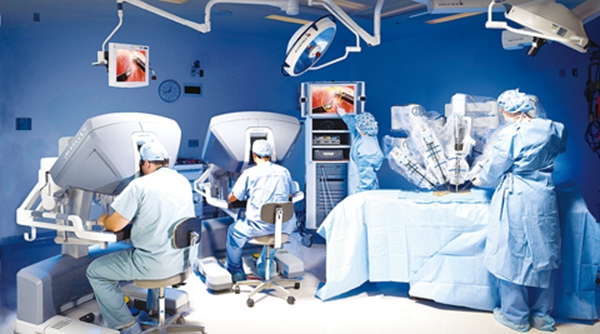
Surgical robots do not imply that machines perform the surgical procedure autonomously. A more accurate definition is that they are advanced surgical tools utilized by surgeons during operations. The surgeon sits at a console, controlling joysticks while viewing the operative field, to manipulate miniature forceps and scissors mounted on robotic arms, thereby performing the surgery.
Among them, surgical robots can be divided into two major categories based on the nature of their operational targets: first, surgical robots for soft tissues (such as the heart, stomach, gallbladder, prostate, etc.), which aim to address minimally invasive surgical procedures under endoscopy; second, surgical robots for hard tissues (long bones, pelvis, spine, cranium, etc.), which primarily address the issue of positioning in minimally invasive surgeries.
Currently, more than 600,000 robotic surgeries have been successfully performed in over 800 hospitals across 33 countries worldwide. These procedures span multiple specialties, including urology, obstetrics and gynecology, cardiac surgery, thoracic surgery, hepatobiliary surgery, gastrointestinal surgery, and otolaryngology. In addition, surgical robots can be applied to organ repair, vascular anastomosis, bone grinding, and other areas.
In early March this year, Google’s latest announcement revealed that it has entered into a collaboration agreement with medical device company Johnson & Johnson to jointly develop a robotic platform designed to assist physicians in performing surgical procedures.It is reported that this robotic surgical platform will help advance minimally invasive surgical techniques, addressing patient concerns such as scarring, pain, and prolonged recovery periods. Google will integrate visual systems and image analysis software into the platform, providing surgeons with enhanced spatial visualization and facilitating access to other relevant information.
In recent years, the da Vinci Surgical System has become the most popular device in the field of surgical robotics and is widely used across various countries.
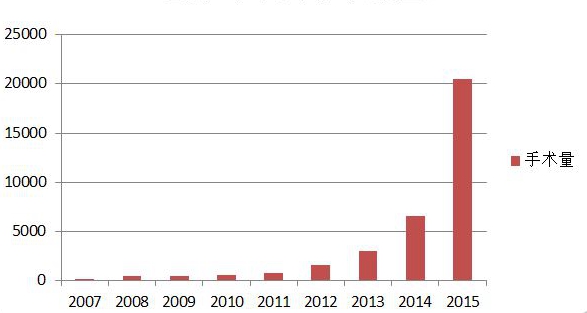
Chart of the Number of Surgeries Performed by the Da Vinci Surgical System in China, 2007–2015
The da Vinci Surgical System operates as follows:
1. The surgeon observes the surgical field through a camera, which allows for magnified visualization;
2. The surgeon operates using foot pedals and hand levers;
3. After being inserted into the patient's body, the robotic arm can flexibly perform movements such as translation, rotation, oscillation, and grasping;
4. The robotic arm is equipped with a stabilizer that filters out hand tremors, enabling precise execution of the surgeon’s commands.
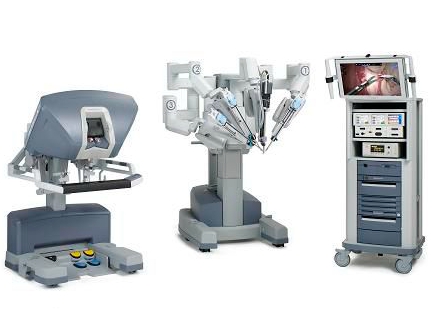
Da Vinci Surgical Robot System: Physical Unit Image
Meanwhile, in August 2015, EMARO, an endoscopic surgical assistance robot developed by RIVERFIELD Inc., a company established by Tokyo Institute of Technology and Tokyo Medical and Dental University, was launched on the market.
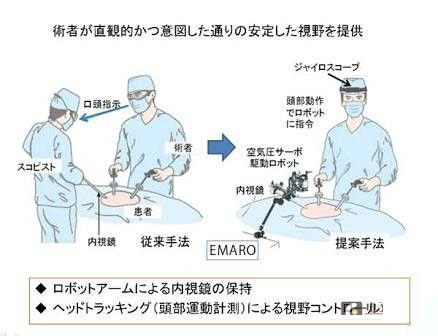
Application Scenarios of the EMARO Surgical Robot
EMARO is a system that allows the lead surgeon to operate the endoscope independently through head movements, eliminating the need for an assistant (the physician holding the endoscope). It took approximately 10 years from the initiation of research to the commercial launch of EMARO by Professor Kenji Kawashima of the Institute of Biomaterials and Bioengineering at Tokyo Medical and Dental University, Associate Professor Kotaro Tadano of the Precision and Intelligence Laboratory at Tokyo Institute of Technology, and their colleagues.
From traditional open surgery to robotic surgery, humanity has undergone nearly three centuries of evolution. In the 1780s, Viennese surgeon Billroth performed the first surgical procedure by opening a patient’s abdominal cavity. This traditional open surgery is known as first-generation surgery and remains in use to this day. In the 1980s, minimally invasive surgery, marked by laparoscopic cholecystectomy, achieved breakthrough progress, replacing traditional open surgery in many fields and becoming known as second-generation surgery. Entering the 21st century, surgical robots have been developed and rapidly introduced into clinical practice, regarded as a revolution in the history of surgical development and heralding the advent of third-generation surgery.
In 2014, Fortune magazine outlined the current state of the future robotics industry:
Robotic laparoscopic surgical capabilities will surpass those of humans.。
Robots can remotely sense human organs and offer superior visual quality.。
The new generation of equipment will be more affordable, enabling more general hospitals to adopt robotic surgical systems, while those already using such technology will consider upgrading to second-generation devices.
Meanwhile,Compared with traditional surgery, surgical robots have the following three advantages:
First, patients experience less intraoperative blood loss compared to traditional surgery. After conventional open surgery, patients require a 2–3-day recovery period before discharge and can resume normal activities only after six weeks. In contrast, following robot-assisted surgery, patients can be discharged within one day and return to normal activities within one week.
Second, the surgical incisions are more precise, which can reduce complications arising from inadvertent nerve transection.
Third, the surgical incision is shorter, reducing patient discomfort. When cardiac surgeons perform procedures using robotic systems, they can avoid splitting the ribs; the incision measures only 3.7 to 5 centimeters, compared with the 20- to 25-centimeter incision required in traditional open-heart surgery.
However, surgical robots face high price barriers and incur substantial usage costs, with the maximum cost per unit reaching $1.3 million.
Despite the high cost, surgical robots represent an inevitable trend in clinical development. According to a J.P. Morgan survey of 25 surgeons conducted as of June 2016, approximately 40% of surgeons welcomed surgical robots, such as the da Vinci system, and expressed hope that hospitals would be equipped with these robots to assist in clinical treatment, while only 24% of surgeons were opposed to the introduction of surgical robots into hospitals.
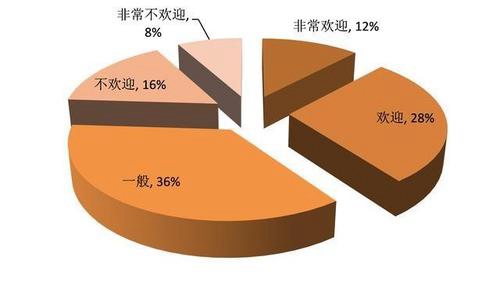
J.P. Morgan Survey Report Chart
In response to the high purchase price of equipment, some medical institutions have undertaken independent research and development of surgical robot systems. Professor Yu Peiwu, Director of the Department of General Surgery at Southwest Hospital of the Third Military Medical University, stated, “The direction of precision surgery led by current surgical robot systems aims to minimize patient trauma, reduce blood loss, and accelerate recovery.” On August 9, 2016, Southwest Hospital of the Third Military Medical University performed surgery on a patient with gastric cancer using its third-generation surgical robot. Professor Yu remarked, “Since we began using the ‘Da Vinci’ system, we have had the idea of developing domestic alternatives.” Through independent research and development, medical institutions can break down significant price barriers.
Moreover, after several years of exploration and collaborative breakthroughs, the goal of domesticating surgical robots is drawing nearer. Currently, domestically produced surgical robot systems are in a critical stage of research and development, with expectations for their market launch within the next few years.