Biweekly Must-Read: Top 10 Health Tech Highlights

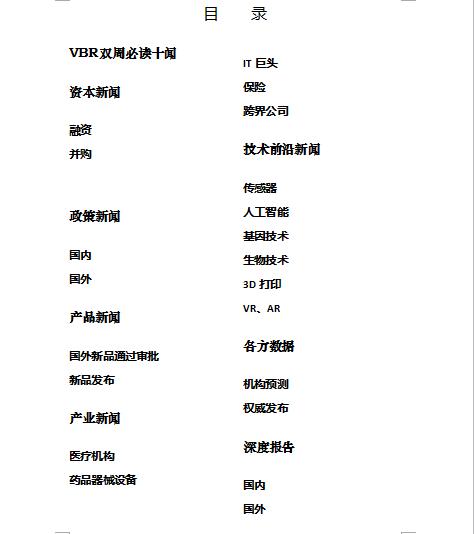
This issue of the Little Blue Book comprises 20 pages and covers the following content:
Good News!!! Starting from this issue, the full text of [VCBeat Blue Book] will be regularly shared with group members in the VCBeat WeChat discussion group. To join the VCBeat WeChat discussion group, scan the QR code to apply.》》》

Review of Major Industry Events Over the Past Two Weeks: 3D Printing Technology Enables Customized Nutritional Capsules for Consumers; Google and GlaxoSmithKline Establish a Joint Venture to Enter the Bioelectronics Market; Deloitte Report: China’s Pharmaceutical Internet Sector Is Poised for Significant Growth.... Top Ten Biweekly News Highlights from VCBeat’s Blue Book.
Issue 3: Top 10 Must-Reads
1. IBM Watson Precisely Diagnoses Cancer
According to a report provided by physicians at the University of Tokyo, IBM Watson diagnosed a rare form of leukemia in a 60-year-old woman in just 10 minutes by comparing genetic variations across 20 million cancer case reports. In addition to providing an accurate diagnosis, Watson also recommended an appropriate treatment plan.
2. Ping An of China Launches the “Hospital One-Account Pass” Platform
On August 2, Ping An Good Doctor Cloud and Ping An Pension Insurance held a press conference in Wuhan, Hubei Province, officially launching the “Hospital One-Account Pass” platform. Leveraging this platform, Ping An Pension Insurance has further upgraded its services by introducing the “Express Claims” service. The Ping An “Hospital One-Account Pass” provides comprehensive medical consultation, refined management, and upgraded financial product services to users, healthcare institutions, and insurance company partners. It aims to enhance patients’ medical experience and operational efficiency of healthcare institutions, reshape the product landscape of commercial health insurance and future industry trends, and create a new integrated model of internet-based healthcare and commercial insurance.
3. 3D Printing Technology Enables Customized Nutritional Capsules for Consumers
MULTIPLY LABS has recently developed a 3D-printed nutritional supplement that provides targeted, personalized services. This supplement can replenish nutrients lacking in users based on their dietary habits. Users can choose to add ingredients such as caffeine, amino acids, minerals, and vitamins B6, B12, and D3. Additionally, users can adjust the release timing of these compounds within the body.
4. Google and GlaxoSmithKline Establish Joint Venture to Enter the Bioelectronics Market
UK pharmaceutical giant GlaxoSmithKline has formed a joint venture with Verily, the life sciences division of Google’s parent company Alphabet, to develop bioelectronic medicines. The new company, named Galvani Bioelectronics, will be 55% owned by GlaxoSmithKline and 45% by Verily. The two companies plan to invest up to £540 million (approximately $715 million) in the new venture over the next seven years.
5. Multiple Hospitals Establish the “Shanghai Public Medical Institutions Drug Group Procurement Alliance”
To advance the pilot program for comprehensive healthcare reform, five public medical institutions—including Huashan Hospital Affiliated to Fudan University, Renji Hospital Affiliated to Shanghai Jiao Tong University School of Medicine, and Shanghai General Hospital—along with public medical institutions under the jurisdiction of six districts such as Xuhui District and Putuo District, jointly established the Shanghai Public Medical Institutions Drug Group Procurement Alliance. This alliance entrusts a non-profit third-party social organization to conduct group drug procurement through a “group-buying” model.
6. Stanford University and Google Launch Collaboration on Genomic Testing
To integrate genomic testing into routine healthcare services, Stanford University School of Medicine recently announced a partnership with Google to advance its upcoming clinical genomics service, which is expected to launch this fall.
7. China’s First 3D-Printed Ophthalmic Application R&D Center Established at Qingdao Municipal Hospital
On August 9, China’s first 3D Printing Ophthalmic Application R&D Center was established at Qingdao Municipal Hospital. Its thin-slice orbital CT scanning and printing technology can “pre-form” surgical materials based on the specific location of a patient’s fracture, thereby shortening operative time, reducing the risk of infection, and accelerating postoperative recovery.
8. Perficient: Top 10 Must-Read Trends in the 2016 Internet Healthcare Guide
Perficient recently released a report on the Top 10 Trends in Internet Healthcare Development for 2016. Understanding these trends not only helps healthcare organizations survive in this user-centric era but also significantly benefits their sustainable development. The report provides trend forecasts across ten dimensions, positing that the development of connected healthcare can reform healthcare services and address inefficiencies in workflow management, chronic disease management, and treatment adherence. It aims to reduce the cost of delivering high-quality healthcare services for chronic conditions, offering more efficient, convenient, and cost-effective methods for healthcare delivery. Telehealth solutions are designed to maximize the utilization of medical resources and provide patients with greater and more flexible access to healthcare services.
9. Deloitte Report: China’s Internet Healthcare Sector—Gathering Momentum on the Brink of Transformation
Internet and mobile technologies are driving cross-industry integration and propelling traditional industries into an era of restructuring. In comparison, pharmaceutical e-commerce has entered a growth phase as policies have gradually been relaxed, although its momentum remains weaker than that of e-commerce for other consumer goods. Pharmaceutical e-commerce will undoubtedly facilitate the redistribution of interests among stakeholders across the value chain and the restructuring of various segments, while also promoting the transformation of offline enterprises. However, regulatory policies remain the most significant barrier to industry development.
10. Report | 77 Top Companies, Led by BAT, Deeply Invest in China’s Digital Health Sector
VCBeat Releases “2010–H1 2016 Report on Digital Health Investments by Chinese Corporate Capital,” Analyzing Corporate Investment Activities. Our findings reveal a surge in activity among corporate investors, with general partner (GP) investment models prevailing over strategic investment models; listed companies are more active than non-listed ones; internet companies show greater focus on digital health; and early-stage projects are increasingly favored by corporate capital.
↓↓↓
By VCBeat. Please credit the WeChat Official Account when reposting:VBResearch2016
【VCBeat Research Institute: Read Our Reports】

Interested parties, click here to view