

SEMMA Therapeutics Files IPO Prospectus Following $50M in Funding for Embryonic Stem Cell-Derived Diabetes Therapy
Diabetes is a common chronic disease worldwide, and there has been a persistent demand for therapeutic solutions in the market. Melton has invented a new therapy for diabetes: the SEMMA approach, representing the most costly and sustained effort to date to convert stem cells into transplantable tissue.
When Doug Melton’s six-month-old son, Sam, was diagnosed with type 1 diabetes, he said, “It felt like we had lost the lottery.” Later, his daughter was also diagnosed with the same condition. Since then, Melton has abandoned his previous work—studying frog eggs at Harvard—to embark on a new research endeavor: cultivating pancreatic cells in his laboratory. This shift was driven by the fact that the pancreatic beta cells in patients with type 1 diabetes are destroyed, which is the primary cause of the disease. Melton believes that he can use embryonic stem cells to generate new tissues to replace these pancreatic beta cells.
To this end, Melton assembled a 30-member research team and launched a startup. Thus was born a therapy named after his children, Sam and Emma—the SEMMA therapy. “Melton acknowledges that his efforts were fraught with false starts and dead ends. The public absolutely fails to grasp that science is mostly about failure,” he said.
In fact, no area in biotechnology has promised and hoped as much at the beginning as embryonic stem cell therapy, only to deliver so little in the end. Although other research teams have published related reports, none have been able to cultivate truly mature pancreatic beta cells suitable for therapeutic use. Cells selected from bovine in vitro fertilization can develop into any other type of tissue in the body, thus providing an unlimited supply of replacement tissues.
This sounds simple, but it is indeed extremely difficult to accomplish. Melton and his research team spent 15 years unraveling the molecular steps required to induce stem cells into pancreatic beta cells capable of secreting insulin and sensing blood glucose levels. The induction method involves using a chemical cocktail, a three-dimensional culture system, and agitation in spinning bioreactors to produce a substance resembling red Gatorade. Under these conditions, stem cells can be directly induced into fully functional beta cells within 30 days.
Earlier this year, Melton finally demonstrated that human islet β-cells transplanted into mice could regulate blood glucose levels in the animals for up to six months. The team hopes to initiate relevant clinical trials within a year and remains confident in achieving their anticipated goals. Meanwhile, plans for an implantable capsule designed to protect these cells have been handed over to SEMMA for implementation.
Over the past two years, SEMMA has secured nearly $50 million in funding from venture capital firms and California-based stem cell companies, and has established strategic partnerships with Novartis and Medtronic. William Sahlman, Chairman of SEMMA’s Board of Directors and a professor at Harvard Business School, stated, “We have raised substantial capital for this project.” One key reason is that the global insulin market already exceeds $3 billion annually. Advances in test strips and monitoring devices could potentially double this figure.
Because the patient’s immune system attacks the pancreatic cells that regulate blood glucose. In conventional treatment, patients with type 1 diabetes need to inject insulin multiple times a day to control their blood sugar levels. This can shorten their lifespan by more than a decade. “You could almost say that cell therapy is the natural solution,” said Melton. “It is not a technological solution, nor is it a ‘Google-style’ solution; it is nature’s way of solving the problem. This technology provides you with the cells that have been lost.”
Several companies are exploring novel therapeutic solutions for diabetes. Medtronic’s MiniMed 670G, which demonstrated favorable outcomes in early trials, has received FDA approval. The MiniMed 670G utilizes electronic technology to create an artificial pancreas system comprising continuous glucose monitoring, an insulin pump, and a sensor-driven algorithm that regulates insulin delivery. Google’s life sciences subsidiary, Verily, is developing glucose-sensing contact lenses and ultra-thin sensors. ViaCyte, in collaboration with Johnson & Johnson, has pioneered the derivation of pancreatic cells from human embryonic stem cells and developed an implantable encapsulation device for immature cells, designed to enable their proliferation and differentiation in vivo. A clinical trial was launched last year to validate this approach.
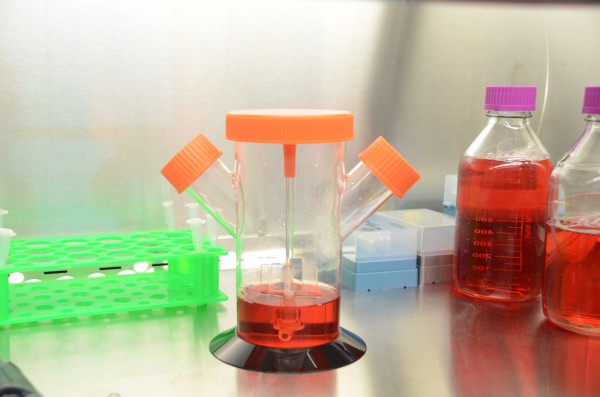
Pancreatic embryonic stem cells under culture: It took 15 years just to develop the culture medium.
SEMMA holds that it is not sufficient to merely differentiate embryonic stem cells into insulin-secreting beta cells; rather, they must be differentiated into a mature islet—a structure composed of alpha cells, beta cells, delta cells, and other accessory cells typically found in the pancreas. This is a complex task, yet it accurately mimics the initial processes of cellular division and differentiation in early life. “Another challenge in the differentiation process is that these cells are remarkably similar to one another, which significantly increases the difficulty of achieving precise differentiation,” said Felicia Pagliuca, founder of SAS and a senior researcher in the Melton Laboratory.
To realize laboratory-grown pancreatic islets, SEMMA has developed a retrievable, iPhone-sized encapsulation device made of materials that shield it from immune system attacks. This approach eliminates the need for patients to take immunosuppressive drugs following organ transplantation. Christopher Thanos, Vice President of SEMMA, stated, “Our team optimized this ‘encapsulation’ by simulating physiological processes under varying conditions of oxygen consumption rates, nutrient ratios, and insulin diffusion rates.”
Some experts believe that protecting cells is impossible. “I am not very optimistic either; using the ‘encapsulation’ method is not the ultimate answer,” said David Cooper, a professor of surgery at the University of Pittsburgh who has long studied human islets in pigs, echoing similar views. “Personally, I do not think it will succeed, as it cannot effectively remove harmful substances.” The professor was referring to cytokines, antibodies, and other compounds released by the body in response to foreign materials. “There is little evidence to suggest that a small encapsulation device can help the human body avoid an immune response.”
The impact of annual surgeries on patients' future lives is alsoMeltonPractical Concerns. How many diabetic patients would be willing to undergo 50, 60, or even 70 surgeries in the years to come? What would be the impact of repeated incisions at the surgical site? “Diabetic patients must weigh the inconvenience of surgery against the countless finger pricks required for insulin injections,” said Melton. “My children said they wouldn’t hesitate to choose surgery if it meant only once a month, but I think that’s a bit extreme,” he said. “However, if it reduces the frequency to twice a year, I believe undergoing the surgery would be worthwhile.”
If the “encapsulation” proves ineffective, SEMMA has numerous backup plans. The company proposes generating pancreatic islets from patient-derived induced pluripotent stem cells (iPSCs). This process involves reprogramming mature cells, such as skin cells, back into a pluripotent stem cell state. Because these cells are autologous, they are less likely to be rejected by the body as foreign substances and may require less immunoprotection. However, these cells could still be destroyed by the autoimmune response inherent to type 1 diabetes during the reprogramming process or thereafter. SEMMA believes its approach could help a subset of patients with diabetes of different etiologies.
For implantable bioartificial pancreases, SEMMA remains unclear about when such devices will be available for patient use. This means Melton’s child will have to wait a long time; the road ahead is still long.