

Avalon AI Files for IPO: Pioneering Alzheimer's Risk Prediction Through Deep Learning and MRI
As artificial intelligence applications continue to expand across various sectors, VCBeat (WeChat ID: vcbeat) will publish a series of reports on the AI + healthcare sector both in China and abroad, covering typical case studies, investment and financing trends, and industrial landscape developments, to serve as a reference for investors and entrepreneurs in the industry.
This article introduces a U.S.-based AI startup that applies deep learning technology to healthcare systems and integrates with wearable devices to provide precise early warnings before disease onset, serving as a typical case of entrepreneurship in the AI + healthcare sector.
Can you believe it? Simply by uploading brain magnetic resonance imaging (MRI) scans, one can predict the likelihood of developing Alzheimer’s disease in the future. This may sound somewhat futuristic, but a company founded in 2015 could make this a reality in the near future.
Headquartered in London, UK, Avalon AI is dedicated to tackling age-related diseases, particularly neurodegenerative disorders such as Alzheimer’s disease. The company leverages deep learning technology to develop computer-aided medical imaging diagnostic tools, currently achieving a 75% accuracy rate in the effective prediction of Alzheimer’s disease.
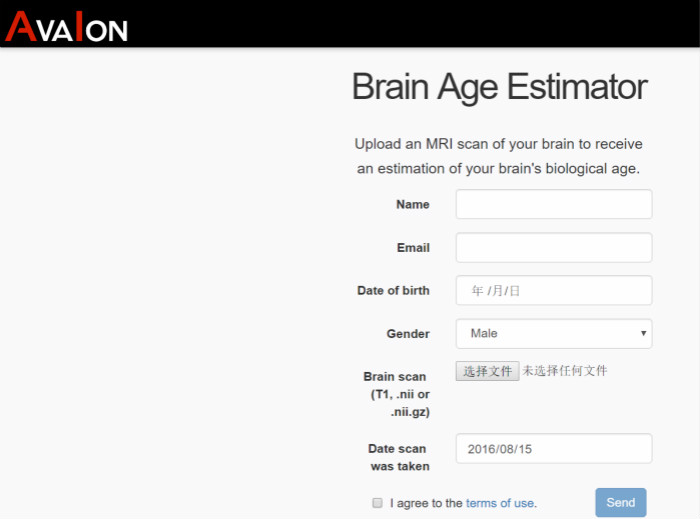
Upload brain scan images to assess brain age and condition
“Our ultimate goal is to treat aging.” Avalon AI’s ambition appears audacious. Co-founder Alejandro Grabotevsky stated, “Addressing aging is profoundly meaningful. If you no longer age, you gain all the time in the world to solve every other critical issue.”
The company was founded by two like-minded individuals: Olivier van den Biggelaar and Alejandro Vicente Grabovetsky. Both are top academic performers from prestigious universities. Olivier van den Biggelaar is a software engineer who, while pursuing his Ph.D. at the Université libre de Bruxelles, worked at a major video streaming platform and developed a sophisticated machine learning system. In a Belgian business plan competition, Olivier secured a top-two finish, winning a €10,000 prize.
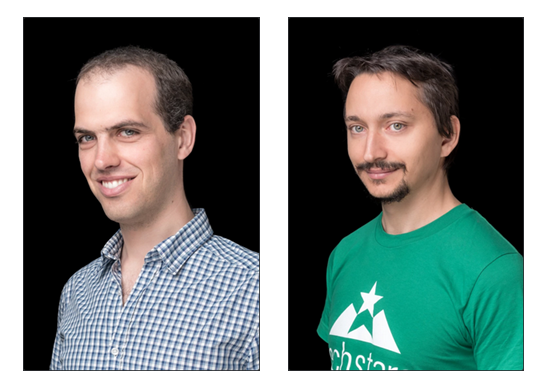
Founder Olivier van den Biggelaar (left) andAlejandro Vicente Grabovetsky (right)
Another co-founder, Alejandro Vicente Grabovetsky, earned his Ph.D. at the University of Cambridge and completed postdoctoral research at Radboud University Nijmegen in the Netherlands. The neuroimaging device he helped develop is now widely used in laboratories around the world. He has received five national and international communication awards, firmly establishing him as a cognitive neuroscientist.
They have long shared a common aspiration to conquer age-related diseases. Determined to turn this vision into reality, they conceived the idea of founding Avalon AI (Avalon, in Celtic legend, is the mythical island of fairies and a place of immortality). Following this line of thought, they observed that research into age-related conditions such as diabetes and cancer enjoys substantial funding support and frequent emphasis within the medical community. In contrast, Alzheimer’s disease receives significantly less funding, partly because no successful treatment has yet been found and clinical trial failure rates remain excessively high. While others shy away from these challenges, these academic overachievers are determined to rise to the occasion.
Their research focus on Alzheimer’s disease actually stems from a deeply personal reason: both of their grandmothers suffered from the condition. The homepage of Avalon AI features this statement: “Among age-related diseases, the most terrifying are neurodegenerative disorders such as Alzheimer’s disease. Once afflicted, one’s sense of identity and human dignity are gradually stripped away until nothing remains.” This profound sorrow is perhaps an experience only those who have witnessed loved ones suffer from this incurable disease can truly understand.
Olivier and Alejandro are experts in deep learning and neurological medical imaging, respectively. They found that most past clinical trials for Alzheimer’s disease focused on studying late-stage symptoms, by which time the subjects’ brains had already suffered severe damage. In contrast, they argue that decisive action should be taken to nip the disease in the bud when early symptoms of dementia appear and brain damage has just begun.
So the question is: how can we combine their expertise in deep learning and MRI imaging to identify brain injury manifestations in a brain scan image?
Based on current knowledge in neuroscience, there are two primary biomarkers used in clinical practice to assess the severity of dementia: one is the volume of the hippocampus (often regarded as the brain’s “memory chip”), and the other is the size of the ventricles, which enlarge as brain tissue atrophies. Additionally, researchers aim to conduct detailed investigations into changes in gray and white matter, as well as alterations in cerebrospinal fluid, to observe how these parameters evolve during the progression from mild cognitive impairment to Alzheimer’s disease.
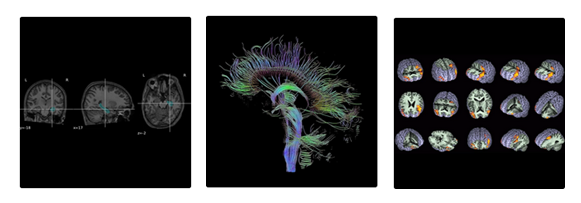
Combining three imaging modalities—structural (left), diffusion (middle), and functional MRI (right)—can reduce the probability of missed Alzheimer’s disease diagnoses by 50%.
To conduct these studies, it is first necessary to generate a 3D magnetic resonance imaging (MRI) scan of the brain, compare it with other samples, and then employ convolutional neural network (CNN) techniques to perform feature analysis on the brain within the image. The principle of CNNs is analogous to human skin perception: each layer of the network extracts simple features from the brain scan, which are then stacked and recombined layer by layer into complex feature sets. This neural network-based analytical approach requires not only horizontal analysis of similar features across brains with comparable levels of dementia but also longitudinal comparison of distinct features among brains with varying degrees of dementia. Through such layered analysis and comparison, it is possible to determine whether brain damage has occurred and to assess the severity of dementia.
The most pressing challenge facing the team is the scarcity of data. Alejandro Vicente, who has dedicated significant effort to this issue, published an article titled “The Health Data Crisis” online, calling on the healthcare industry to make more existing medical imaging data available. The article notes that while data and computer technologies have driven transformative innovations in many industries, the conservative healthcare sector has lagged behind. This stagnation stems primarily from hospitals’ reluctance to contribute case data on conditions such as diabetes, cancer, and Alzheimer’s disease for research purposes, thereby squandering valuable resources.
He also made the following hypothetical inference: There are over 36,000 MRI scanners worldwide, approximately one-quarter of which are used for brain imaging. Assuming each scanner operates five days a week, eight hours a day, and takes one hour to produce one valid scan per patient, the total annual number of scans would be calculated as 36,000 scanners × 250 days/year × 8 scans/day, resulting in 72 million images annually. Of these, 18 million would be brain scans, averaging 50,000 per day. This is a conservative estimate; the actual figure is significantly higher.
He also expressed his deep gratitude to the various medical and research institutions, both large and small, that are currently providing brain imaging data to Avalon AI. However, to date, the total volume of data contributed by all these institutions combined does not exceed 50,000 cases. Although data from research institutions is more comprehensive and of higher quality than clinical data, the quantity is exceedingly scarce—falling short of the volume of clinical data generated in a single day.
“In this era of big data, the data scientist within me weeps at the thought of so much valuable information lying idle on the hard drives of hospitals and clinics,” said Alejandro.
Regarding data security, Avalon AI has committed to strictly protecting patient privacy. They stated that during research, image headers would be anonymized by stripping out names, dates of birth, and the time and location of MRI scans. Nevertheless, risks remain: even without disclosing any other information, some individuals might still be identifiable from a pool of anonymized images.
Avalon AI responded that they would explore methods to specially process facial features, but cautioned that this could not guarantee absolute security. Compared to the substantial contributions that primary data bring to medical research, the drawbacks posed by this risk are negligible.
Three years ago, before the technological revolution in deep learning had even begun, it was inconceivable that neural network technologies could be applied to the study of Alzheimer’s disease. Today, driven by increasingly powerful computational capabilities and robust data infrastructure, we have reached a turning point in the application of deep learning to clinical imaging diagnosis and treatment. This development is good news for neuroradiologists, as the technology not only saves time but also enables highly precise diagnoses. For pharmaceutical companies, it allows them to focus drug treatments on patients at risk of rapid dementia progression within a short timeframe, thereby significantly reducing costs in clinical trials.
Nevertheless, deep learning is currently more widely applied in medicine to conditions with higher treatment success rates, such as analyzing CT scans for stroke and certain cancers. Avalon AI is the first company to apply deep learning to predict Alzheimer’s disease.
According to Avalon AI, its database already contains 80,000 scanned images, although building a single diagnostic model typically requires 10,000 images. Despite achieving a diagnostic accuracy of 75%, the current predictive performance is not yet sufficient for clinical medical diagnosis. However, the company estimates that once the number of tested images reaches between 100,000 and one million, this technology will meet the threshold for clinical diagnosis and be ready for practical implementation.
Received investment from Europe's Entrepreneur First in 2015; received investment from the U.S.-based Techstars startup accelerator in 2016. Collaborating scientists are from the University of Cambridge, the Donders Institute, and Imperial College London.

Avalon AI Has Numerous Collaborators
Three advisors are investors from Entrepreneur First: Chris Mairs, Alice Bentinck, and Matt Clifford. Another advisor is Professor Rik Henson from the University’s Institute of Cognitive and Brain Sciences, who is world-renowned for his research on age-related memory impairment. The other advisor is Christian Doeller from the Donders Centre for Cognitive Neuroimaging, who possesses extensive expertise in the medial temporal lobe—the brain region responsible for memory and spatial representation—which is affected by neurodegenerative diseases such as Alzheimer’s disease.
In March 2016, a partnership was established with Zebra Medical Vision, a medical imaging analytics company that, like Avalon AI, employs deep learning for image-based diagnostic analysis. The company’s research areas include the skeletal system, liver, lungs, cardiovascular system, and brain.
Series Report:
$1.4 Billion in Total Global Financing for AI + Healthcare from 2011 to H1 2016
[AI Series] How Does AnalyticsMD Leverage AI to Support Data-Driven Decision-Making in Hospitals?
【AI Series】MedyMatch Precisely Diagnoses Stroke: A Typical Application of AI + Medical Imaging