

Top 10 Disruptive Technologies Reshaping the Future of Pharma: Empowering Patients, Personalizing Medicine, and Redefining Drug Development
It is fascinating that disruptive innovation can fundamentally transform the delivery of healthcare services and the utilization of pharmaceuticals. In the near future, profound technological changes will drive the transformation and upgrading of pharmaceutical companies.
However, if we fail to prepare for the impending transformation, the existing healthcare system will be utterly dismantled, leaving behind only rudimentary technical services devoid of human interaction. We should not hastily discard such a complex system; rather, we must intentionally, purposefully, and phasedly redesign it. To seize this opportunity, we must brace ourselves for the challenges of the future.
Therefore, it is recommended that pharmaceutical companies take immediate action; otherwise, they will suffer losses and may even face the predicament of bankruptcy. What would happen if we redirected the funds, expertise, and time currently dedicated to treating diseases toward disease prevention? This would mean a healthier population, while the existing business models of pharmaceutical companies would lose their core rationale. Still hesitant about the validity of these radical claims? Consider the following transformative trends and case studies first.
With greater access, patients will establish equal partnerships with their caregivers and unlock the potential to navigate the entire healthcare system. They will engage in research, gather information, and stay abreast of the latest advancements. While this approach offers numerous benefits, medicine is not easily accessible knowledge for laypersons. Throughout the treatment process, specialized healthcare professionals across various fields must treat patients as partners and be prepared to answer their questions at any time. These “high-access patients” will apply to participate in clinical trials.
Some individuals may even acquire biotechnology companies to conduct independent trials. In the absence of regulatory oversight, impassioned experimenters will abandon ethical principles in garage laboratories. Overall, this approach has both advantages and disadvantages; therefore, we must prepare for new models of medical services. Future pharmaceutical companies will make healthcare decisions that best serve patients’ interests through consultation with them.

The patient and healthcare professional incentive mechanisms currently adopted by pharmaceutical companies are long outdated. They need to shift their focus toward gamification to engage online users, enhance customer loyalty, and improve the corporate image of pharmaceutical firms. For instance, Pokémon Go transformed the entire gaming industry within just a few weeks. It encouraged players to leave their homes and keep moving, thereby promoting healthier lifestyles. Whenever people begin to move away from an advertising platform, it becomes necessary to create a new one. This new advertising platform must be sufficiently attractive to customers and provide relevant information to assist them in making informed healthcare decisions.
High-autonomy patients may resent the term “loyalty,” as it implies that they must obey orders. Therefore, patients will be appropriately motivated through shared decision-making with their caregivers.

Augmented reality (AR) and virtual reality (VR) technologies, along with VR devices such as Google Glass and Oculus Rift, have ushered in a new era of digitally processed information. If you have the opportunity to experience VR devices and visualize the mechanism of action of drugs in 3D, you will recognize the immense potential of virtual reality technology. The profound impact will leave a lasting impression. In a world saturated with vast amounts of information, this technology will provide us with a decisive advantage. For instance, wearable devices enable comprehensive, multi-angle observation of the heart, allowing even individual heartbeats to be clearly visualized.

Genomics and personalized treatment approaches will enable therapies tailored to an individual’s genetic background. For instance, once I obtain a document containing my genetic information, I can provide it to my physician to receive a medication list customized according to my genetic profile and metabolic differences, thereby avoiding one-size-fits-all prescribing practices. Meanwhile, the cost of genomic sequencing continues to decline. As this technology becomes widely adopted, physicians’ prescribing patterns will undergo significant transformation. Pharmaceutical companies must prepare for this shift by promptly providing corresponding solutions.

In-body and on-body sensors will become a comfortable and affordable means of measuring health parameters, helping patients obtain critical health data. The success or failure of clinical trials largely depends on how healthcare professionals collect patient data. We can envision a future where automated health sensors are widely adopted. If pharmaceutical companies transform their current data collection methods, they will achieve significant cost efficiencies. Meanwhile, we must keep pace with the times and remain vigilant, advancing technologies in a steady and progressive manner to truly reap the benefits brought by technological development.

“Do-It-Yourself” Biotechnology: A New Generation of Scientists Will Break the Constraints of Traditional ResearchLarge research institutions have long monopolized drug development, but this era is drawing to a close with the emergence of citizen scientists like Jack Andraka, who developed a revolutionary pancreatic cancer test. At just 15 years old, he invented a low-cost diagnostic assay. Such innovative spirit is crucial for maintaining the safety of DIY biotechnology. While regulations are necessary, we cannot deny that individuals are fully capable of conducting scientific research at home. Therefore, pharmaceutical companies must keep a close eye on the rising scientific stars emerging from garage laboratories.
3D printing technology can manufacture medical prostheses, medical devices, and pharmaceuticals. A research and development team in Scotland is attempting to print drugs using 3D printers. The first drug produced via 3D printing received approval from the U.S. Food and Drug Administration (FDA) in 2015. Imagine a scenario where, after obtaining a blueprint for medications tailored to your genomic profile, local pharmacies could print the drugs at customized dosages for you, without the involvement of large pharmaceutical companies.

Detailed human physiology simulation experiments will replace human subject trials. Testing new drugs on actual humans is a barbaric practice.
Perhaps we could use supercomputers to simultaneously run billions of human physiology models, completing thousands of drug target tests within seconds. By circumventing ethical dilemmas, the efficiency of scientific experiments will be significantly enhanced. This approach is cheaper, faster, and more reliable. The aforementioned methods for collecting massive amounts of medical data bring nearly infinite possibilities, while ensuring that patients are not harmed during the data collection process.

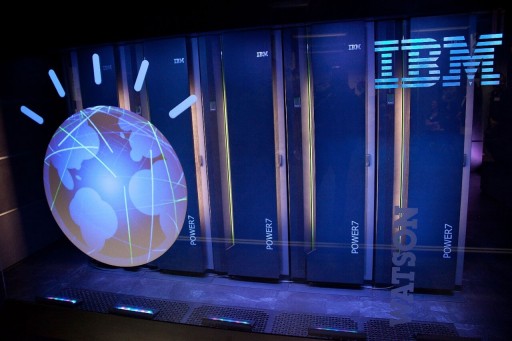
Medical decisions made by artificial intelligence systems in supercomputers will revolutionize traditional medicine. Cognitive computing systems, including IBM’s Watson supercomputer, have already begun analyzing big data from fields such as genomics research and biotechnology. This will transform the way new drugs are discovered. Of course, human oversight remains indispensable throughout the entire process, but machines clearly offer superior accuracy and speed in analysis.
Nanorobots in the bloodstream can facilitate early diagnosis for patients by continuously monitoring all health parameters. Once the technology for delivering drugs encapsulated in nanocages to target cells becomes practically feasible, the pharmaceutical industry will be compelled to manufacture final products compatible with nanotechnology. If new therapeutic approaches are not developed, pharmaceutical companies will face significant difficulties in their transformation. Nanorobotics represents the most futuristic technology, and any technological revolution poses substantial challenges to pharmaceutical enterprises.

Nestlé has already begun researching home-based 3D food printing technology. While we do not yet need to print our food, Nestlé is preparing for the time when we will. One of the company’s divisions is dedicated to developing business models, specialized products, and cultivating expertise. The pharmaceutical industry is currently enjoying a period of substantial returns, but it too must take action before the wave of disruptive technologies arrives. Science and technology are remarkable tools; however, if we wish to shape the technological transformation of the pharmaceutical industry, we must closely monitor the trajectory of scientific and technological advancements.
We need a pharmaceutical industry with strong innovation capabilities, but as technology rapidly transforms drugs and healthcare, pharmaceutical companies must find new solutions to oversee drug production and ensure the safety of new products. Think it’s impossible? Look at the aerospace industry.