

The '3-5-5-3-5' Framework: A Must-Read Guide on How Commercial Health Insurance Drives Deepening Healthcare Reform
On August 18, 2016, the “Healthcare + Internet Insurance Innovation Forum,” part of Taikang’s 20th Anniversary Celebration Series, was held in Beijing. Hosted by Taikang Life Insurance and organized by Taikang Online, the forum also marked the successful conclusion of the nearly two-month-long “Searching for China’s New Healthcare Policies” campaign, jointly launched by Taikang Online and VCBeat.
VCBeat has compiled the following key points from Mr. Yao Jianhong, Deputy Director of the Department of Structural Reform under the National Health and Family Planning Commission, in his keynote speech titled “Developing Commercial Insurance to Facilitate the Deepening of Healthcare Reform”:
Seven Years of Healthcare Reform Yield the “158” Framework, with Insurance Becoming a Key Component
Insurance is an integral component of healthcare delivery and also a key element of healthcare reform. The insurance industry plays a vital role in healthcare reform, and establishing a comprehensive medical insurance system is one of the major objectives of such reform. Over the past seven years, from March 2009 to the present, healthcare reform can be summarized as the “158” framework:
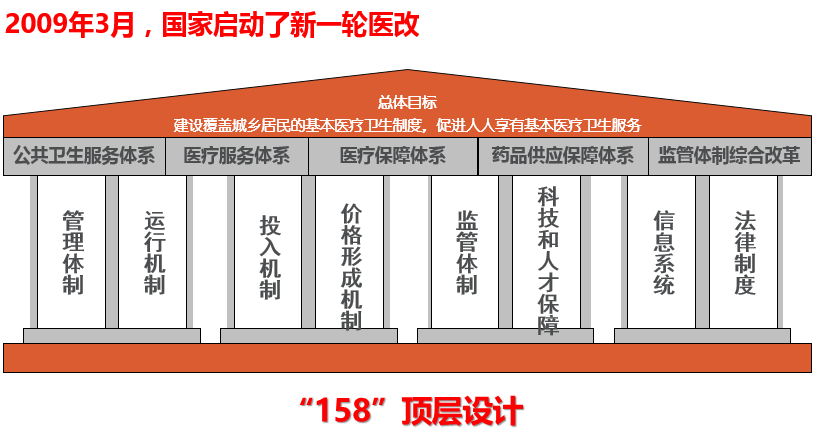
I.This refers to the goal of achieving universal access to basic medical and health services by 2020. China’s healthcare reform started relatively late, primarily due to its large population; ensuring that every citizen has access to medical care when needed poses a significant challenge. Although China’s total economic output ranks second in the world, dividing this figure by its 1.37 billion people results in a much lower per capita ranking. Therefore, China’s healthcare reform differs from that of Western countries and faces greater difficulties. Achieving the goal of universal access to basic health services by 2020 is no easy task.
VThe goal is to establish five systems, namely the public health service system, the medical service system, the healthcare security system, the drug supply guarantee system, and the comprehensive supervision system, each of which has its specific connotations.
EightIt refers to eight supporting aspects, including management and inputs, which provide critical support for achieving one goal and establishing five major systems.
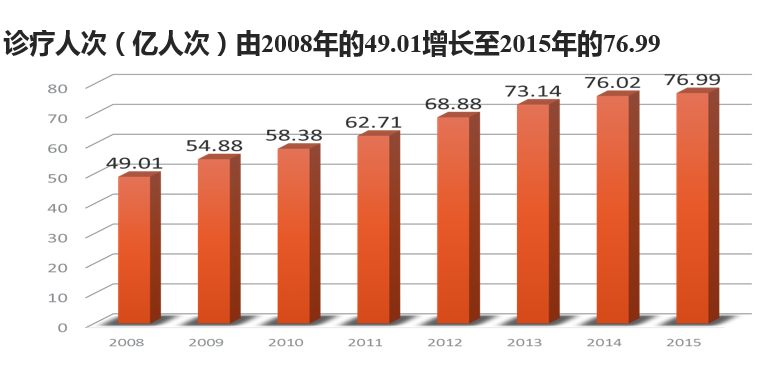
The insurance industry possesses inherent advantages that align well with healthcare reform. Since China implemented its healthcare reforms, there has been a marked increase in the public’s willingness to seek care at hospitals. Intuitive data demonstrate a substantial rise in the volume of medical treatments. In the year preceding the reforms, the national volume of medical consultations and treatments stood at only 4.901 billion visits; by 2015, the latest available data showed this figure had reached 7.699 billion visits. This increase from 4.9 billion to 7.7 billion represents a growth rate exceeding 50%. On one hand, this reflects significant improvements in medical service infrastructure and clinical capabilities. On the other hand, the increased hospital utilization by the general population is driven by the presence of insurance coverage—whether through basic medical insurance or commercial health insurance—which provides financial support for patients to access medical care. From these figures, it is evident that the rapid growth in treatment volumes following healthcare reform has laid a solid foundation for the development of the insurance industry.
Three Major Goals: A Perfected Market System, Diversified Product Forms, and Standardized Operational Procedures
The state has set clear, long-term, and macro-level objectives for the development of commercial insurance. By 2020, the final year of the 13th Five-Year Plan period, China aims to basically establish a modern commercial insurance service industry characterized by a well-developed market system, diverse product offerings, and standardized operational procedures.
First, the market system is relatively well-developed, with all market participants playing significant roles in the insurance industry;
The second aspect is product form, i.e., how commercial insurance companies can leverage their own circumstances and align with the needs of their service recipients to offer more diversified insurance products, thereby expanding the range of choices for policyholding entities, individuals, and relevant authorities.
The third aspect is operational standardization, a key element in enhancing reputation and service quality. The ultimate goal is to establish a robust commercial insurance operating mechanism, significantly improve service capabilities, expand the scope of services, substantially increase the number of insured individuals, and gradually raise the proportion of commercial insurance claims within total health expenditure.
Five Key Areas Warranting Close Attention in Insurance Product Design
From the perspective of healthcare reform, there are five categories of products that warrant consideration or should be prioritized:
The first category comprises products that interface with basic medical insurance. Currently, China has three major basic medical insurance schemes: the New Rural Cooperative Medical Scheme (NRCMS) for farmers; the Urban Resident Basic Medical Insurance for non-employed urban residents outside the formal system; and the Employee Basic Medical Insurance for employees of enterprises, public institutions, and government agencies. The insurance industry should primarily target these three major insurance systems, exploring how to integrate with them to provide farmers, residents, and employees with more diverse insurance options. The industry must now consider how to align with these three basic medical insurance schemes and achieve effective integration.
The second aspect involves integration with health management service products. In the realm of full-lifecycle health management services, covering conditions such as hypertension, diabetes, and other key diseases, the insurance industry has made substantial efforts in this field.
The third is long-term care insurance. With the continuous aging of China's population, how to adapt to the requirements for nursing insurance proposed by healthcare reform, draw on successful experiences, and further expand and enhance efforts in this area are issues that warrant careful consideration.
The fourth area focuses on pharmaceuticals, medical devices, and diagnostic and laboratory testing services. For instance, some insurance companies have made significant contributions to the development of regional imaging centers, clinical laboratories, and other facilities. This approach not only optimizes the use of healthcare resources, ensuring that limited resources achieve maximum effectiveness, but also provides convenience for both hospitals and the general public, thereby realizing economies of scale.
Finally, regarding the use of traditional Chinese medicine (TCM) for health preservation and preventive care, TCM is a treasured heritage of our nation. Public demand for TCM products is extensive. In particular, Tu Youyou’s Nobel Prize win has significantly enhanced the global influence and discourse power of TCM. The fields of TCM-based wellness and product diversification hold substantial potential for development.
Five Approaches to Expand the Coverage of Medical Malpractice Insurance
In the process of providing services to hospitals, the insurance industry can also identify its market value and positioning, with five aspects worth considering.
The first issue is how to develop our medical liability insurance. This area is relatively mature abroad, and the key lies in reducing the professional risks faced by healthcare institutions or physicians. It should be acknowledged that the state has made considerable progress in this regard, introducing numerous policies. Medical liability insurance also plays a significant role in the prevention and mediation of medical disputes.
Second, there is a wide range of medical accident insurance available to the general public and hospitals. These incidents arise neither from physician negligence nor patient fault, but rather from the inherent risks associated with medical care; as long as medical interventions are performed, the possibility of adverse events inevitably exists. In this regard, stakeholders can engage in appropriate insurance coverage.
Third, regarding medical professional liability insurance for healthcare institutions and physicians: Beijing and other regions have previously implemented such programs. Under these schemes, healthcare institutions pay insurance premiums based on a specified share, thereby securing corresponding coverage for the institutions or their physicians to mitigate occupational risks.
Fourth, through various means, particularly via insurance mechanisms, how can we enhance the medical and pension benefits for healthcare professionals? Beyond the conventional benefits provided within the public system, how can both public and private hospitals leverage insurance solutions to improve medical and pension coverage for medical staff?
Fifth, it is possible to provide certain insurance coverage for occupational injury protection and compensation in the medical profession. For instance, radiology work in the healthcare industry poses specific hazards to medical and health personnel. If we offer insurance products tailored to these risks, I believe it would contribute to enhancing the dignity of their profession. Therefore, as a second consideration, we should explore how to provide more product options tailored to medical institutions, physicians, and other healthcare workers.
Three Major Sectors: Driving Participation in the Construction of a Universal Health Insurance System
Commercial insurance is a vital component of the universal health coverage system, and its development can be advanced through three key pillars to strengthen the overall framework.
The first section involves the administration of critical illness insurance for urban and rural residents. This initiative, launched in 2012, allocates a portion of basic medical insurance funds to purchase critical illness coverage for the public, without requiring additional out-of-pocket payments from individuals. The administration is carried out by commercial insurers, who provide numerous specialized services in the process. Many major domestic insurance companies have engaged in extensive practices to leverage the advantages of commercial insurance and effectively administer critical illness insurance, offering valuable insights worthy of further summary.
The second area involves participation in the administration of basic medical insurance services. Current domestic practices have demonstrated that commercial insurers can engage in the administration of basic medical insurance, as exemplified by Henan Province, where commercial insurers administer services for the New Rural Cooperative Medical Scheme (NRCMS). Through this model, commercial insurers provide specialized administrative services for both the NRCMS and urban resident basic medical insurance.
The third section addresses how to improve the collaboration mechanism with medical institutions, which is a relatively weak area that requires further strengthening. The United States has a well-known “Blue Cross Blue Shield” initiative. Historically, the core strategy of the largest insurers involved directly operating hospitals, thereby reducing costs and providing policyholders with more convenient, direct services. In a sense, this approach offers distinct advantages: owning and operating hospitals enables better cost control and delivers diverse, patient-centered options for insured individuals, making it a model worthy of reference and learning.
Five Areas to Enhance the Management and Operational Standards of the Insurance Industry
Insurance companies can strive to gain the understanding, respect, and trust of medical institutions, patients, and the general public through various efforts.
1. Strengthen the development of internal management systems;
2. Enhance the specialization of service capabilities;
3. Enhance the level of informatization;
4. Strengthen supervision and management;
5. Improve support policies.