

Virvio Files IPO Prospectus: Pioneering De Novo Protein Drugs Through Computational Design
Seattle-based protein engineer Aaron Chevalier predicts that molecular origami technology will be the future of drug development.
He and his team at the University of Washington devoted extensive effort to designing intricately folded amino acid chains to create molecules not found in nature. Their goal was to engineer a protein molecule capable of binding to pathogenic viruses, thereby preventing viral infection of cells, or to develop a protein molecule that could effectively inhibit protein allergies.
“You can imagine a scenario in which we use designed proteins to develop and manufacture all drugs and vaccines,” said David Baker, Director of the Institute for Protein Design at the University of Washington.
Of course, challenges coexist with progress: First, it remains unclear whether our immune system will tolerate these novel exogenous proteins, as the body may mount an immune rejection response. Second, even if these proteins demonstrate normal activity in silico, they may lose efficacy in vivo due to unknown factors. In reality, it will take some time before these designed proteins can become viable additions to our pharmaceutical arsenal.
Baker said, “Like other drugs, these proteins must undergo clinical trials before they can be applied in humans.”
Zhang Yang, a professor of biochemistry at the University of Michigan and an expert in protein engineering, believes that Baker’s work is promising. However, it will take a considerable amount of time to endow theoretically designed proteins with therapeutic functions, as proteins not only have specific roles but also need to interact with the body’s overall physiological processes.
“This process is complex, involving not only the interactions between proteins but also issues such as side effects, the impact of the environment on protein function, and protein transcription and translation,” said Zhang Yang.
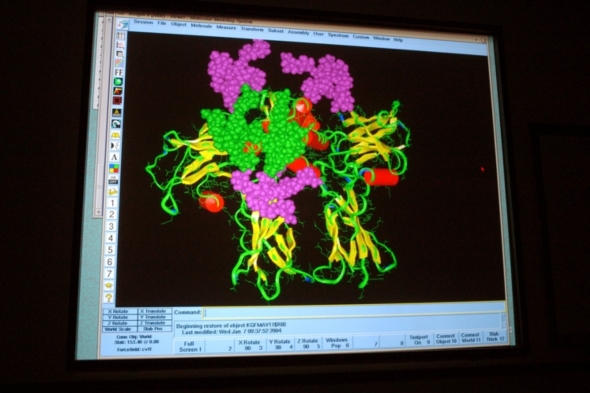
One summer afternoon, Chevalier demonstrated the principles of protein folding to students attending a laboratory tour. On his computer screen, he showed how a planar protein molecule could be folded into a cup-shaped structure and then unfolded back into its flat conformation. “This process is complex,” he said, “but designing proteins for therapeutic purposes will be even more challenging.”
“It’s not simply a matter of figuring out how to fold protein molecules into the shape of a cup. When you make a cup, the emphasis is on its rigid, durable properties and its ability to hold water. For designed proteins, we care not only about their shape but even more about their function and stability,” said Chevalier.
The human body contains tens of thousands of proteins, which serve not only as essential structural components but also as carriers for intracellular and systemic transport, enabling substances to move freely and precisely within cells and organisms with an accuracy comparable to that of Swiss watches. “The goal of protein engineering is to design novel proteins for disease treatment,” said Don Hilvert, Professor of Organic Chemistry at ETH Zurich and collaborator with Baker.
In the past, scientists leveraged their knowledge of thermodynamics and biochemistry, combined with intuition, trial and error, to identify potential drug candidates. Now, Baker’s team can use software programs to construct models of target proteins, specifying their size, shape, chemical properties, and mechanisms of action. Meanwhile, the Rosetta software provides them with a vast array of candidate structures for testing.
In the computer laboratory, product development engineers and protein engineers fixated their gaze on screens, leveraging Rosetta to design and refine protein models. This software can sift through vast combinations of amino acids to identify proteins with the desired shape, size, and chemical properties. In theory, this is achievable and does not violate the laws of physics.
However, Neil King, an investigator in product development management, stated: “This is entirely a computer’s imagination.”
Given Rosetta’s ability to rapidly simulate a large number of molecules, Baker and his team also published a related article in the July issue of Science. The paper primarily details their research on “molecular classes” for drugs, introducing ten distinct classes, all of which consist of molecules not found in nature.
Once Rosetta completes the protein design, scientists test the proteins. They then search online for the required DNA sequences and insert these sequences into bacteria or yeast to undergo transcription and translation, thereby producing new proteins.
Chevalier designed proteins based on viral antibodies, which achieve better therapeutic effects by locking onto viruses within human cells. Meanwhile, the Rosetta software provides Chevalier with alternative protein structures to reduce his workload. The next challenge is to demonstrate to the public that his designs are effective.
Chevalier stated, “Considering the properties of antibodies, which circulate throughout the human body via the bloodstream, their design does not need to account for storage and transportation under frozen conditions, nor for issues such as mass production, solubility, and purification and concentration.” Chevalier aims to start from scratch to engineer proteins with these characteristics, thereby developing new drugs that are cost-effective and structurally stable.
Although Chevalier has not yet succeeded, he has tested a highly stable protein in mice. An article published this February indicated that this protein can prevent influenza.
Laboratory operations have primarily been funded by government and nonprofit grants; however, Chevalier and Baker have secured funding from Takeda Pharmaceutical Company Limited of Japan and established a company named Virvio to further advance their work.