

Human Longevity Inc. Files IPO Prospectus to Build World's Most Comprehensive Genomic Database
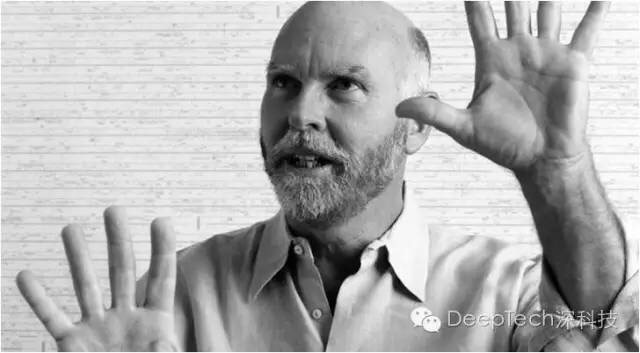
Image source: btownerrant.com
On October 14, 1946, Craig Venter was born into an ordinary family in Salt Lake City, Utah, USA. His free-spirited upbringing fostered his lifelong curiosity, competitive drive, adventurous spirit, and creativity. He had little affinity for formal schooling, frequently engaging in rebellious behavior; he detested rote memorization and examinations, resulting in poor academic performance. However,Venter believes that formal education destroys the creativity of children who study diligently.
Years later,Venter’s own genetic analysis revealed that he carries a large number of gene variants associated with an increased risk of attention deficit hyperactivity disorder (ADHD).
After graduating from high school, Venter enlisted in the military,IQ Test Score Reaches 142, he was the tallest among thousands of new recruits in his cohort. He trained as a medic and was deployed to Vietnam. During this period, he secretly accessed his personnel file and removed the disciplinary record issued for insubordination against a superior. However, he had also been confined to barracks during training for selflessly assisting a Black fellow serviceman who was subjected to unjust corporal punishment.
In Vietnam, he even attempted to swim back to the United States by jumping into the sea; fortunately, he came to his senses halfway and returned. Genetic analysis revealed that a gene in Venter responsible for producing enzymes that control muscle movement was normal, endowing him with muscle endurance far exceeding that of the average person; otherwise, he would likely not have made it back. He was in VietnamConfronting life and death on a daily basis led him to pursue a career dedicated to unraveling the mysteries of life.
After retiring from military service in 1969, Venter entered university and embarked on a career in biological research under the guidance of the renowned biochemist Nathan Kaplan. His excellence was unquestionable—upon completing his Ph.D. in 1975, he received three job offers, while his peers struggled to secure even a single interview.
He enrolled at the New York University School of Medicine; however, his outspoken criticism of the low-quality dissertations produced by doctoral students under senior professors offended many colleagues. Ultimately, the tenure committee chaired by one of these senior professors denied him tenure. Nevertheless, he secured a professorship in another department and later moved with his research team to the National Institutes of Health (NIH).
At the time, the idea of sequencing the entire human genome had already been proposed, but the inefficiency of sequencing technologies led many experts to dismiss it as “pure fantasy.” Venter boldly stepped into this emerging frontier,Shifted my research focus to the emerging field of genomics and achieved numerous results; however, behind this success lay a fierce struggle for academic resources.
To secure additional resources for advancing his research, Venter entered the business world by founding Celera Genomics and embarked onThe Human Genome Project: A Race Against Each Otherresearch plan, achieving remarkable accomplishments that have drawn worldwide attention.
But as he escaped the factional struggles within academia and the red tape of government agencies, he also had to contend with the pressure from investors pursuing short-term commercial gains. In 2002, the board of directors of Celera Genomics dismissed Venter. He returned to the academic circle.
In May 2010, the J. Craig Venter Institute announced the world’s first synthetic life form—a single-celled bacterium with a completely synthetic genome. Venter named this “synthetic life” “Synthia” (meaning “synthetic child”).
◆ ◆ ◆ ◆ ◆
Recently, DT had the honor of conducting an exclusive interview with Craig Venter.
Today, at Human Longevity Inc. in La Jolla, California, more than 20 automated gene-sequencing instruments distributed across three rooms operate around the clock, completing the sequencing of a human DNA sample every 15 minutes at a cost of no more than $2,000. Craig Venter is the co-founder of Human Longevity Inc., which was established in 2013.
During the interview, Venter showed us his latest research findings on a computer—DNA sequencing of 1,000 individuals and subsequent reconstruction of their facial features based solely on DNA data.
Venter stated that DNA can be used to predict a person’s facial features, height, body mass index (BMI), iris color, hair color, and hair texture. He expressed hope that, in the near future, DNA-based facial predictions will rival the accuracy of photographs.
However, he also stated that predicting facial appearance from DNA is merely child’s play; the ultimate goal is to use DNA to detect potential diseases of the aorta and spinal cord.
As of today, it must be acknowledged that human understanding of the relationship between genes and diseases remains superficial. Even for gene sequences that have been relatively well studied, their application in guiding drug development continues to encounter significant obstacles.
For example, through sequencing his own genome, Venter discovered that he carries a favorable variant of the cholesteryl ester transfer protein (CETP) gene, which lowers his risk of heart disease and stroke compared to the general population.
As research deepens, scientists have discoveredThe Relationship Between Genes and Diseases Is Becoming Increasingly Complex. Venter is undaunted by this complexity. He believes that comprehensive analysis of genomic big data and other medical data can unravel this complexity.
Ruth March, a senior executive at AstraZeneca, stated,Human Longevity Inc.’s technology can already compare the genetic sequences of tens of thousands of individuals and identify subtle variations, which will significantly advance our understanding of disease mechanisms and accelerate drug development.
However, beyond comparing gene sequences, to fully unravel the mysteries of life encoded within the approximately 20,000 human genes, scientists also need to correlate an individual’s genetic data with other personal information. Data have already shown that gene expression is associated with environmental factors and acquired behaviors; therefore, records of drug responses, magnetic resonance imaging (MRI) scans, and other medical records constitute valuable resources.
Venter believes that,By comprehensively analyzing these data, Human Longevity Inc. is poised to achieve precision medicine and tailor optimal treatment plans for individual patients.。
However, analyzing petabytes of genomic data generated from one million genomes and identifying correlations between genes and diseases requires an astonishing amount of computational power. Therefore, Venter recruited Franz Och. Previously the lead expert for Google Translate, Och possessed top-tier expertise in developing language translation systems. Och stated that, in essence, genomic analysis involves translating various “words” representing diseases in the genetic “language” into corresponding terms for those diseases in human language, thus making it akin to aLanguage Translation Issues。
However, an individual’s genetic data comprises 6.4 billion letters, making it highly challenging.For instance, degeneration of the hippocampus in the brains of Alzheimer’s disease patients begins many years before symptoms manifest. By leveraging machine learning to compare patients’ genetic data with brain magnetic resonance imaging (MRI) scans, researchers can identify gene sequences that indicate an increased risk of Alzheimer’s disease. This approach enables early diagnosis and prevention of the disease.
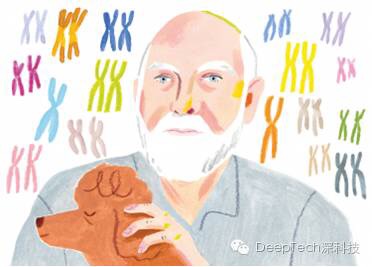
Ken Bloom, CEO of Human Longevity Inc. and head of its oncology program, stated that the company will design targeted cancer vaccines based on patients’ genetics. This therapy begins by sequencing the genes of both the patient’s normal cells and tumor cells, using this information to design a personalized vaccine, whileThe vaccine enables the human immune system to recognize and attack these cancer cells, thereby completely preventing their recurrence.。
Venter told VCBeat that his goal is to sequence the DNA of at least 1 million people within 10 years, and to leverage genetic data, medical records from DNA donors, and other healthcare data toIdentify the one-to-one correspondence between specific DNA sequences and diseases. In this way, gene sequencing can be used toEarly detection of risks for diseases such as cancer and heart disease, enabling early prevention or targeted treatment.
Venter, now 69 years old, has already from includingRaised $300 million from investors including General Dynamics Venture Capital, biotechnology company Celgene, and Illumina to support the operation of sequencing equipment.Furthermore, Human Longevity, Inc. has entered into collaboration agreements with British pharmaceutical giant AstraZeneca and Genentech, a South San Francisco-based biotechnology company controlled by Roche, to obtain gene samples from both companies.
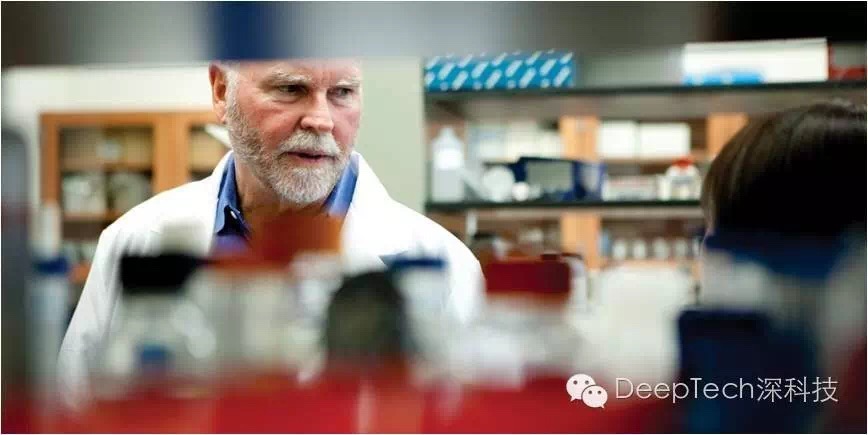
Meanwhile,In 2015, he launched a bold initiative called the Health Nucleus.. Customers of the Health Core Program are required to pay $25,000. Upon arrival at the company headquarters, they will spend 90 minutes in a private consultation room, where their attending physician will document their family medical history and collect blood samples. Subsequently, patients will undergo a series of medical tests, including whole-body magnetic resonance imaging (MRI) scans and 4D cardiac ultrasound scans (which enable real-time visualization of three-dimensional blood flow within the heart).
Subsequently, the patient may return home but is required to wear a Band-Aid-sized sensor on the chest for the next two weeks to record electrocardiogram (ECG) data. Via a mobile app, the patient can tap on various parts of a 3D human body model displayed on the screen, such as the heart and brain. The system will then provide information on gene profiles associated with the selected region and assess any disease risk for that area.
Currently,220 patients have paid to participate in the project.
The public was not quite accustomed to such aggressive services at first.Arthur Caplan, a professor of bioethics at NYU Langone Medical Center, is a long-time friend of Venter and previously served as an advisor to companies founded by Venter.
He stated,The Health Core Project has raised numerous ethical and social concerns., for example, who will pay for this type of genetic sequencing and personalized medicine? Are these genomic medical services worth the cost? Kaplan stated that, at least for now, health insurance plans do not cover genetic sequencing, so individuals must pay out-of-pocket for such services. Consequently, it is unlikely that everyone can afford genomic medical services; only the wealthy will be able to purchase them.

Median Household Income by U.S. State, 2014. Source: U.S. Census Bureau
The chart above illustrates the median annual household income by U.S. state in 2014. “Median” indicates that half of the households in a given state had an annual income below this figure.As shown in the figure, even in states with generally higher household incomes, $25,000 exceeds one-third of the median annual household income.. Therefore, without insurance coverage, it is indeed difficult for ordinary Americans to access genetic sequencing services. It should be noted that,If only whole-genome sequencing of the human body is performed, it would not cost that much.。
Illumina was named one of the 50 Best Innovators of 2014 by MIT Technology Review. In January 2014, the company announced that its gene-testing microarray had reduced the cost of whole-genome sequencing for an individual to $1,000.
However, as a new product, Venter’s service is not limited to gene sequencing; it also involves the use ofConduct comprehensive health examinations using state-of-the-art medical equipment, while also integrating and analyzing personal genetic data, examination results, and family medical history to derive diagnostic outcomes.Therefore, the price is inevitably higher than that of standalone gene sequencing.
In response to concerns over the high cost, Venter stated that chemotherapy and other treatments for late-stage cancer typically cost far more than the $25,000 price tag of gene sequencing, yet often fail to save patients’ lives. Does this not provide ample justification that investing in gene sequencing for targeted disease prevention offers greater value than spending on late-stage cancer treatment?
Nevertheless, Venter is already addressing this issue. He has hired actuaries to demonstrate that the sequencing services offered by Human Longevity, Inc. provide good value for money, with the aim of urging insurance companies to include genetic sequencing services in their coverage.
This article is republished with permission from “DeepTech” (WeChat Official Account: mit-tr). Secondary redistribution is prohibited.