

Bay Labs Files IPO Prospectus to Expand AI-Powered Ultrasound Diagnostics in Developing Countries
As artificial intelligence applications continue to expand across various sectors, VCBeat (WeChat: vcbeat) will publish a series of reports on the AI + healthcare field both domestically and internationally, covering typical case studies, investment and financing trends, and industrial landscape developments, to serve as a reference for investors and entrepreneurs in the industry.
This article introduces an AI startup dedicated to the development, improvement, and testing of machine learning technologies. By leveraging deep learning to enhance the clinical adoption and diagnostic accuracy of ultrasound, it serves as a typical example of entrepreneurship in the AI+healthcare sector.
Currently, global annual spending on ultrasound medical devices amounts to $5.8 billion. Ultrasound medical imaging offers numerous advantages, including real-time image acquisition, non-invasive scanning, low equipment costs, and no known side effects (as ultrasound is a form of non-ionizing radiation). However, the inconsistent quality of ultrasound diagnostic techniques has significantly hindered their application and development. Consequently, in clinical practice, more expensive medical imaging modalities that involve ionizing radiation and pose greater health risks are often preferred. Bay Labs, a deep learning software development service company, aims to develop, improve, and test machine learning technologies to enhance the clinical utilization and diagnostic accuracy of ultrasound through deep learning.

Bay Labs: Committed to Enhancing the Quality, Value, and Accessibility of Medical Imaging
Bay Labs was founded on November 12, 2013, and is headquartered in San Francisco, California. Currently, Bay Labs’ primary business is the development and sale of software that uses deep learning technology to diagnose rheumatic heart disease. On February 4, 2015, Bay Labs secured a $1.6 million investment from Eleven Two Capital; it subsequently raised $2.5 million in seed funding from the venture capital firm Khosla Ventures. Deep learning experts Yann LeCun (Head of Facebook AI Research), Nicolas Pinto, and Jack Culpepper also invested in Bay Labs.
Implementing AI-based diagnosis for ultrasound imaging requires significantly more research effort and is far more complex to process than simple medical image recognition. Due to the dynamic nature of ultrasound imaging, Bay Labs’ system essentially analyzes ultrasound features from video data when employing deep learning methods to make intelligent medical assessments.
However, Bay Labs has developed its own approach to address this challenge: by leveraging intelligent video analytics, it can conduct detailed analyses of ultrasound scan videos and create user-specific models that account for the unique characteristics of each ultrasound dataset. This significantly simplifies the entire workflow of ultrasound imaging, from image acquisition and editing to clinical assessment. According to co-founder Cadieu, many hospitals are likely to adopt their ultrasound medical imaging diagnostic technology in the future, as it can substantially reduce the cost of ultrasound diagnosis.
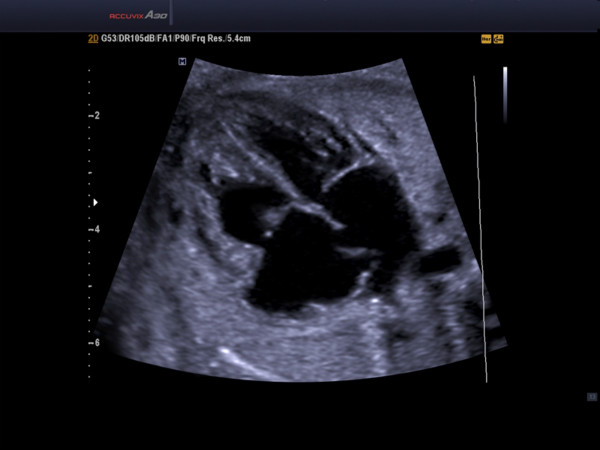
Echocardiography
Bay Labs has twice received awards from the U.S. Small Business Innovation Research (SBIR) program. In the SBIR Phase I project titled “Semantic Analysis Technology for Video Content Extraction and Video Recommendation,” Bay Labs employed neural network technologies to assess the technical feasibility of an automated video content extraction system. The system automatically distills videos into concise collections organized by specific topics, thereby alleviating information overload caused by video proliferation, and was awarded $149,000. In the SBIR Phase II project titled “Ultrasound-Guided Localization System,” Bay Labs leveraged deep learning to enhance ultrasound diagnostic and therapeutic techniques, receiving an SBIR award of $741,000.
From the perspective of award recognition, Bay Labs has indeed gained a certain degree of external acknowledgment in the fields of image and video recognition and processing, as well as in the application of deep learning to ultrasound medical imaging.
The company has three founders: Kilian Koepsell, Charles Cadieu, and Johan Mathe. The founders boast extensive research backgrounds, with their passion for neuroscience and computer science evident from their comprehensive publication records.
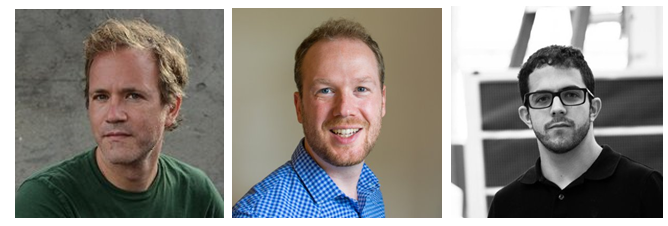
Bay Labs’ three founders: Kilian Koepsell (left), Charles Cadieu (center), and Johan Mathe (right)
Kilian Koepsell has over 20 years of research experience, with his scientific career dating back to 1997. He completed postdoctoral fellowships at the Max Planck Institute for Gravitational Physics in Germany, King’s College Cambridge, and the Redwood Center for Theoretical Neuroscience. His research interests span symmetric group theory, neuroscience, and deep learning. He has founded two companies: White Matter Technologies, which developed a psychophysical evaluation platform using image and video compression algorithms to biomimetically simulate the human visual system; and IQ Engines, Inc., which created “Glow,” an image recognition platform capable of identifying scenes, objects, landmarks, text, and people, and was acquired by Yahoo in 2013. Subsequently, Koepsell worked at FiveStars, a customer identification platform, where he researched how to leverage big data, predictive analytics, and cloud-based automated marketing to enable personalized transactions at offline point-of-sale locations.
Charles Cadieu served as a postdoctoral researcher at the University of California, Berkeley, and MIT, and worked as a research scientist at IQ Engines, founded by Koepsell. His primary research interests include visual information processing, computational neuroscience, and deep learning technologies. Johan Mathe is a “mad scientist” who previously worked at Google. His research areas encompass optimization, applied mathematics, embedded development, signal processing, and physics. His work involves “creating crazy things and figuring out ways to identify their failures and shortcomings as quickly as possible.”
Bay Labs is now focusing more on assisting regions with underdeveloped medical infrastructure. In developing countries where the diagnosis and treatment of rheumatic heart disease lag behind, particularly in rural areas with a scarcity of sonographers, there is a severe shortage of professionals capable of performing medical diagnostics. In these resource-constrained settings, deep learning technologies that assist in interpreting ultrasound images can play a more significant role. The company has begun collaborating with David Adams, a cardiac ultrasound expert at Duke University Medical Center, who frequently provides medical aid in developing countries and teaches nurses the fundamentals of cardiac phonocardiography.

Committed to Improving the Current State of Ultrasound Medical Diagnosis in Developing Countries
Adams stated that he would bring Bay Labs’ ultrasound diagnostic software on his upcoming trip to Rwanda and later this year to Kenya.
Series Report:
$1.4 Billion in Global AI + Healthcare Financing from 2011 to H1 2016
[AI Series] How Does AnalyticsMD Enable Hospitals to Make Data-Driven Decisions with AI?