

New Medical Services Under the Impact of Mobile Internet and Artificial Intelligence
On August 19, 2016, the Beijing leg of DemoHealth 2016 Innovative Healthcare Entrepreneurship Competition (Medical Devices and Mobile Health Special Session) concluded successfully at the Beijing Exhibition Center. The competition was honored to invite Leng Yan, Investment Director at Legendstar Capital, who delivered an insightful presentation on “New Medical Services in the Era of Mobile Internet and Artificial Intelligence.”
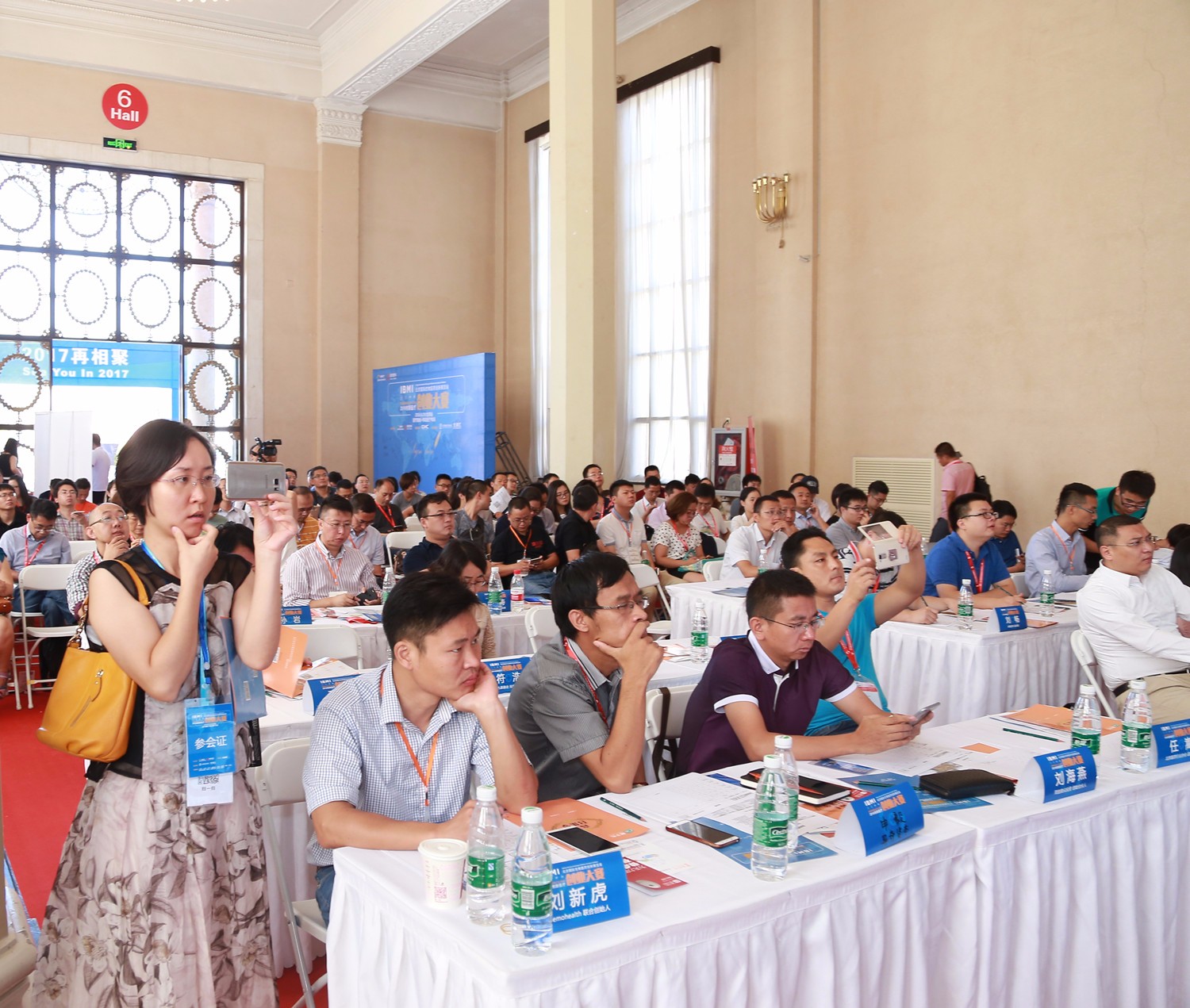
DemoHealth 2016 Innovative Healthcare Startup Competition – Beijing Event
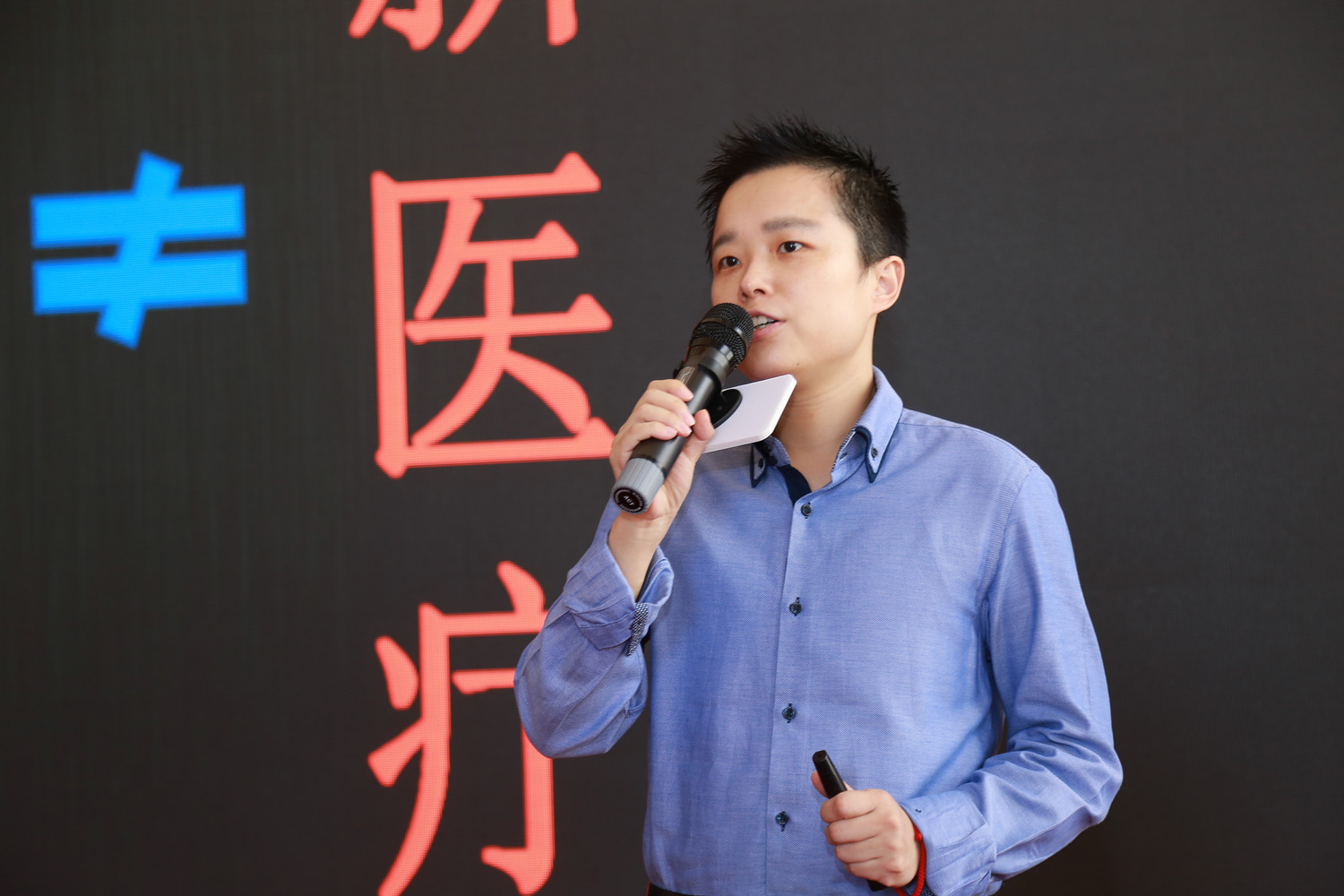
Leng Yan, Investment Director at Legendstar Capital, Delivers Keynote Address at Demohealth
Leng Yan: Investment Director at Legendstar Capital. She holds a Bachelor’s degree in Bioengineering from Xiamen University and a Master’s degree from the School of Economics and Management at Tsinghua University. With 13 years of experience in the healthcare industry, including six years specializing in mergers and acquisitions within the pharmaceutical sector, she joined Legendstar Capital in 2013 to focus on angel investing in the medical field. Her investment priorities include biopharmaceuticals, molecular diagnostics and gene sequencing, tumor immunology and cell therapy, as well as medical-grade sensors and data acquisition terminals. She has executed numerous investments in these areas, leading early-stage healthcare deals such as Burning Rock Biotech, PegBio, Ribobio, ZhiKang Pharma, Shulian Yixin, Aiji Taikang, Guangjing Biology, Coyote Bioscience, and Yu Ying Medical, among more than ten cases.
Mobile Health 1.0: Establishing Connections
Around 2010, mobile internet began to be applied across various sectors. From 2010 to 2012, the focus was primarily on utility-based products; from 2012 to 2014, content- and community-oriented products became more prevalent. The period from 2013 to 2016 marked the phase of large-scale transformation of traditional industries by mobile internet. Initially, industries that were easier to standardize and where connectivity could directly match demand and facilitate transactions—such as ride-hailing and food delivery—were transformed, fundamentally disrupting their traditional models. Starting in 2014, the internet began to reshape traditional industries more deeply, such as real estate sales and domestic services. While these sectors can be transformed, they have not achieved the explosive growth seen in the first category. The third category, exemplified by education and healthcare, represents industries that are difficult to transform successfully through mobile internet alone. The healthcare sector is characterized by stringent regulation and a shortage or misallocation of high-quality medical resources. Although the integration of internet technologies has improved efficiency, it has not resolved the core issues of insufficient supply or misallocation, and thus has yet to fundamentally reshape the industry.
Therefore, the transformation of traditional industries by mobile internet has largely run its course; those amenable to change have already been transformed, and those poised for explosive growth have already surged. At this juncture, industries that have not yet been successfully transformed cannot be revamped through mobile internet alone. Instead, new technologies are required to upgrade mobile internet itself, thereby jointly enabling the transformation of certain heavily complex industries.
In the healthcare sector, the primary business model of Mobile Health 1.0, an era centered on connectivity, involves establishing links among various healthcare-related elements. For instance, appointment registration connects patients with large hospitals, while "visiting specialist surgeries" (feidao) connect renowned physicians with smaller hospitals to address patient needs. Additionally, some lightweight medical services occur directly between patients and leading physicians, and communities facilitate connections between senior and junior doctors. Other efficiency-enhancing connectivity models exist but are not exhaustively listed here.
Why Is It So Difficult for Traditional Healthcare to Evolve into New Healthcare?Some perspectives attribute this difficulty to resistance from “traditional forces.” Entrepreneurs in mobile health often complain, “Why can’t you doctors embrace new innovations?” Doctors respond, “We have embraced them, but if you fail to solve the core problems, what is the point of our continued adoption?” This raises a pertinent question: Should it be “Internet + Healthcare,” or rather “Healthcare + Internet + Other Elements”?When the transportation industry underwent transformation, drivers initially resisted. They even mounted clear opposition when ride-hailing services began encroaching on their livelihoods. Yet today, such resistance has proven futile. Therefore, opposition alone is by no means the reason why transformation efforts have stalled. The so-called “traditional forces” are capable of sustaining prolonged resistance primarily for two reasons:First, healthcare services differ fundamentally from basic necessities such as clothing, food, housing, and transportation. As consumption upgrades and demand rises, consumers may seek premium experiences in many sectors. However, healthcare involves matters of life and death, where successful treatment holds veto power over all other considerations. In healthcare, curing the disease is the paramount objective, while patient experience ranks second or even lower. Consequently, transforming healthcare requires a protracted and cautious evolutionary process.Second, healthcare is inherently complex, involving numerous interconnected factors. This complexity dictates that any transformation must advance simultaneously across multiple dimensions. Moreover, the pace of change is constrained by the slowest-moving elements among various boundary conditions.
From a results-oriented perspective, the first wave of mobile internet technology clearly did not achieve a deep transformation of healthcare services. Nevertheless, its positive significance is undeniable, as the old system has begun to loosen and connectivity channels among various elements have been established.
The Transition from Traditional Healthcare to New Healthcare Requires Addressing Three Key Issues
The key to problem-solving lies in the imperative transformation across at least three dimensions: enhancing service efficiency, improving medical efficacy, and boosting treatment outcomes. These correspond to three keywords: experience, supply, and methods. Only by exerting joint efforts across these three aspects can a new landscape of medical service supply be established.Improving service efficiency focuses on experience, including changes in processes, payment reforms, and matching supply with demand. In this regard, the first wave of internet development has performed well, establishing numerous connections and significantly loosening the rigidities of the old system, which represents the positive impact brought by the first wave of the internet.The supply of high-quality medical services is either scarce or mismatched, which constitutes the core issue of medical supply. The development of big data and artificial intelligence, combined with mobile internet technologies such as intelligent image reading, assisted diagnosis, and smart monitoring, has significantly transformed the improvement of medical service supply.While connections have been established and both efficiency and supply have improved, the essence still requires a solution capable of achieving better treatment outcomes. This includes the research and development of new drugs, the introduction of new therapeutic devices, and the emergence of novel treatment modalities—this is the driving force of biotechnology for the entire healthcare industry.The transition from traditional medicine to new medicine requires all three directions; none are dispensable. The formation of a new medical landscape cannot be achieved by relying solely on mobile internet as a single driver. It requires multi-wheel drive. Therefore, it is not merely "Internet + Healthcare," but rather "Healthcare + Internet + Artificial Intelligence + Biotechnology," and potentially even more.
New Healthcare 2.0: Internal Revolution or External Reshaping
The landscape of new medical services is not a patchwork or simple retrofitting of traditional healthcare; it must be reshaped from the outside. For instance, I hold a relatively negative view (purely my personal opinion) on physician groups within the public system from an investment perspective. Essentially, so-called “in-system” physician groups are no different from the various sub-committees of medical associations in the past; they merely represent a realignment of factions. It is akin to being in one medical investment chat group and then being invited by another group admin into a different one, only to find that you already know most of the members. Therefore, I believe such moves carry little significance. That said, while I remain skeptical about the success rate of this form of internal entrepreneurship, I maintain a positive outlook on the substantive value of physician groups. What do I mean by “substantive”? It refers to physicians themselves. Physician resources are the core and bottleneck in realizing the reshaping of new medical service models. The liberation of productivity cannot happen overnight; it requires a process and pioneers to blaze the trail. These pioneers must endure pressure, misunderstanding, and even disdain from their peers—which is why pioneers are always a minority. Most people will become followers at different stages. Once the number of followers reaches a critical mass, the emergence of a new landscape becomes unstoppable.
The Essence of New Healthcare 2.0: Empowering Scarce Resources
With the evolution of mobile internet, three classic pitfalls or misconceptions have emerged in its application across various sectors: first, attempting to drive high-frequency engagement through low-frequency services; second, using low-value offerings to lead into high-value ones; and third, transitioning from non-commercialized models to commercialized ones. These three approaches are generally regarded as misconceptions when mobile internet transforms other industries, and they are also issues that warrant careful consideration in the healthcare sector. For instance, suppose I operate a physician community where many doctors, both senior and junior, discuss clinical cases and engage in academic exchanges. If one day I introduce another product on this platform, will physicians be willing to pay for it? Alternatively, if I develop a tool that effectively helps manage patients or improve work efficiency, achieving high daily active users, and then attempt to monetize through “flying knife” services (where experts travel to perform surgeries), will physicians be willing to pay for this model? Can they seamlessly transition from using the tool in Scenario A to adopting it in Scenario B? These are critical questions that must be addressed when designing business models.
When it comes to physicians, there is a well-known saying: “He who wins over physicians wins the market.” However, interpretations of this phrase vary. What does it truly mean to “win over physicians”? Does it simply mean creating a platform populated by numerous active doctors? In my view, the essence of “winning over physicians” lies in providing them with a secure channel to unleash their professional value—that is, empowering physicians. We know that in traditional healthcare systems, hospitals are strong while individual physicians are relatively weak, as physicians depend heavily on hospitals. The greatest value of mobile internet development has been the reallocation of key factors: it re-empowers both production resources and individuals, redefines value, and, to some extent, breaks down and lowers previous barriers and thresholds.Meanwhile, the application of artificial intelligence (AI) and deep learning technologies in healthcare is drawing ever closer, especially since IBM Watson entered the Chinese market. The question of whether physicians will be replaced by machines is essentially moot. Fundamentally, new-generation technologies are empowering scarce resources and providing technical support for the transformation toward Healthcare 2.0. It is precisely this empowerment that brings us closer to the vision of “New Healthcare.” Therefore, I consider it fortunate that the first wave of mobile internet has already established connectivity, and AI and machine learning have begun to permeate the healthcare sector. The convergence of various technologies and boundary conditions is driving the formation of new models and landscapes in our industry—a development that is highly promising and worth anticipating.
Authors: Wang Li, Leng Yan
Source: UTO Space