

MC-1(T) Magnetotactic Bacteria-Based 'Bio-Missile' Platform Files for IPO, Offering Precision Cancer Targeting with Reduced Chemotherapy Side Effects
Recently, Nature magazine reported that researchers from Polytechnique Montréal and McGill University have achieved a new breakthrough in cancer treatment. By utilizing a specialized bacterial strain as a drug delivery vehicle, they can precisely target cancer cells and deliver medication, significantly reducing both dosage and side effects.
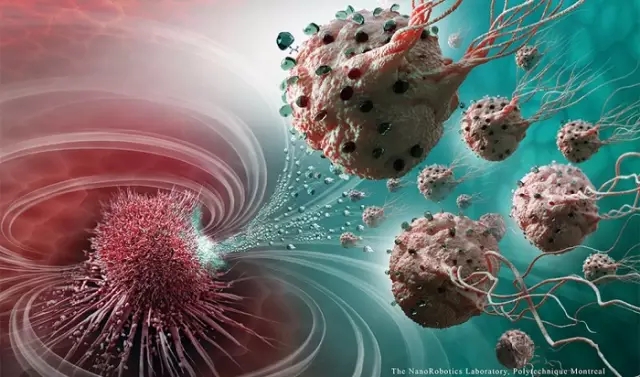
Drug-Loaded “Biological Missiles” Are Attacking Cancer Cells
Conventional chemotherapy has significant limitations. Chemotherapeutic agents are highly toxic and can kill rapidly proliferating cancer cells. Unfortunately, these drugs lack specificity, often destroying a portion of normal human cells while killing cancer cells, thereby causing harm to the body and resulting in severe side effects.
Is there a method that can selectively kill cancer cells while preserving normal human cells? Attention has turned to targeted therapy. Targeted therapy involves designing therapeutic agents at the cellular and molecular level to act on well-defined oncogenic sites. Once administered, these drugs specifically bind to and interact with the oncogenic targets, inducing selective death of tumor cells without affecting the surrounding normal tissues.
Martel is the Director of the Canadian Nanorobotics Research Center and has been engaged in research on tumor-targeted therapy for 15 years. Initially, he envisioned using microrobots, commonly known asNanorobots, under the influence of a magnetic field, drugs are delivered to specified locations via the bloodstream. However, he regretfully stated, “This is beyond current technology; we are unable to manufacture such nanorobots.”
Consequently, Martel turned his attention to nature: Does a bacterium with such characteristics exist? As it turned out, his hypothesis was correct. A type of bacterium known as magnetotactic coccus uses flagella for propulsion to swim in water. These bacteria are naturally equipped with iron-containing “compasses,” granting them navigational capabilities. This means they can orient themselves using magnetic fields.
MC-1 bacteria belong to the magnetococci group. Among them, a magnetococcus strain designated MC-1(T) was discovered in the hypoxic waters of the Pettaquamscutt Estuary in Rhode Island; this strain exhibits both magnetotaxis and aerotaxis toward low-oxygen environments. It is well established that cancer cells are characterized by rapid proliferation, a process that consumes substantial amounts of oxygen. Consequently, regions with extensive cancer cell proliferation inevitably become hypoxic. Therefore, identifying these hypoxic zones is equivalent to locating large populations of cancer cells.
If MC-1(T) cocci are injected into the human body and guided to the vicinity of tumors through magnetic field control, they can automatically locate areas within the tumor where cancer cells are proliferating extensively, thereby solving the challenge of targeting cancer cells in targeted therapy.
How is drug loading achieved? The drug is encapsulated within a lipid vesicle, serving as a miniature drug-carrying pouch. Martel, in collaboration with researchers from Polytechnique Montréal and McGill University, designed a chemical “Velcro-like” linker that securely anchors these drug-loaded pouches to the surface of magnetotactic bacteria. By centrifugally mixing the bacterial cells with the drug-loaded liposomes, drug-loaded bio-hybrid bacteria are obtained, with each bacterium capable of binding approximately 70 liposomes.
As for the specific efficacy, researchers conducted multiple experiments on a mouse with rectal cancer. Several milliliters of drug-loaded bacteria were injected into the mouse. The researchers used a weak magnetic field to guide the bacteria to the tumor region, and then relied on the bacteria’s hypoxia-taxis to automatically navigate to the most active part of the tumor. The experimental results showed that the bacteria survived in the mouse for only about 30 minutes. This indicates that the mouse’s body temperature was too high for the bacteria.
Fortunately, these bacteria swim extremely fast, at approximately 200 body lengths per second. This speed is ten times that of other cells, enabling them to rapidly reach tumor sites.By using special dyes, bacteria, drugs, and tumors in different regions can be distinguished. After the experiment, researchers observed the tumors and bacteria under a microscope. They found that approximately 55% of the 100 million bacteria entered the hypoxic regions of the mouse tumors.
Chemotherapy is associated with significant side effects. By leveraging these natural "biological missiles," drugs can be delivered directly to the target area to precisely eliminate cancer cells. This approach not only alleviates, and may even eliminate, the side effects of conventional chemotherapy, but also enhances the efficacy of both the drugs and therapeutic interventions, thereby substantially reducing patient suffering.
However, althoughTheoreticallyFeasibility has been demonstrated, but extensive testing is still required before this technology can be applied in clinical settings. As this is merely a proof-of-concept study, the researchers have not yet analyzed the impact of the released drugs on tumors. Nor do they know how the immune systems of non-human primates or humans would respond to bacterial injections.
Undeniably, this technology has not only broadened the horizons for nanorobots and fostered more advanced engineering concepts and intervention strategies, but also ushered in a new era for targeted therapy, imaging, and diagnostic agents.