

Specialty Clinics: The Offline Pathway of Internet Healthcare (Part III)
By Wu Chong
We believe that the development of internet healthcare in China will unfold in three stages: “Connected Healthcare,” where the internet links all elements of the healthcare industry; “Quality Healthcare,” where the internet enhances the quality of medical care; and “Controllable Healthcare,” characterized by cloud-based intelligent management of health insurance data. In 2016, the internet healthcare industry was progressing through the second stage under significant pressure, with typical models including internet hospitals, general practice/specialty clinics, and third-party medical service centers.
We believe that the expansion of internet healthcare into offline settings is not merely about converting online traffic into offline revenue, but rather involves more deeply breaking down hospital barriers, reshaping diagnostic and treatment processes, and improving medical efficiency and quality. This article explores the changes brought by internet healthcare to specialty clinics and hospitals.The following is a curated selection of highlights from VCBeat (WeChat Official Account: vcbeat).
Dual Evolution of Specialty Clinics/Hospitals: Marketization and Specialized Chain Operations
Setting aside public specialized hospitals (mostly established by the government for certain public health purposes, such as infectious disease hospitals and maternal and child health care hospitals), the development of private specialized clinics/hospitals originated from policy liberalization (with 2001 being a watershed moment), namely the promotion of healthcare marketization. The marketization of China’s healthcare system is divided into two levels: marketization of pricing factors and marketization of physician resources. The development of different professional fields has gradually unfolded in accordance with the varying degrees of marketization of these two factors.
1) Market-driven pricing mechanisms spurred the first wave of development in private specialized healthcare, with sectors requiring lower levels of professional technical expertise leading the way. As shown in Figure 1, plastic surgery, dentistry, and health check-ups, located in the bottom-right corner, are typical examples of this trend. Their services fall outside the scope of medical insurance coverage, and they exhibit the lowest technical complexity among specialized medical fields. Specialists in these three areas were the first to embrace market-oriented mobility, driven by the potential for higher incomes in private institutions (although it should be noted that plastic surgery and health check-up services rely relatively less on physicians).
2) Market-oriented allocation of physician resources is driving the second wave of development in private specialized healthcare, with higher-technology specialties beginning to gain momentum. Specialties with greater professional demands—such as obstetrics and gynecology, orthopedics, ophthalmology, dermatology, and traditional Chinese medicine—are adopting semi-marketized models for pricing and physician participation (where only value-added services are paid out-of-pocket, and physicians often engage through “flying knife” procedures or multi-site practice arrangements). The latest trend sees private capital increasingly penetrating high-technology specialties with substantial health insurance coverage, such as cardiology and oncology.
The natural next step in specialization is, of course, chain-based expansion.
Clinics are small in scale, have lower requirements for medical teams, and are easier to replicate. Chain dental clinics, health checkup centers, and traditional Chinese medicine (TCM) clinics are currently the most mature sectors, with large chain groups already operating hundreds of locations. The chain expansion of specialized hospitals is more complex and has a longer cycle; however, they can also achieve rapid growth by leveraging capital markets.
However, the chain development of traditional offline specialty clinics/hospitals faces challenges such as a shortage of specialist physicians and difficulties in branded chain management. The former involves the marketization of physician resources and medical skills training, while the latter pertains to the standardization of clinical treatment pathways and management processes.
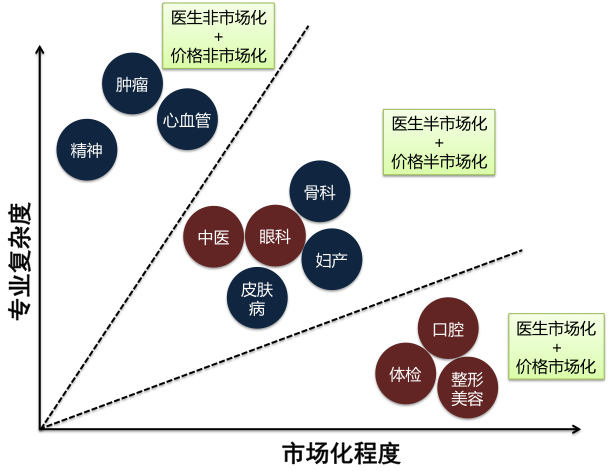
Figure 1 Development of Specialty Clinics/HospitalsData Source: National Health and Family Planning Commission
Internet Healthcare Promotes Marketization of Physician Factors and Standardization of Management
Internet healthcare was initially aimed at liberating doctors from institutional constraints. Typical examples include Chunyu Doctor’s online consultations and WeDoctor Group’s internet hospitals, which provide platforms enabling physicians to connect with patients’ medical needs outside of public hospitals. Most other internet-based specialty chronic disease management platforms have also leveraged tools and communities to aggregate doctors and patients before further developing offline clinics, such as Weitang in the field of diabetes and Aiding Doctor in reproductive health. The “catfish effect” generated by the “Internet Plus” initiative has also prompted the government to accelerate the introduction of policies encouraging multi-site practice and even independent practice for physicians.
Taking traditional Chinese medicine (TCM) consultations as an example: online apps reach users, attracting hundreds of thousands of users through home-visit physician services (at homes, communities, and workplaces); leveraging physical offline clinics, the platform enables multi-site practice and treatment matching for over a thousand TCM practitioners. These two aspects significantly expand the user base and the number of contracted physicians for individual clinics, overcoming the geographical and spatial limitations of traditional clinics.
On the other hand, internet-based healthcare is also enhancing the standardization of traditional clinic management by starting with informatization. The new SaaS platforms not only involve simple administrative functions but also comprehensively integrate all features necessary for chain management, including CRM, supply chain management, clinical pathways, electronic medical records (EMR), physician management, payment processing, and financial and operational analytics. Their SaaS customer base essentially constitutes a “virtual chain group” that embodies standardized management.
Take Linkedcare as an example: Its online dental clinic management platform, “Linkedcare,” targets the operational management of independent or small-chain dental clinics. Its inventory management system extends into supply chain management, while its payment system integrates with installment-based consumer finance and commercial medical insurance to help clinics acquire patients. Doctor-facing tools support the standardization of clinical pathways and physician training, thereby connecting “patients–clinic customer bases–payers” to form a virtual chain group.
This article is authored by Wu Chong, an investment manager at Lian Fund, and does not represent the views of VCBeat (WeChat official account: vcbeat). This article was exclusively premiered after being edited by VCBeat. Please cite the source when reprinting. If you have more insightful ideas and perspectives on internet healthcare, we welcome you to share them with us.