

Addressing Supply-Side Constraints: The Core of Healthcare Reform and the Essence of the Medical Industry
The fundamental issue in the healthcare industry is the mismatch between supply and demand. Therefore, the core of healthcare reform lies in supply-side structural reform. Since physicians’ professional needs cannot be adequately addressed by the market and must be fully met by public hospitals, this has resulted in a rigid binding of physicians to public hospitals, hindering the mobility of medical talent. Consequently, the crux of healthcare supply-side reform is to decouple physicians from hospitals. Only by breaking the existing paradigm and enabling the flow of physician resources can new industry opportunities emerge.
Core Argument of This Chapter:
I. Supply in the Healthcare Industry Fails to Meet Demand
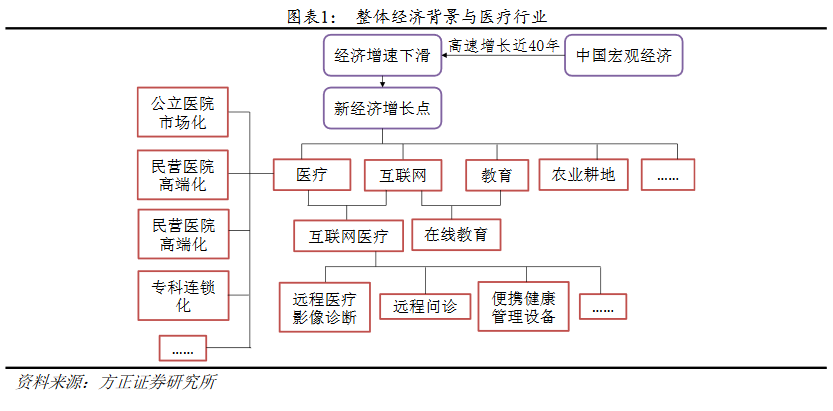
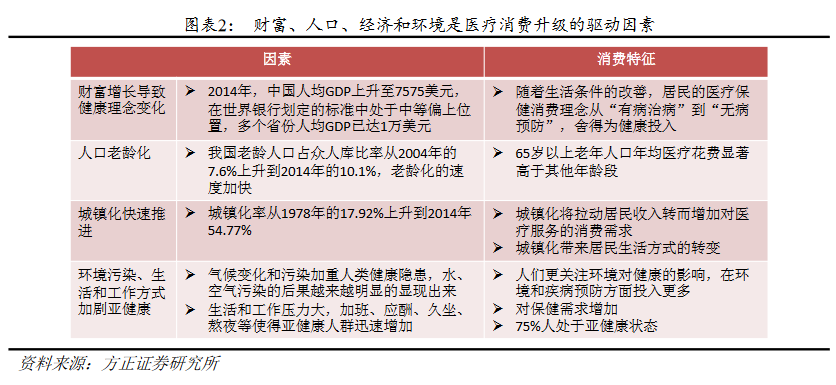
As China has become an upper-middle-income country, wealth growth, population aging, urbanization, environmental changes, and shifts in lifestyle and work patterns are driving increasing demand for healthcare, with more diversified and premium consumption of health products and services.
From the demand side, population aging, rising urbanization, lifestyle changes, wealth growth, and the advancement of universal health insurance are all driving rapid expansion of the healthcare services market. However, supply has grown at a markedly slower pace than the surging demand for healthcare services. In 2013, the number of healthcare institutions was 1.2 times that of 2004, healthcare personnel 1.5 times, and hospital beds 1.9 times. In 2013, there were 961,000 healthcare institutions and 6.182 million hospital beds; in 2014, there were 981,432 institutions and 6,601,214 beds; in 2015, there were 983,528 institutions and 7,015,220 beds.
The fundamental issue in China’s current healthcare industry is insufficient supply, manifested as inadequate overall capacity, structural imbalances, and scarcity of high-end medical services.
Insufficient Total Supply on the Supply Side
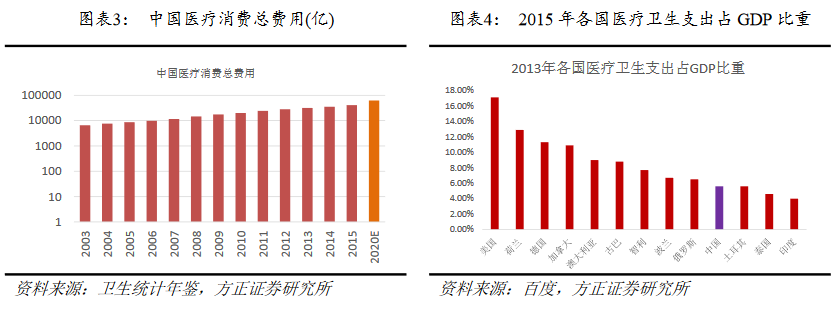
China’s total health expenditure reached RMB 3.2 trillion in 2013, 4.2 times the 2004 level, with a compound annual growth rate (CAGR) of 17.2%. It rose to RMB 3.5 trillion in 2014 and RMB 4.1 trillion in 2015. Despite this rapid growth, health expenditure accounted for only 5.6% of GDP, remaining below the levels observed in high-income and upper-middle-income countries. If this share were to reach the 6.5%–7% target proposed by the National Health and Family Planning Commission in its “Healthy China 2020” Strategic Research Report by 2020, China’s health care market would scale to RMB 6.2–6.7 trillion.
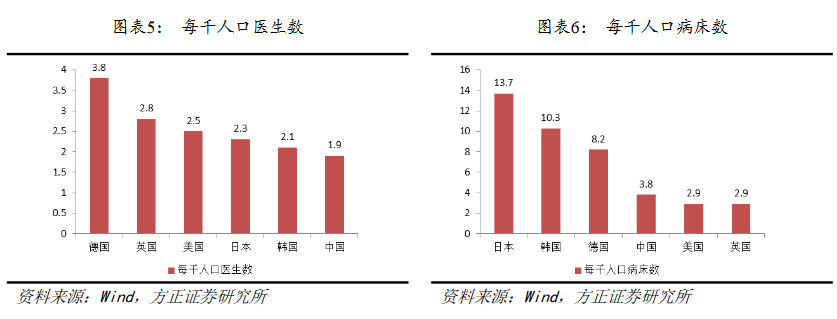
Although total healthcare expenditures continue to rise, the demand side remains inadequately met due to China’s large population base, as evidenced by indicators such as healthcare spending as a percentage of GDP, the number of physicians per capita, and the number of hospital beds per capita.
Structural Imbalance
The issue lies not only in the insufficient total supply but also in the unreasonable structure of healthcare services. Currently, major diagnosis and treatment activities are still concentrated in public tertiary and secondary hospitals. In China, over 40% of outpatient visits occur at tertiary hospitals, more than 50% at secondary hospitals, while less than 10% take place at primary care institutions.
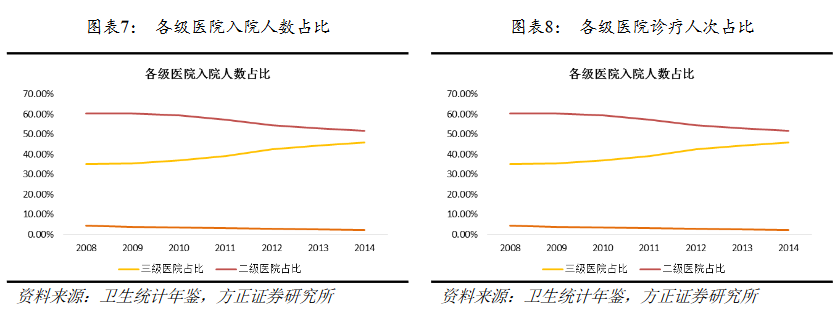
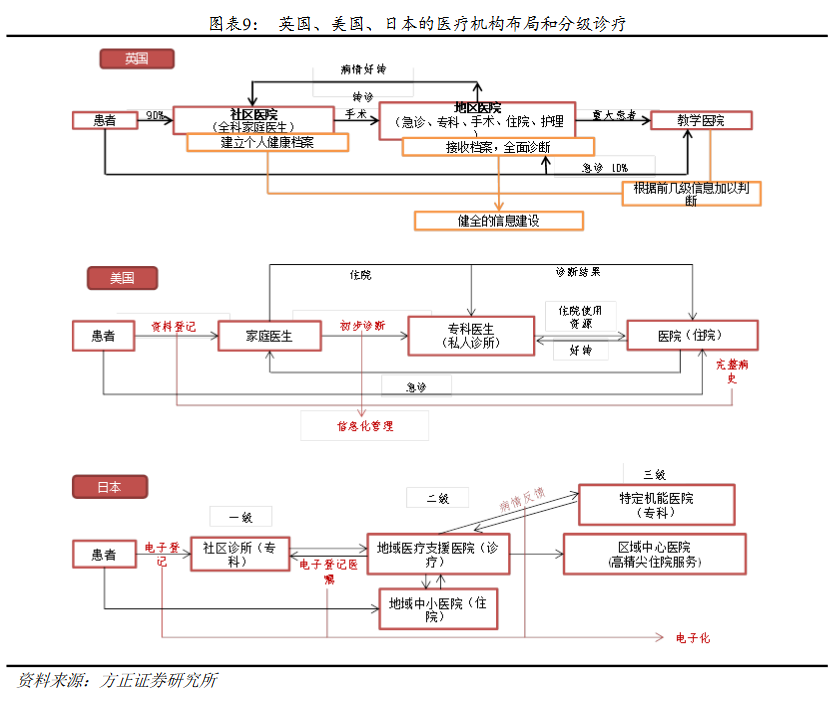
Correspondingly, the focus of healthcare institution layout and tiered diagnosis and treatment systems in foreign countries lies in primary care hospitals and family physicians.
Scarcity of High-End Medical Services and Insufficient Marketization
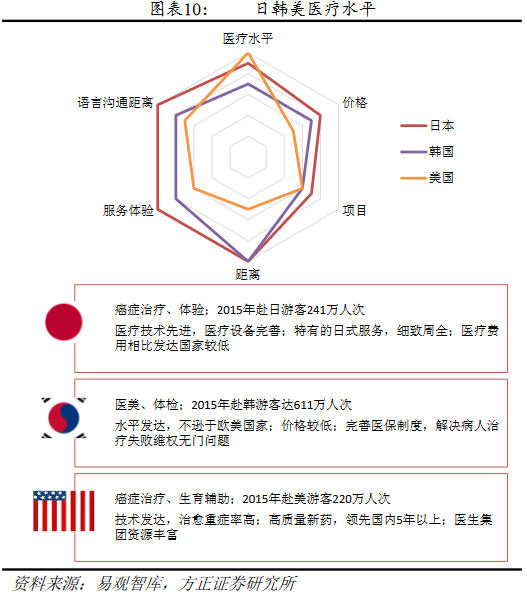
Due to the excessive concentration of medical resources in China, top-tier hospitals and renowned physicians have become highly sought-after by patients, akin to “too many monks and too little gruel.” This has given rise to overseas medical services, remote consultations, and overseas medical intermediaries. According to professional media reports, approximately 3,000 Chinese patients traveled abroad in 2015 for treatment of serious illnesses, representing a 40% year-on-year growth. This figure excludes those traveling abroad for health check-ups or cosmetic surgery.
According to a research report by Analysys International, Japan, South Korea, and the United States have become China’s top overseas medical tourism destinations, leveraging their respective competitive advantages. The United States and Japan are the preferred destinations for Chinese patients seeking treatment abroad, owing to their systematically advanced technologies, robust pharmaceutical offerings, and mature service systems for international patients.
According to a report by the Stanford Research Institute (SRI), global tourism revenue is projected to reach $678.5 billion in 2017, up from $438.6 billion in 2013. The growth rate of global medical tourism is twice that of the overall tourism industry. Medical tourism revenue is expected to account for 16% of total global tourism revenue in 2017, compared to 13% in 2013.
II. As the core supply side, public hospitals suffer from distorted compensation mechanisms and urgently require reform
Figure 11 illustrates the current compensation mechanism for public hospitals in China. It can be observed that socioeconomic factors determine the potential healthcare market, thereby defining the scope of medical services; however, the revenue and expenditures of public hospitals are simultaneously influenced by government policies and regulations.
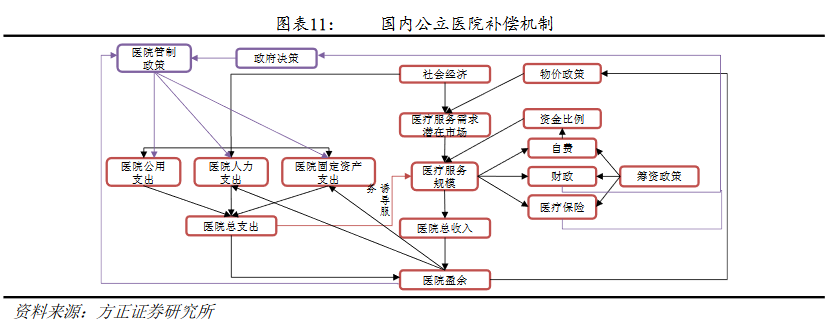
The crux of the problem facing public hospitals today lies in: insufficient government funding, inadequate support from medical insurance, the infeasibility of cost-cutting measures, and the prohibition on price increases.
In such circumstances, public hospitals can only achieve break-even by inducing service utilization. Since physicians alone determine the type and volume of services required by patients, and when their clinical judgments are linked to the hospital’s financial compensation, revenue becomes a significant factor in decision-making, giving rise to supplier-induced demand. Common practices in China include drug markups, diagnostic testing, medical reagents, and consumables.
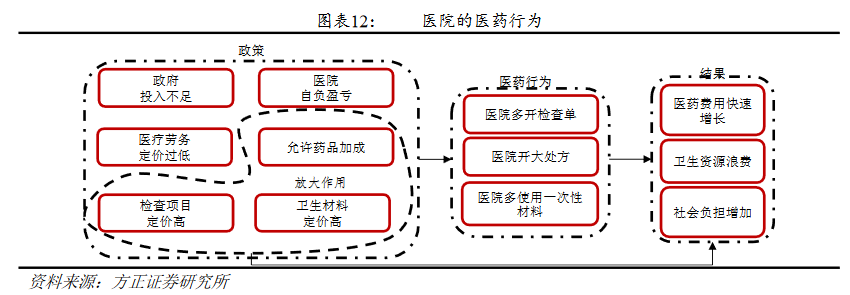
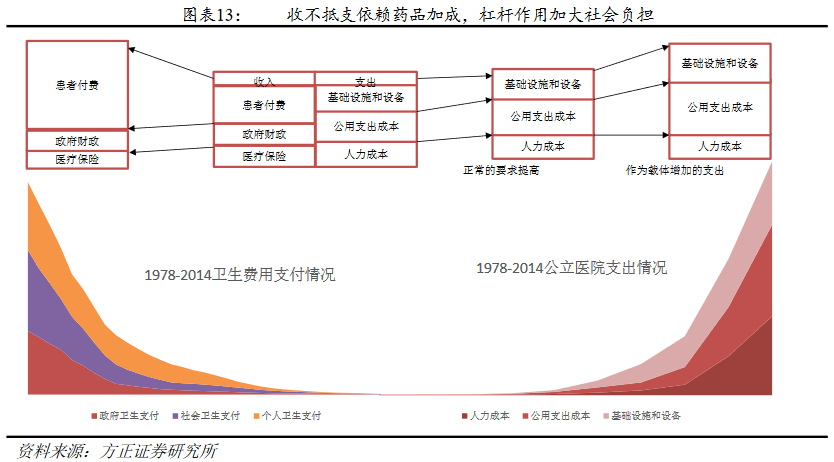
Figure 13 illustrates the revenue and expenditure items and volumes of public hospitals; distortion in the compensation mechanism is the primary cause of supply-side issues in these hospitals.
Public Hospitals Are Diverging: Large Hospitals Are Overcrowded, While Small Hospitals Struggle to Survive
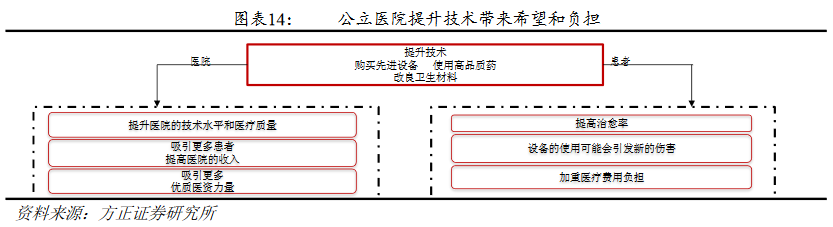
Distortions in the compensation mechanism have forced public hospitals to rely on revenue streams from pharmaceuticals, medical equipment, and consumables. The operational success of public hospitals hinges on their ability to sell drugs, diagnostic tests, and materials to patients. As noted in “Research Originates from Data, Research Creates Value: In-Depth Industry Report on Internet Healthcare,” the better the drugs, the more advanced the equipment, and the higher-grade the materials, the higher the prices and the greater the hospital’s revenue. While this offers hope to patients, it also exacerbates their financial burden.
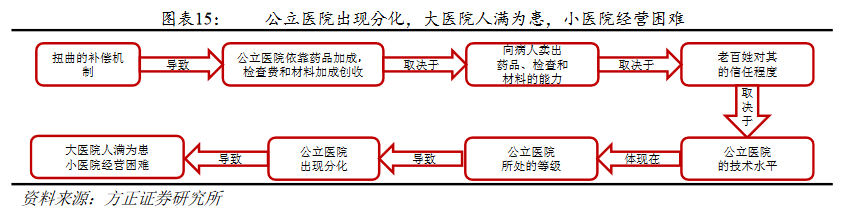
Public hospitals’ ability to sell pharmaceuticals, diagnostic tests, and medical supplies to patients depends on the level of public trust. Public trust, in turn, hinges on the technical proficiency of these hospitals. This technical proficiency is reflected in their tiered classification: tertiary hospitals possess higher technical capabilities than secondary hospitals, which in turn surpass primary hospitals. Consequently, large hospitals are overcrowded, while smaller ones struggle financially.
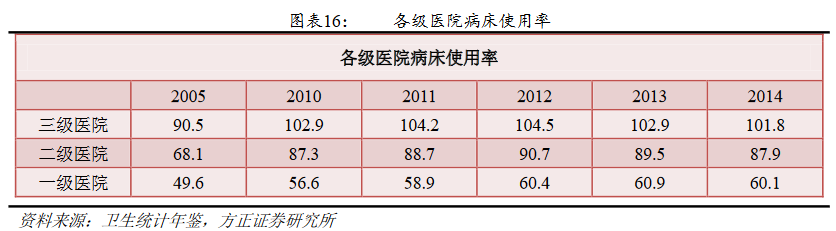
Medical costs are rising rapidly, far outpacing income growth, yet the supply gap remains substantial.
The economic development patterns of countries around the world all indicate that the proportion of household expenditures on food will gradually decline, while the proportion of non-food expenditures will gradually rise, particularly for medical expenses.
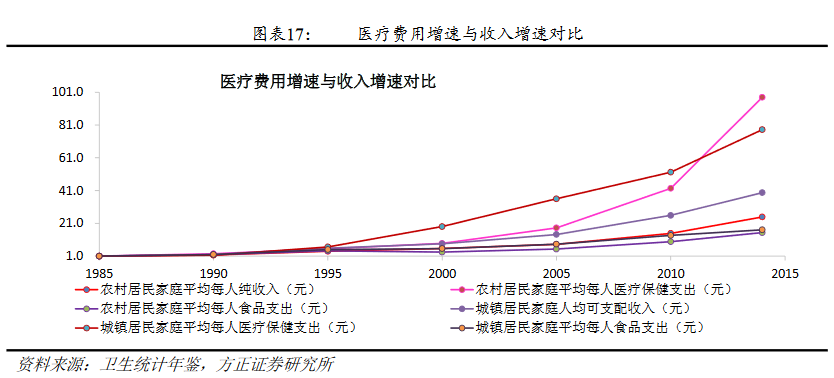
In China, the distorted compensation mechanism for public hospitals has led to healthcare costs rising far faster than income growth. Meanwhile, this growth is driven by hospital compensation incentives, leaving a substantial gap in actual supply.
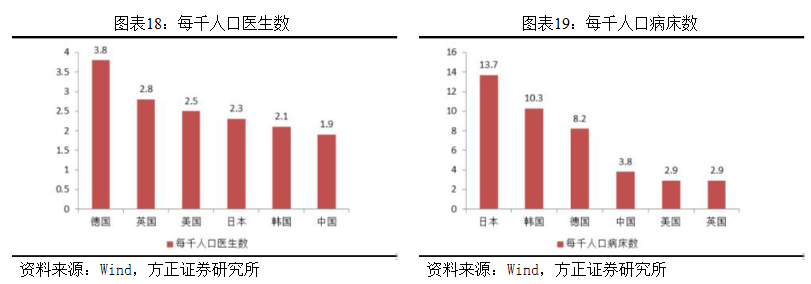
III. The Core of Supply-Side Reform Is to Liberate Physicians
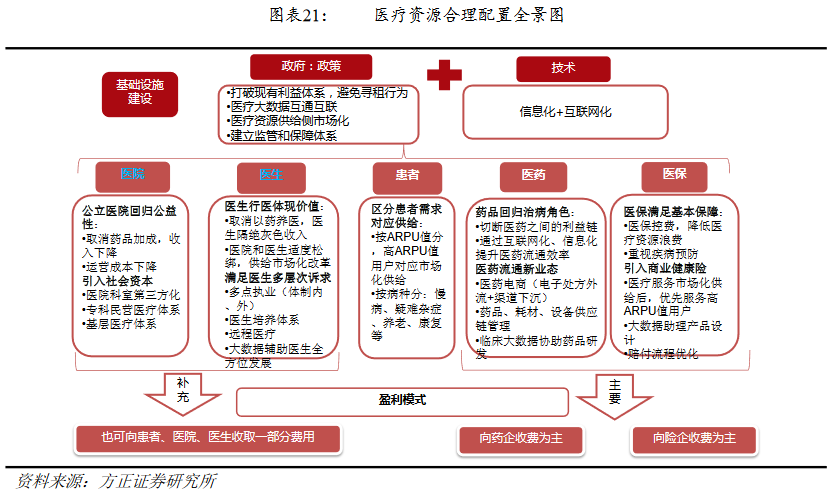
Healthcare reform involves six key elements of the healthcare system: the government, hospitals, physicians, patients, insurance, and pharmaceutical companies, such that a change in one element can have far-reaching implications across the entire system. We have mapped out the interrelationships among these six core healthcare resources, revealing a complex and intricate network of connections:
1) The government's planned economy mindset has led to a mismatch between supply and demand, giving rise to rent-seeking behavior;
2) Inadequate infrastructure (e.g., big data, policies), hindering the effective flow of various factors;
3) Hospitals and physicians are fully bound together, lacking market-based pricing and restricting supply;
Basic Supply (Primary Healthcare System)
High-End Supply (Specialized Private Healthcare System)
4) Long-established benefit distribution mechanisms have led to resource waste.
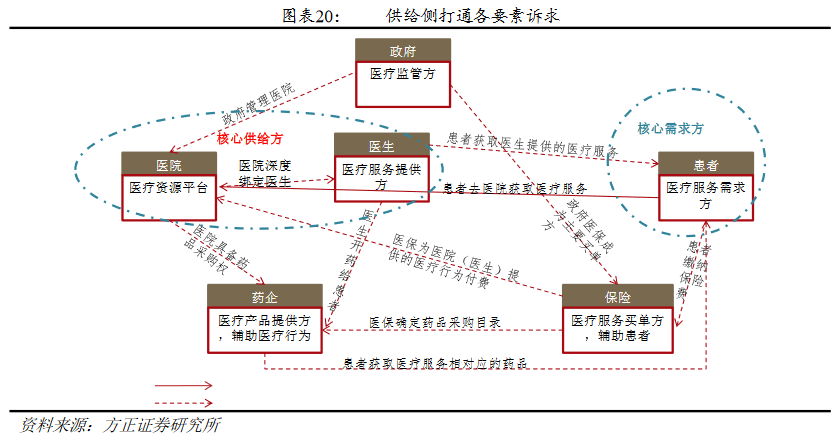
Supply-side reform in the healthcare industry is the true direction for reforms that can generate incremental market growth:
Hospitals: As the mainstay of the hospital sector, public hospitals will revert to their public-welfare role and serve as platforms for the provision of basic medical services to society against the backdrop of the elimination of drug markups. Meanwhile, greater social capital will be introduced into the sector.
Doctor: As the true providers of healthcare services, physicians will be moderately decoupled from hospitals to discover their genuine value through market-based allocation of scarce resources, thereby advancing supply-side reform in the healthcare sector.
Patient: With supply-side reforms, the demand side of patients will be segmented more granularly. Years of internet research have shown that user-need-based studies are central to building business models.
Pharmaceuticals: The vast scope for rent-seeking will be compressed, and drugs will return to their primary role of treating diseases. Meanwhile, with the advancement of internet integration and informatization, the efficiency of pharmaceutical distribution will increase significantly, better serving new supply-and-demand scenarios.
Healthcare Insurance: After implementing cost containment measures for public health insurance, introducing new payers to align with market-driven supply and demand structures has become an inevitable trend, with the adoption of private individual health insurance being a key direction.
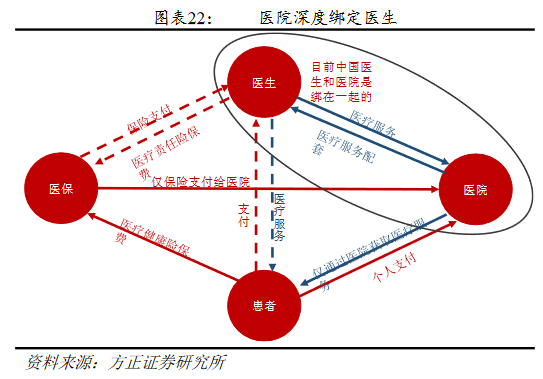
The core of supply-side reform is to liberate medical service resources, namely physicians. Under normal circumstances, physicians, as the primary suppliers, provide medical services. Meanwhile, hospitals support physicians by offering platforms, management, equipment, and patient referrals. In China, however, public hospitals are deeply tied to physicians. Physicians’ demands cannot be addressed through market mechanisms and must be fully met by public hospitals, resulting in a complete binding between public hospitals and physicians and hindering the mobility of physician resources. Therefore, the crux of healthcare supply-side reform lies in decoupling physicians from hospitals.
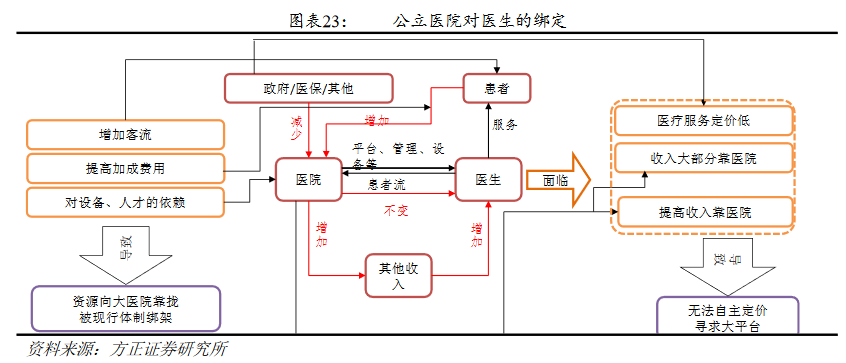
Under the current pricing system, hospitals derive revenue not only from patients but also from government subsidies and medical insurance funds. However, the limited payment capacity of the latter two sources forces hospitals to focus on patients if they seek to increase income. Consequently, hospitals must drive up patient volume, raise mark-up fees, and intensify their reliance on equipment and talent, leading to a concentration of resources in large hospitals and leaving them captive to the existing systemic constraints.
On the other hand, since patients must pay medical expenses to hospitals, hospitals control physicians’ income, preventing market-based pricing of medical services. Consequently, physicians can only increase their earnings through the hospital, making supplier-induced demand a mechanism to align the interests of hospitals and physicians.
Note: This report is reprinted from Founder Securities.