EpiPen Price Surge Sparks Public Outrage: A Review of Recent Hot Topics in the Pharmaceutical Industry
In the pharmaceutical industry, the intense backlash triggered by the EpiPen price hike shows no signs of abating, with Hollywood celebrities and political figures alike joining the controversy. As a pillar of the healthcare sector, the pharmaceutical industry is directly linked to public health. Competition and barriers to entry in the drug market are particularly fierce, while regulatory oversight and risk management are notably strict and standardized. The industry is also highly sensitive to policy changes and emerging technologies. VCBeat (WeChat: vcbeat) has compiled a summary of recent hot-button issues in the pharmaceutical sector.
Mylan has faced intense controversy over the price hike of its emergency allergy medication, EpiPen, evenSenator Amy Klobuchar has called on the Federal Trade Commission and the Senate Judiciary Committee to intervene and investigate the price increases.In a letter to Mylan CEO Heather Bresch, Iowa’s Charles Grassley stated that since the pharmaceutical company acquired EpiPen from Merck KGaA in 2007, its cost has risen by more than 450%, and such substantial price hikes could raise barriers to accessing this critically needed medication.
EpiPen, a life-saving allergy treatment, has become a $1 billion annual business for Mylan. In 2007, the unit price of this injection device, with an actual production cost of just $1, was approximately $57; today, that price has soared to over $600. The significant price hike for EpiPen is attributed to a lack of competition among pharmaceutical companies, leaving patients under considerable financial pressure with few choices between generic drugs or alternatives. Additionally, Mylan has spent heavily on marketing strategies, including promotional campaigns featuring actress Sarah Jessica Parker and efforts to encourage public schools to adopt its product.
Regarding the company’s future direction, CEO Bresch stated that he still sees opportunities for the drug in the European market and will continue to explore ways to enhance its efficacy, as well as strategies to bring EpiPen to market and expand its global reach.
Boehringer Ingelheim’s modern anticoagulant Pradaxa remains the only one with an FDA-approved reversal agent. The agency sent a complete response letter to Portola Pharmaceuticals, requesting additional information from its clinical trials on an antidote designed to reverse the anticoagulant effects of Johnson & Johnson’s Xarelto, Bristol-Myers Squibb’s Eliquis, and Daiichi Sankyo’s Savaysa.
Portola’s CEO, William Lis, told investors on Thursday that he believes the challenge currently facing the industry is attempting to understand the FDA’s numerous policy issues, noting that this will require in-depth discussions with regulators to achieve a better understanding. Meanwhile, the approval of Praxbind, the reversal agent for Pradaxa, has drawn considerable envy. In contrast, the tool that Boehringer Ingelheim (BI) prides itself on for managing uncontrolled bleeding in anticoagulated patients during emergency or life-threatening situations has met with a different fate.
FDA Approves Pfizer’s Abuse-Deterrent Opioid Troxyca ER. The medication provides pain relief while deterring misuse by individuals seeking euphoria when the drug is taken orally or snorted due to distress. However, the U.S. FDA advisory panel expressed reservations about the drug’s ability to curb various forms of abuse.
Troxyca ER contains oxycodone and naltrexone, with naltrexone serving to counteract the effects of oxycodone. When taken orally as intended, naltrexone remains sequestered and does not diminish the analgesic effect of oxycodone; it is only released after oxycodone has exerted its therapeutic effect. This formulation is designed to deter individuals with substance use disorder from crushing the medication to release oxycodone for euphoric effects. Upon crushing, naltrexone is released concurrently with oxycodone.
Additionally, Pfizer announced this month that it would acquire part of AstraZeneca’s antibiotic business for approximately $1.5 billion. Earlier this week, Pfizer acquired Medivation for $14 billion, gaining rights to three antibiotics and two other drugs still in development.
A new analysis of medical aid data has found no significant association between an increased risk of congenital malformations and the use of antipsychotic medications during pregnancy. Although overall use does not pose a substantial risk, certain drugs may still elevate the risk of malformations. The study was led by researchers at Brigham and Women’s Hospital in Boston.
“Given that general prescription medications are frequently used during pregnancy, it is crucial to conduct large-scale assessments of their safety, with specific attention to the role of potential confounding variables,” added researcher Huybrechts. “This information will provide reassurance to psychiatrists prescribing medications to pregnant patients.”
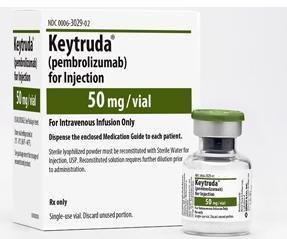
According to Reuters, based on new clinical data, more doctors treating lung cancer may choose Merck’s Keytruda over Bristol-Myers Squibb’s Opdivo when prescribing medications.
According to Global Oncology Doctor Network, Merck’s Keytruda and Bristol-Myers Squibb’s Opdivo are both PD-1 inhibitors approved for marketing by the U.S. FDA, and each has received the FDA’s Breakthrough Therapy designation. Keytruda has enabled targeted immunotherapy to replace standard chemotherapy, marking a significant breakthrough in cancer treatment. Previous studies have found that Keytruda can extend the survival of patients with advanced lung cancer while causing relatively fewer side effects. Regardless of which agent proves superior, the combination of immune checkpoint inhibitors with other therapies holds promise for further improving outcomes, making the cure of cancer no longer just a dream.
In addition, Merck Group has added two new divisions to diversify its business: one producing specialty chemicals for displays, and the other manufacturing laboratory equipment for biotechnology companies. The pharmaceutical company has remained profitable, even as some of its experimental drugs have failed.
Harvard University and Chris Danforth of the University of VermontResearchers have developed a machine that diagnoses mental illnesses by examining Instagram photos, with a 70% success rate. Compared to those who post more vibrant photos, individuals who use filters and post gray or dark images are more likely to suffer from depression.
Medical research indicates that an image can be interpreted in various ways. An individual’s current color preferences are influenced by their mood; people tend to favor bright colors when in a cheerful state, whereas they often choose darker shades when feeling down.
Through test analyses of these photos leveraging color saturation, contrast, and facial recognition software, researchers found that individuals with depression tend to reduce image saturation and brightness, often posting photos dominated by dark hues such as blue or gray. They also exhibit certain preferences in filter selection; for instance, the black-and-white “Inkwell” filter is relatively popular among patients with depression. In contrast, healthy individuals prefer using the high-brightness “Valencia” filter.

According to researchers at Harvard Medical School, the use of exclusivity is one of the most significant factors driving prescription drug costs in the United States. Specifically, government-granted protections provide pharmaceutical manufacturers with “monopoly” rights, which drive U.S. prescription drug prices higher than those anywhere else in the world. These delayed-entry agreements can postpone the arrival of competition for up to 20 years.
Researchers reviewed tens of thousands of studies published from January 2005 to July 2016 in an effort to simplify and explain the crisis driving up U.S. drug prices and to explore potential solutions. They found that the problem has deep and complex roots. Their findings were published in the Journal of the American Medical Association (JAMA). The study was supported by the Laura and John Arnold Foundation, with additional support from the Engelberg Foundation.