

Physician Groups: Repricing Medical Services with Commercial Insurance as the Key Growth Enabler
In[In-Depth Report] Insufficient Supply-Side Capacity: The Core of Healthcare Reform and the Fundamental Issue of the Medical IndustryThe article mentions that the core of healthcare reform lies in supply-side reform, and the crux of supply-side reform is to decouple hospitals from physicians. Therefore, we will analyze the evolving trends on the supply side of medical services from the perspectives of both physicians and hospitals.
The hierarchy of licensed physicians in China exhibits an inverted pyramid structure, comprising, from bottom to top, resident physicians, attending physicians, associate chief physicians, and chief physicians. Annual income increases progressively with rank, while the number of practitioners decreases accordingly. In the composition of Chinese physicians’ income, the base salary—which constitutes the largest proportion—is determined by professional title. Since professional titles reflect a physician’s clinical competence and seniority, they also indirectly determine the levels of hospital bonuses, departmental bonuses, and financial support from pharmaceutical companies. Physicians with senior professional titles can achieve an average annual income of RMB 100,000, whereas those with junior titles earn only RMB 55,000 per year.
In contrast, there is a significant gap between China and the United States in terms of medical service pricing and physician income.
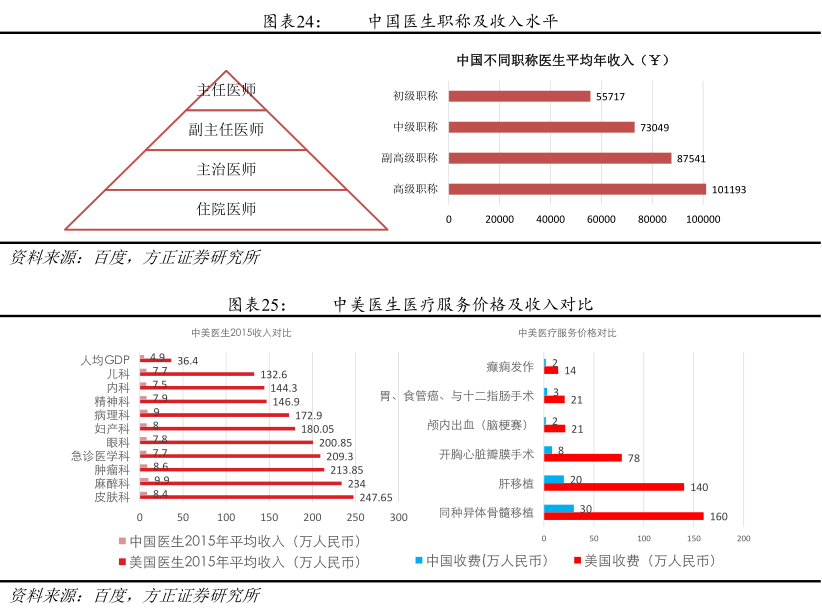
The market-based pricing of healthcare services in the United States is, in essence, a result of its restrictive entry mechanism for physicians. A distinctive feature of the U.S. physician training system is its control over the number of licensed practitioners through prolonged education and training periods (averaging 13 years, with even longer durations for certain highly specialized surgical fields) and rigorous elimination processes (including low medical school admission rates and stringent specialty board examinations during residency training). This artificially constrains the supply of physicians, thereby shifting the supply-demand dynamics in favor of providers and helping to sustain high prices for medical services.
In China, physicians’ resources are deeply tied to public hospitals, with their various professional needs—such as income, academic rank, research, and teaching—all linked to these institutions. A physician survey conducted by DXY also shows that academic rank is considered the second most important factor affecting income, after hospital or departmental performance.
A physician group refers to an independent legal entity composed of at least two physicians, capable of meeting the needs for patient acquisition, brand building, risk control, and operational management associated with physicians’ independent practice. It represents an inevitable pathway for optimizing the allocation of medical human resources. Currently, policies in China promoting multi-site practice, private healthcare provision, and tiered diagnosis and treatment are all conducive to the development of physician groups.
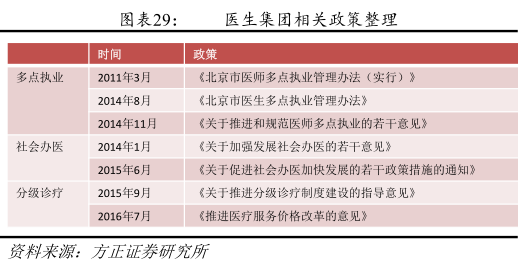
The operational model of physician groups involves collaboration with hospitals and capital investors, wherein hospitals provide the platform and patient base, while capital supports operations. As physician groups have evolved to their current stage, there are no significant barriers in terms of talent or funding; the key success factors lie in policy, brand reputation, patient acquisition, supporting facilities, and operational management.
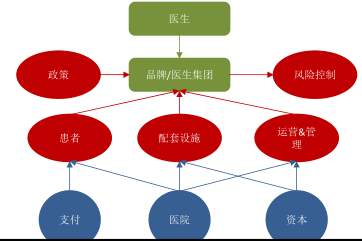
Policy: The Decisive Factor for Physician Groups
The greatest challenge facing the development of physician groups to date is policy. The mobility of physicians requires two conditions:First, a favorable macro-environment and key nodes for mobility; second, physicians themselves possess the capacity for mobility,"It is difficult for the young and the elderly to migrate, while it is easier for the core workforce."
As medical schools and major tertiary hospitals remain the primary sources for physician training, doctors must either engage in multi-site practice while remaining within the hospital system or completely leave the public sector. The vast majority of physicians have not yet left the public system; instead, they choose to join physician groups through multi-site practice arrangements. Although national policies encourage multi-site practice, many physicians are hesitant to do so openly, fearing that outside practice may adversely affect their career advancement within their home institutions.
Physician groups have siphoned patients from public hospitals, further diverting patient flow under the tiered diagnosis and treatment system, while also recruiting core medical staff from these institutions, thereby exerting a negative impact on public hospitals. In the view of some directors of large tertiary hospitals, physicians belong to the hospital rather than to the patients or to themselves; consequently, they “do not support” multi-site practice and even engage in “silent resistance.”
The number of physicians in public hospitals who are qualified and capable of practicing at multiple sites is inherently limited. Coupled with ambiguous policies and uncertain attitudes from hospital administrations, the growth potential of physician groups remains constrained, and the outflow of doctors from hospitals will face certain restrictions in the future. This may primarily manifest as a slow exodus of top-tier experts; however, this trend is expected to persist in the long run.
Brand—The Prerequisite for the Operation of Physician Groups
Due to considerations of career advancement and professional growth, it is difficult for Chinese physicians to leave the public healthcare system. Those who are capable of doing so are typically at the level of Associate Chief Physician or above. However, after leaving the system, a critical issue arises: the building of their personal brand.
Currently, the majority of patients in China still rely heavily on hospital brands when seeking medical care. However, a hospital’s brand is not equivalent to an individual physician’s brand. Consequently, when physicians leave their affiliated hospitals, a conflict arises between their personal brand and the hospital’s brand. After departing from their institutions, physicians often face a sharp decline in patient volume. During the peak popularity of physician groups, some doctors who left public hospitals found themselves with very few patients. This outcome stemmed from a misunderstanding of the relationship between the institutional brand of public hospitals and their own personal brands; they mistakenly believed that patients were primarily attracted by their individual reputations. In reality, most patients continue to place their trust in the brand reputation of public hospitals.
Therefore, if physicians intend to leave public hospitals and join physician groups, they must prioritize the cultivation of their personal brands. Leveraging internet platforms and establishing a presence at the primary care level can facilitate this brand-building process. Once a physician’s personal brand is well-established, it can serve as the cornerstone for forming specialized teams, thereby driving brand development for other members within the physician group.
Patient Portal for Physician Groups
The number of patients is the core source of competitiveness for physician groups. With a sufficient patient base, physician groups can ensure their revenue and strengthen their bargaining power. In the industrial structure of physician groups, the relationships among key elements—patients themselves, insurance, the internet, healthcare institutions, and physician groups—are still at an early stage, meaning any of these elements could serve as an entry point. Of course, having patients alone is not enough; patient back-Next is payment capability; only by aligning with the payment side can physician groups achieve long-term sustainability.
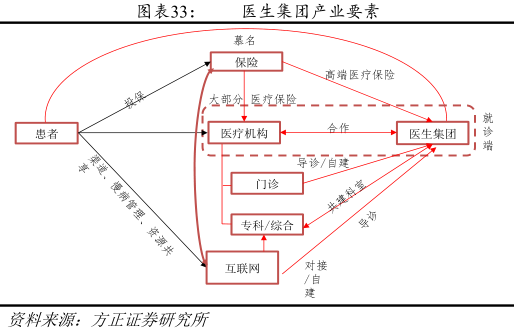
Patients—Physician Groups
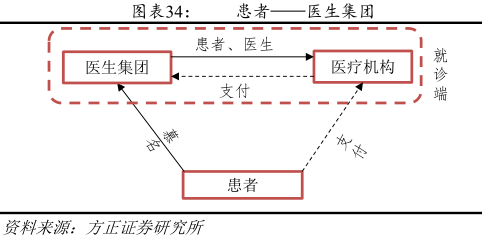
Patients directly seek out physician groups primarily through brand marketing. With many renowned physicians and strong personal brand effects, these groups attract numerous patients who come specifically for their reputations, making this one of the primary channels for patient acquisition by physician groups at present.
On the one hand, the marginal growth rate of patients attracted by reputation is extremely limited; on the other hand, the current fee schedules of physician groups are relatively high, particularly reflected in specialist consultation fees that often reach thousands of yuan, targeting a high-end patient demographic. Consequently, the marginal expansion of physician groups through direct patient acquisition is constrained.
Patients—Medical Institutions—Physician Groups
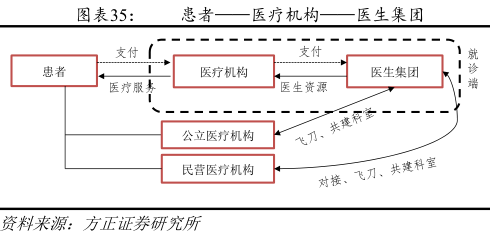
Currently, it appears that most physician groups need to collaborate with physical medical institutions. Physician groups either partner with high-end private hospitals (such as United Family Healthcare) or co-establish departments with public hospitals. A small number even operate their own physical hospitals (e.g., Wanfeng Physician Group).
However, most physician groups are small in scale and still in a phase of rapid growth. Some have adopted an asset-light model, which significantly limits their clinical practice locations, and their medical facilities often fall short of those offered by large public hospitals.
Due to regulatory restrictions, only a handful of physician groups in China currently hold business licenses specifically designated as “Physician Groups.” This means that, in practice, most companies claiming to be “Physician Groups” are legally structured as physician management companies, which cannot register physicians and are unable to independently provide medical services. Furthermore, physician groups are not qualified to handle billing settlements.Patient fees can only be shared with partner medical institutions under the guise of consultation fees, which consequently grants these institutions significant leverage in payment matters.
Patients—Internet Healthcare—Physician Groups
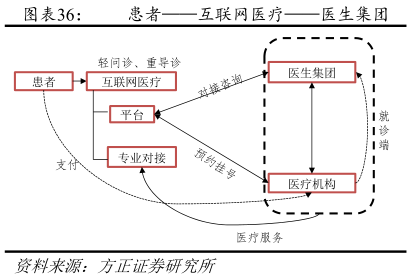
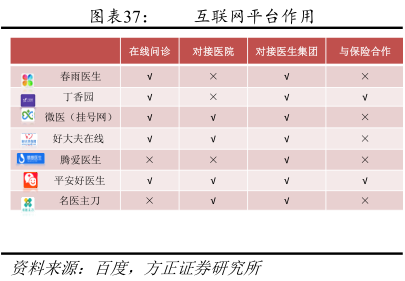
The platform serves as the link between patients and physician groups, with internet healthcare platforms playing a relatively minor role. Current collaborations between existing internet healthcare platforms and physician groups are fraught with issues. For instance, the Zhang Qiang Physician Group on Guahao.com can only be booked via telephone. Many internet platforms do not collaborate directly with physician groups; instead, they merely post physician group profiles on their sites to boost consumer-side traffic and stickiness, ultimately requiring patients to make appointments through traditional methods such as phone calls.
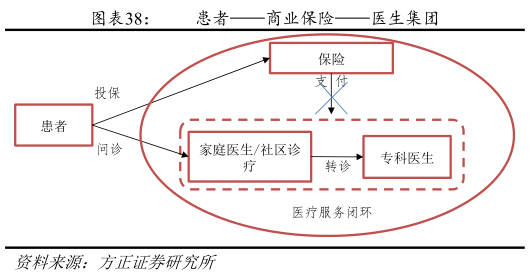
Patient – Commercial Insurance – Physician Group
Currently, collaborations between insurance companies and physician groups in China remain relatively limited. One model involves insurers establishing their own physician groups; however, these entities typically lack a physical presence, and most physicians serve on a part-time basis. Another model entails partnerships with internet healthcare platforms that operate physician groups (e.g., the collaboration between Xingxiangyuan and Ping An Health). Given that most current physician groups are specialty-focused, such collaborations with insurers are still uncommon. Consequently, commercial health insurance in China currently functions more as an entry point to physician groups rather than playing a core payer role behind the scenes for patients.
Supporting Facilities and Operational Management
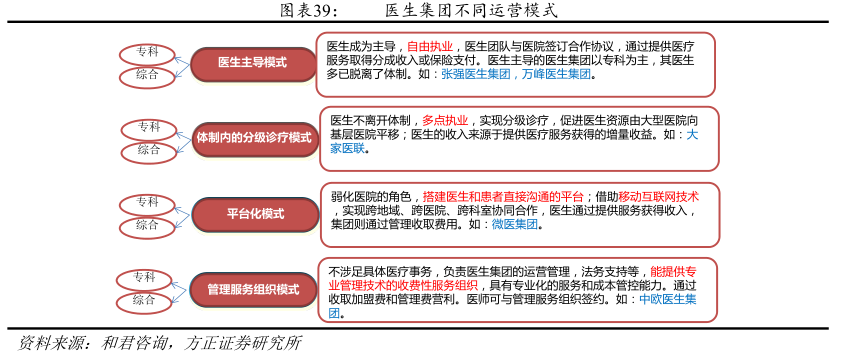
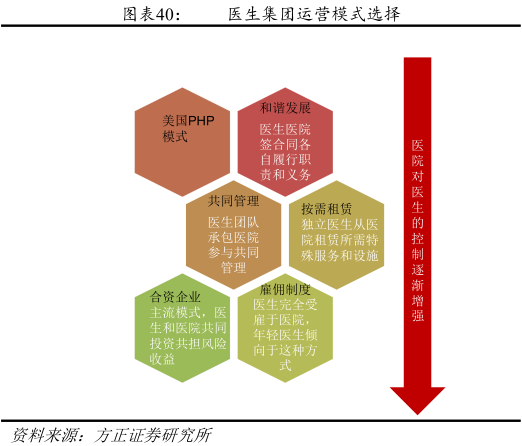
Another key element in the development of physician groups is the provision of corresponding supporting facilities and operational management, which also constitutes one of the primary objectives for physician groups to collaborate with hospitals and capital investors in either the industrial market or the secondary market. Currently, physician groups mainly operate under four models: physician-led, tiered diagnosis and treatment within the public healthcare system, platform-based, and managed service organizations. Each model can be further categorized into specialized and comprehensive directions.In essence, the difference lies in the supporting services provided by hospitals and their respective operational models:
Doctors remain within the public healthcare system while practicing at multiple institutions, facilitating tiered diagnosis and treatment and promoting the redistribution of medical resources from large hospitals to primary care facilities; physicians’ income is derived from providing medical services. Research is driven by data; research creates value.
De-emphasize the role of hospitals and build a platform for direct communication between doctors and patients; leverage mobile internet technology to enable cross-regional, cross-hospital, and cross-departmental collaboration, where doctors earn income by providing services, and the group generates revenue through management fees.
A fee-based service organization that refrains from engaging in specific medical affairs, instead focusing on the operational management and legal support of physician groups. It offers professional management expertise with specialized services and cost-control capabilities, generating revenue through franchise fees and management fees. Physicians may enter into contracts with such management service organizations.
Doctor groups are essentially a transfer of existing medical service capacity.
The rise of physician groups is still in its early stages; fundamentally, physician groups represent a transfer of existing resources from public hospitalsUnreasonable domestic pricing is shifted outside the system for market-based pricing. The reason it was quickly accepted is thatDue to strong domestic demand, the market has long faced a significant supply gap. We believe this pricingUnder the current mechanism, the room for growth in the existing market is very limited; to achieve long-term success, it is necessary to identify breakthroughs that drive incremental growth.
The incremental value lies in the coordination with commercial insurance.
Since the essence of physician groups lies in market-based pricing for medical services, those who can bear such pricingAlthough the population is small, medical demand will not decrease; the growth potential for physician groups lies in finding suitableAppropriate payment methods.
We believe that China's insurance system will evolve toward a distinct dual-track structure, with the vast majorityBasic medical insurance covers the general population, while commercial insurance serves the mid-to-high-end market; only by integrating with commercial insuranceOnly an integrated healthcare service system can form a complete closed loop.
China's commercial insurance industry has developed rapidly in recent years, with health insurance premium income reachingRMB 241 billion, a year-on-year increase of 52%, maintaining a strong momentum of rapid growth. It is estimated that by 2020,The scale of commercial insurance in China will reach 2 trillion.
Note: This report is reprinted from Founder Securities.