

Healthfinch Files IPO Prospectus to Revolutionize Physician Workflow Automation
Imagine you are a physician with a packed and tight daily schedule: seeing patients, making ward rounds, prescribing medications, ordering lab tests, and communicating with patients. After completing all these tasks, you feel exhausted and just want to sit down in your office to catch your breath. However, as soon as you sit down, you notice dozens of new unread emails popping up on your computer screen, most of which are prescription refill requests from patients with chronic conditions. Processing these requests is not particularly challenging, but it consumes a significant amount of your time. Meanwhile, critically ill patients in the ward are waiting for you to follow up on their treatment outcomes. If you often find yourself bogged down by repetitive and trivial tasks, consider turning to Healthfinch for assistance.
Healthfinch is an EHR (Electronic Health Record) application company headquartered in Madison, Wisconsin, USA. Jonathan Baran serves as its CEO and is also one of the company’s co-founders. Jonathan studied biomedical engineering at the University of Wisconsin–Madison and continued his studies there in human factors engineering after completing his undergraduate degree. Through his academic and professional experiences, Jonathan gradually identified certain service gaps in the EHR sector, which inspired him to develop an application designed to enhance EHR usability efficiency while simultaneously improving the operational efficiency of healthcare providers.
However, since Jonathan was not a physician and had limited understanding of clinical workflows, this posed a significant obstacle to the successful implementation of his idea. Fortunately, in 2011, at the Mayo Clinic Innovation Conference, Jonathan met Dr. Lyle Berkowitz. The two hit it off immediately, leading to the founding of Healthfinch.

Jonathan Baran, Co-founder and CEO of Healthfinch
Discussing the motivation behind founding Healthfinch, Baran stated that while the emergence and widespread adoption of Electronic Health Records (EHRs) have ushered in new possibilities for improving healthcare outcomes and comprehensively optimizing clinical workflows, they have also exposed certain challenges. One particularly burdensome issue is that, since the implementation of EHRs, physicians have been forced to devote substantial portions of their working hours to basic, repetitive, and mundane tasks, such as simple data entry and case management. Advocates of EHRs, both in regulatory and technological spheres, have recognized this drawback and attached significant importance to addressing it.
Let’s look at a piece of data: on average, each physician in healthcare institutions diagnoses 20 patients per day, which is already a significant workload. Yet, beyond this, they must also spend four hours handling routine, unpaid, and repetitive tasks. The Healthfinch team recognized the problems and business opportunities inherent in this situation early on and began conceptualizing solutions aimed at leveraging technology to help physicians complete these repetitive, low-value tasks. Although still a startup, Healthfinch set its sights from the outset on becoming the leader in this field.

Some Members of the Healthfinch Team
Simply put, Healthfinch aims to build a technology platform on top of Electronic Health Record (EHR) systems to automate repetitive and mundane tasks.
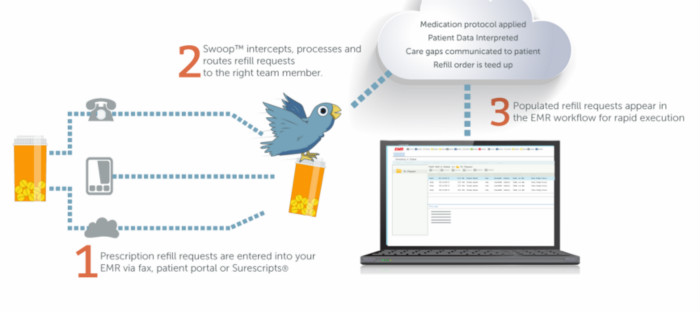
Nowadays, in the medical field, processing prescription refill requests is a time-consuming task. For many patients with chronic conditions, such as those with high cholesterol, diabetes, or hypertension, their prescription refill requests are typically handled directly by physicians. The process usually works as follows: When these patients, who require regular medication, have finished the drugs prescribed by their physician, the pharmacy generates a prescription refill request and sends it to the physician via email. The physician then determines whether the prescription should be refilled. Before making this determination, the physician often needs to answer a series of questions, including: When was the patient’s last visit? When were their last laboratory tests performed? Were these tests part of routine screening? And so on.
The challenge, however, is that physicians must first address these questions before they can approve or deny a patient’s prescription renewal request. This is where Healthfinch steps in. By implementing Healthfinch’s technological solutions, healthcare organizations have two options: either fully delegate prescription renewal requests to Healthfinch’s platform, or reassign tasks originally performed by physicians to pharmacists, nurses, or physician assistants, ensuring a safe and efficient process. This approach automates low-value, highly repetitive tasks, frees up human resources, and enhances the overall efficiency of the healthcare system.
Overall, many healthcare institutions have chosen Healthfinch, with more than 1,800 physicians using Healthfinch’s technology (as of November 2015).
Since its launch, the company has received substantial positive feedback from users. Take, for example, a healthcare organization with 250 primary care physicians. At this institution, the aforementioned repetitive and mundane tasks were primarily handled by nursing staff, with 13 full-time registered nurses (RNs) assigned exclusively to process prescription renewal requests. Their responsibilities included monitoring incoming requests in the system, verifying them against medication guidelines, and making final approval decisions. After implementing Healthfinch’s solution, the organization redeployed the 13 full-time RNs previously dedicated to this task and increased its support staff capacity from serving 250 to 400 providers. While this is just one case, it clearly demonstrates that Healthfinch’s products can indeed create significant value for healthcare organizations and enhance return on investment.
Swoop
Since its inception, Healthfinch’s team has been dedicated to addressing a single question: How can every aspect of the healthcare industry and every individual’s workflow be simplified? To achieve this goal, the company launched its first product, RefillWizard (later renamed Swoop), and built a cloud-based team decision support system to power it. Swoop reviews and processes prescription refill requests, then routes them to the appropriate staff members to complete the workflow. The product was designed to save physicians time, enabling them to devote more and better-quality attention to direct patient care.
Swoop has successfully processed 1,416,266 prescription renewal requests; since the adoption of Swoop, the volume of prescription renewals requiring physician intervention has decreased by 70%; Swoop has saved physicians a cumulative total of 3,540,665 minutes.

Swoop, Prescription Refill Assistant
Features of Swoop:
Determine Medication Guidelines
Users can choose from over 180 scientifically validated medication guidelines pre-embedded in Swoop, or define their own guidelines and apply them within the program.
Reduce Workload
Swoop can automatically handle a large volume of routine tasks, such as processing prescription refill requests sitting in physicians’ inboxes, thereby helping to “reduce the burden” on physicians.
Identifying Blind Spots in Healthcare
If any patient requires a consultation or laboratory tests before proceeding with the prescription renewal process, Swoop will “identify” such patients and automatically notify the scheduling staff within the institution.
Charlie
In January 2016, Healthfinch secured $7.5 million in its Series A funding round to support the research and development of its second product: Charlie, an automated operations platform. The round was led by Adams Street Partners, with participation from JumpStart Ventures, Chicago Ventures, OCA Ventures, Abundant Ventures, and an individual investor.

Regarding the motivation behind Charlie’s development, Jonathan stated, “Shortly after Swoop was launched, it was widely adopted by numerous healthcare institutions, indicating that our product largely filled a gap in market demand. The rapid acceptance of Swoop by a broad user base sent us a strong signal: automating repetitive and mundane tasks in the medical field is a key direction for the future of healthcare service delivery. To achieve this goal, we envisioned developing a powerful automation platform built upon a single application, capable not only of handling prescription renewal requests but also performing other tasks such as scheduling appointments and facilitating patient communication. This led to the creation of Charlie.”
Rather than an automation platform, the Healthfinch team positions Charlie more aptly as a hired employee. Healthcare organizations can employ Charlie to handle routine, repetitive, and uncompensated administrative tasks—work that often consumes 10 to 12 hours of healthcare professionals’ time each week. With Charlie as a new colleague, healthcare providers can reclaim valuable time to: engage directly with patients by delivering care and treatment services; develop treatment and care plans for the most urgent cases; and enjoy life with friends and family, thereby alleviating work-related stress.
Charlie's Features:
# Preparing for a Scheduled Consultation
Charlie helps patients and healthcare providers prepare for scheduled consultations. Charlie reviews the personal information forms completed by patients prior to their visits, along with their preferred appointment dates, to gather relevant data that may be needed during the consultation. This information is displayed on the computer screen for physicians to review before the patient arrives.
Assist in completing prescription renewals
Charlie is responsible for screening duplicate prescription refill requests, implementing new procedural and medication rules into the system, identifying blind spots in clinical care, and documenting related decisions to ensure rapid system response and efficient decision execution. Prior to identifying these clinical care blind spots, Charlie carefully reviews each patient’s complete list of regular medications.
Detecting Blind Spots in Healthcare
Charlie’s brain is loaded with over 2,400 reliable drug lists and medication guidelines, enabling it to detect potential health risks for patients.
Compared with other internet healthcare startups, Healthfinch’s advantages are mainly reflected in the following three aspects:
1."Effective Use."(Editor’s Note: The “Meaningful Use” criteria aim to promote the comprehensive and coordinated development of health information technology in the United States by encouraging hospitals and independent practitioners to effectively use electronic health records (EHRs), thereby improving healthcare quality and efficiency.) The impact of “Meaningful Use” has become evident; in order to meet the Meaningful Use deadlines, nearly all vendors were already overbooked in 2015.
2. Content.We have designed a series of scientifically robust and user-friendly prescription renewal protocols. Prior to this, clinical decision support and formularies of commonly used clinical medications were areas that vendors typically avoided.
3. Focus."In dynamic workflows, prescription refills represent only a minuscule niche. It is difficult for other companies to match our level of dedicated focus on this segment, which offers limited commercial opportunity."
As an internet healthcare startup, Healthfinch faces challenges primarily from two aspects: “healthcare” and “startup.”
Let’s begin with “healthcare.” Fundamentally, the technological infrastructure in the healthcare sector is still in its early stages. Most other industries have already accumulated substantial volumes of electronic data for reference, enabling startups to achieve rapid growth by building upon this foundation. In contrast, the current reality in healthcare is that many medical institutions have only just begun implementing Electronic Health Record (EHR) systems, resulting in very limited data accumulation. Without extensive data support, automation cannot be realized. This presents healthcare startups with numerous challenges that other industries have long since resolved, one of the most pressing being the integration of EHR systems.
Broadly speaking, integration has been achieved in the healthcare sector. However, for healthcare professionals, “broadly achieved” is far from sufficient; the portions that remain unintegrated pose significant obstacles to medical practitioners. Currently, there are no highly effective solutions to address the challenge of integrating electronic health records (EHRs). Healthfinch aims to be a pioneer in this space, but because many team members lack prior experience in the healthcare industry, the company will require a considerable ramp-up period to allow its engineers to gain a deep and thorough understanding of the sector. Many startups, seeking to bypass this learning curve, have shifted their focus to areas where they already have expertise, resulting in a proliferation of patient-facing applications on the market. Nevertheless, there is substantial demand on the provider side as well, which also requires technological support. Therefore, despite the necessary ramp-up time, Healthfinch remains committed to this field, dedicating itself to helping physicians “reduce their administrative burden.”
Thanks to the booming development of the Internet, numerous incubators and support organizations for digital health companies have been established in recent years. If every link in the chain can perform at its best, incubators can provide tremendous assistance to startups, including offering resources and pathways, facilitating connections, and providing support groups, among other benefits. Healthfinch boasts an excellent support team in Madison. Approximately twenty local digital health enterprises, including Healthfinch, meet regularly to communicate and collaboratively address the challenges they encounter during their development.
However, the timeframes inherent to the internet incubator model may not be well-suited for startups in the healthcare sector. Traditional incubators are designed to provide startups with various resources, such as a buffer period and focused attention. Startups need these resources to ensure they can make substantial progress within three months, thereby convincing investors and successfully securing follow-on funding.
However, for most internet healthcare startups, making substantial progress within a mere three months is exceedingly difficult, as innovation in the medical field invariably advances at a slow pace. Perhaps appropriately relaxing this three-month timeframe would enable more promising internet healthcare startups to seize development opportunities and bring about truly beneficial changes to this deeply entrenched sector.
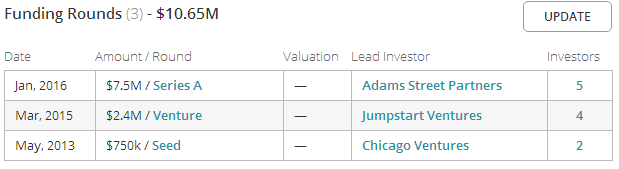
Healthfinch's Funding Status
To date, Healthfinch, founded in 2009, has raised over $10 million in total funding. For Healthfinch, prescription refills are merely the starting point for addressing broader challenges. Its ultimate goal is to leverage technology to help healthcare providers “eliminate” all repetitive, mundane tasks. Only by freeing physicians from their computers can they truly return to the bedside, devote more time to high-value work directly related to patient care, and thereby enhance the efficiency and effectiveness of healthcare delivery.