

Recoding Life: A Revolution in Drug Development and a Grand Endeavor in Biology
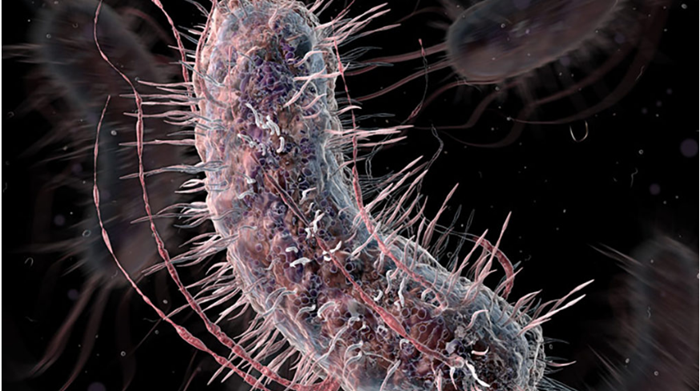
After millions of years of evolution, all living organisms on Earth share the same 64 genetic codons. However, scientists at Harvard University believe they can change this status quo. Recently, they published a paper stating that they had created a complete bacterial genome containing only 57 codons in the laboratory. This experiment holds significant importance for the field of genetics. VCBeat (WeChat ID: vcbeat) has compiled and translated the relevant content.
At first glance, this experiment significantly advances the use of genetically modified bacteria for drug development. Previously, producing pharmaceuticals and antiviral vaccines through the cultivation of genetically modified bacteria often took more than a year and cost billions of dollars. Today, by artificially designing gene sequences to cultivate the required bacterial strains, we can substantially shorten drug R&D timelines and reduce costs. However, this experiment holds even greater significance: it represents a recoding of life.
This experiment is groundbreaking for the field of biological genetics. For instance, imagine replacing all the magic and wizards in the Harry Potter book series; yet, while reading, you would still perceive the same sense of enchantment the books convey. Scientists believe that if the genome does not require the full set of 64 codons, it could confer new functions upon certain genes—functions that do not exist in nature.
“Marc Lajoie, a graduate supervisor at Harvard University and a professor at the University of Washington, said: ‘We are redefining the meaning of the genetic code and designing a genome unlike any seen before.’”
Recoding entails that biologists need to replace or delete certain codons in the genomes of organisms to artificially create “Genomically Recoded Organisms (GROs).” If earlier genetically modified organisms are likened to the Ford Model T produced in 1908, then “genomically recoded organisms” are akin to today’s Audi R7S, representing a qualitative leap. This technology, capable of reorganizing the genomes of all living beings, including humans, promises to rewrite the biological history of life on Earth. Professor George Church of Harvard University and other experts in synthetic biology have recently announced their intention to pursue research in this area.
To date, no coded organism capable of evolutionary adaptation has been created. For instance, such organisms could synthesize proteins not found in nature, with these novel proteins serving as the concrete manifestation of their evolution. Including Church, six of the 21 researchers involved in this latest study are listed as patent inventors for genomic design.
Scientists not involved in the new study have also expressed concerns, arguing that the results may not be as promising as expected and that many theoretical concepts may not prove feasible. Dieter Söll, a stalwart of Yale University’s biochemistry community, stated, “There is no doubt that this represents significant progress; however, what I am currently seeing is merely a progress report, with no team yet having achieved novel biological functions through codon recoding. There is still a long way to go.”
The transcription and translation of DNA in microorganisms, plants, and animals all rely on codons composed of three adjacent nucleotides. The famous DNA double helix structure consists of sequences of four nucleotide bases: A, T, C, and G. Every threeBaseDecide aAmino Acids. Theoretically, there are 4³ = 64 possible combinations of nucleotide bases. These 64 base combinations constitute 64 codons, which encode all 20 amino acids, indicating that a single amino acid can be encoded by multiple codons. Amino acids then assemble to form proteins.
In a 2013 study, Church and his team sought to use CRISPR technology to eliminate specific gene sequences from the Escherichia coli genome. CRISPR (Clustered Regularly Interspaced Short Palindromic Repeats) can be simply described as follows: viruses integrate their genetic material into bacteria, hijacking the bacterial cellular machinery to replicate their own genes. To counteract this viral invasion, bacteria have evolved the CRISPR system, which enables them to silently excise viral genes from their chromosomes. This constitutes a unique immune system inherent to bacteria.
In this study, to obtain the desired genome, researchers replaced seven codons in more than half of the genome. As a result, 62,214 regions in the resulting genome were deleted or replaced. In contrast, scientists at Harvard directly synthesized and assembled the base sequence of Escherichia coli DNA in segments of 50,000 base pairs each, thereby directly obtaining the desired genes.
This achievement means that it will not be long before scientists can design the genomes of higher organisms, just as Professor Church has proposed to redesign the human genome. Professor Church has financial interests in a DNA synthesis and genetic engineering company and is also the founder of Enevolv, a Boston-based company aimed at improving the microbial pharmaceutical industry.
“The goal of recoding is to improve the natural genome, which is why Church and his team replaced the original codons with new base sequences,” said postdoctoral researcher Nili Ostrov. Tests on more than half of the genome showed that most modified Escherichia coli genomes continued to function normally. This is the essence of recoding: codon reassignment can create novel amino acids, including those never before seen in nature.
“Genome encoding will allow you to obtain new proteins from E. coli that do not exist in nature,” said Lajoie. It is like in Harry Potter, where every time a wizard waves their wand and says “Bang,” something never seen before appears.
Recoding can also enable organisms to evade viral infections, as viruses typically propagate by replicating their genetic material within the cells they infect. According to Lajoie, recoded microorganisms will no longer utilize the genetic language of viruses, thereby preventing viral parasitism within these recoded cells and consequently inhibiting the transmission of influenza viruses. Church posits that the potential benefit of recoding the human genome lies in enabling humans to develop antibodies against lethal viruses.
According to Dieter Söll of Yale University, the 2013 study failed to achieve the goal of genome recoding. On one hand, only 63% of the seven target codons in the genome were replaced, rather than all of them. On the other hand, the scientists did not make any other modifications to the genetic machinery of Escherichia coli for synthesizing novel amino acids. While they demonstrated that codons could be substituted, the essence of recoding lies in creating new amino acids that endow natural codons with new meanings. However, this study did not accomplish that. If replacing just seven codons in cells proves so difficult, attempting the same in complex multicellular organisms found in nature would present an even greater challenge.
Ostrov stated that the Harvard team would not stop, expressing firm confidence that the research on recoding biology would proceed smoothly. “We publish our findings as each phase of the study is completed. We have now broken free from the constraints of certain established principles and begun assembling all DNA fragments to construct a completely novel, fully encoded genome.”
Lajoie stated, “Fundamentally altering the genetic code is within reach. Although conducting such experiments in higher organisms remains challenging at present, our work is inherently future-oriented, and we are eager to embrace this challenge.”