

YC Summer 2016 Demo Day Highlights Promising Health Tech Startups
As a renowned bellwether for Silicon Valley investment, Y Combinator showcased a highly diverse portfolio of startups at its 2016 Summer Demo Day. The projects were primarily concentrated in the consumer sector, developer tools, cybersecurity, hardware, and non-profit organizations, featuring innovative ventures such as autonomous bodyguards and next-generation tampons.

Among the projects showcased, 30% were from non-U.S. companies. This figure indicates that Y Combinator’s focus has become increasingly international compared to previous years. Although some of these ventures are mere replicas of existing U.S. startups, others demonstrate significant originality, offering unique solutions to long-standing and stubborn “ailments.”
Although some investors noted that few presentations were truly impressive, past experience suggests that it is often difficult to accurately assess a startup’s value based solely on Demo Day. Many of the well-known companies incubated by Y Combinator (YC) did not achieve fame immediately on Demo Day; rather, they proved their worth over several years of development. Below, VCBeat (WeChat ID: vcbeat) highlights six healthcare and medical technology projects that may well emerge as rising stars in the field.
Since its invention, the tampon has been around for more than eighty years. However, during these eight decades, this “female companion” seems to have never undergone any major improvements. Recently, a startup named Flex has designed a subscription-based alternative to tampons, which has been approved by the U.S. Food and Drug Administration and successfully patented.
Flex is now open for pre-order, with presale revenue reaching $70,000 to date. Flex is designed to minimize menstrual discomfort for women as much as possible, empowering them to fully enjoy every day. Traditional tampons often fall short in several aspects: they can interfere with sexual activity, are prone to side leakage, and may sometimes lead to infections. In contrast, Flex’s disposable menstrual product helps women overcome these issues. It is non-insertive, can be worn continuously for up to 12 hours, and offers both safety and comfort. Within a few weeks, subscribers will receive their Flex products by mail at a cost of $20 per month, allowing the company to capture a 70% profit margin.

Nowadays, many companies backed by millions in funding, such as Google’s Calico, are dedicated to combating age-related diseases like memory loss. However, several former Facebook Timeline engineers recently plan to leverage their expertise to design a solution for memory loss that is far easier to implement than drug synthesis.
Fabric is a journaling product that automatically captures and records users’ daily lives and social interactions, including GPS location data, and generates a comprehensive, searchable memory archive. Shortly after its launch, Fabric ranked among the top downloads on the App Store, acquiring over 1.5 million new users.

Several Apple iPhone apps once utilized the phone’s flash to detect heart rate. Luminostics has adopted this approach and taken it a step further: leveraging the smartphone flash to diagnose sexually transmitted infections (STIs) such as chlamydia. Using Luminostics is straightforward: users place collected blood, urine, or saliva samples into a cartridge, which is then inserted into a smartphone adapter.
In just 15 minutes, users can obtain results for several key health indicators. According to the Luminostics team, the decision to start with sexually transmitted infections (STIs) was driven by the fact that approximately 35 million individuals with STIs miss the optimal window for diagnosis and treatment each year due to privacy concerns, thereby putting themselves at risk. Home-use devices offer convenience and speed while safeguarding patient privacy—advantages that traditional clinic appointments cannot provide. This technology is part of the founders’ doctoral research and is scheduled to enter clinical trials next year.
The company plans to launch the product in the U.S. and European markets by 2018, which is already an ambitious goal. However, the core team’s aspirations extend even further: they aim to develop additional healthcare-related applications, offering services such as veterinary diagnostics and food safety feedback.

The Company’s Two Co-Founders: Andrew Paterson (Left) and Bala Raja (Right)
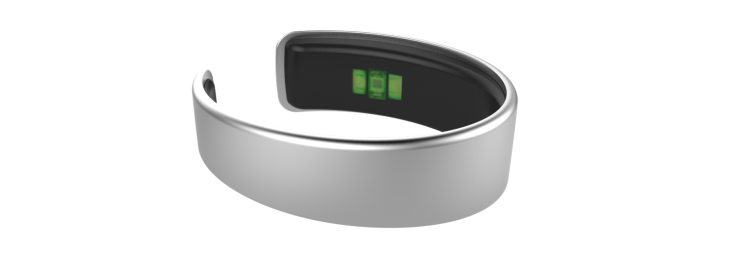
There are numerous smart health applications on the market that provide detailed analyses of users’ personal health data. However, the most challenging aspect of medical and health analytics is the initial step: obtaining truly reliable health metrics. Airo Health aims to track one such metric: calorie intake.
As a wearable device priced at $200, Airo Health maps the wearer’s pulse waveform to track blood circulation in the digestive system. The company’s research has revealed a strong correlation between digestive system blood flow and daily average calorie expenditure. Airo Health has established a partnership with the U.S. military and has identified 94 million Americans who monitor their calorie expenditure as its potential target audience.
In Africa, 5,900 newborns die every day, with many of these deaths attributable to unregulated childbirth facilities. New Incentives is a non-profit organization that provides financial incentives to expectant mothers who choose to give birth at formal healthcare institutions, aiming to reduce the risk of infection and HIV transmission. A pilot program by New Incentives enrolled 5,000 expectant mothers and successfully saved 47 infant lives.
Funding for this project is provided by GiveWell, Good Ventures, and the Bill & Melinda Gates Foundation, with participant numbers increasing weekly. Scientific research indicates that “choosing to give birth at a formal medical institution” is one of the three most cost-effective life-saving interventions. Currently, New Incentives is striving to secure additional funding for expectant mothers who are unable to deliver at formal medical facilities due to financial constraints, making unremitting efforts to effectively reduce neonatal mortality rates.

For most people, taking medication is hardly a pleasant experience. It requires accurately remembering the dosing schedule prescribed by your doctor, which can be challenging—especially when you need to take medication more frequently than you eat meals.
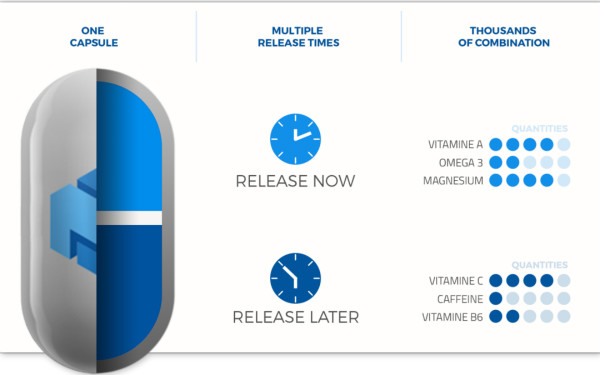
Multiply Labs leverages robotics and 3D printing technology to create personalized medication refill assistants tailored to each user. With this service, you can not only look up the ingredients of your delivered medications online but also track the logistics and delivery status of medications such as caffeine to ensure on-time arrival.Traditional pharmaceutical companies rely on mass production, whereas Multiply Labs leverages 3D printing to enable personalized manufacturing, with robotic systems handling drug filling.