

Voices from Grassroots Medical Institutions: Funding and Staff Shortages Are Old Issues—Systemic Constraints Are the Core Challenge
On August 27, the inaugural session of the VCBeat Future Healthcare City Forum · Guangzhou was successfully held.
Themed “Exploring the Core Forces Driving Change in the Primary Healthcare Market,” this urban forum attracted nearly 100 participants, including physicians, community healthcare administrators, mobile health entrepreneurs, and representatives from the pharmaceutical and medical device sectors.
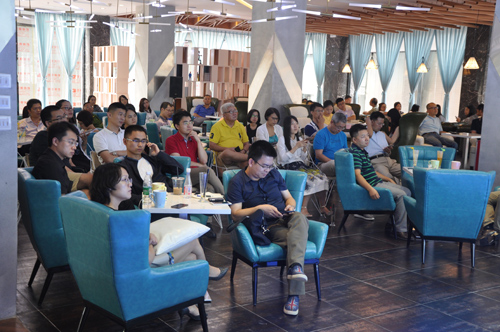
What particularly excited the organizers was that numerous entrepreneurs made special trips from Shenzhen, Zhuhai, Dongguan, Maoming, and Zhanjiang (a seven- to eight-hour drive from Guangzhou), and even from Guangxi Province. The city forum appeared poised to be upgraded into a “Greater Guangdong Future Healthcare Forum.”
After several years of a venture capital boom, the healthcare sector has entered a bottleneck phase, accompanied by a “capital winter” (perhaps because many investors went on vacation this summer—as a prominent investor remarked...). While the industry’s landscape is showing clear signs of divergence, the primary care market, previously overlooked or even marginalized, is surging with new vitality.
However, the severe scarcity of primary healthcare resources has posed significant challenges to the implementation of any new services targeting the primary care market.
Wu Yuxiong, Executive Vice President of the Guangdong Family Doctor Association and one of the guest speakers, began by pouring cold water on the chain clinic model. Wu stated that during a recent inspection tour in Taiwan, he found it difficult to see chain clinics in the streets and alleys there. Even in Hong Kong, although there are some chain-operated clinics, their market share remains in the single digits, making it hard to achieve significant scale. He noted that Country Garden is also establishing clinics within its residential properties and is encountering the same severe shortage of physicians.
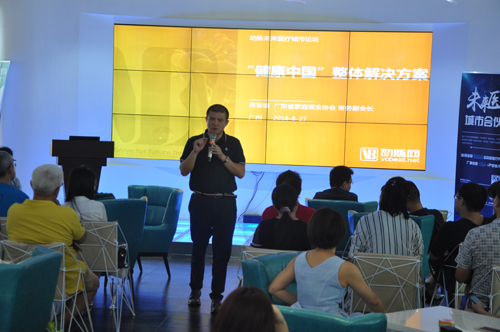
Wu Yuxiong, Executive Vice President of the Guangdong Family Doctor Association
Furthermore, Wu Yuxiong also stated that Taiwan’s healthcare system should not be overly praised. According to his observations at Chang Gung Memorial Hospital, Taiwan’s National Health Insurance (NHI) is currently facing shortages, with many hospitals refusing to accept NHI-covered patients by year-end, often citing midnight operations as the reason.
Regarding grassroots entrepreneurship or reform, Wu Yuxiong stated that although there are many challenges, the primary consideration should be how to increase income for grassroots medical personnel and healthcare institutions. Any model that merely increases workload without a corresponding rise in income, or with only minimal gains, is unlikely to be sustainable.
Wu Yuxiong specifically highlighted GE Healthcare’s new automated breast ultrasound system, ABUS. While traditional manual ultrasound relies on specialized sonographers for operation, ABUS features one-touch operation, enabling nurses to become proficient after just one week of training. This makes it highly suitable for deployment at primary care levels, with acquired breast images uploaded to the cloud for expert diagnosis. Although the high cost of the equipment may hinder its market expansion, the ongoing use of new technologies to extend services from large hospitals to grassroots healthcare facilities represents a prevailing market trend.
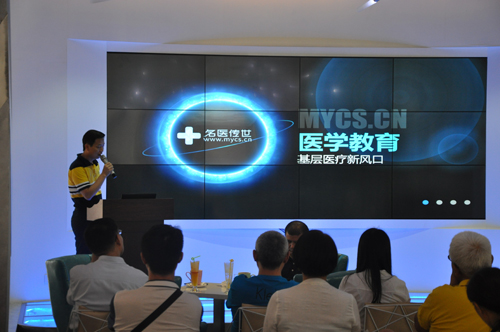
Chen Jin, Founder of Mingyi Chuanshi
Chen Jinze, founder of Mingyi Chuanshi, shared his insights on the medical education market. Chen asked the audience: “Please raise your hand if you believe that physicians are a highly educated demographic.” The majority of those present raised their hands. In response, Chen presented a set of data:
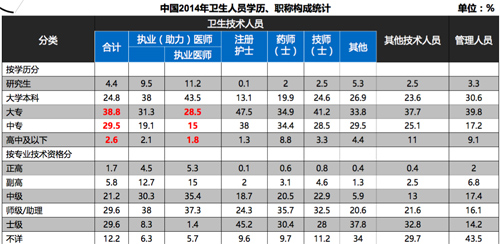
The table above presents official statistics from 2014. Among licensed physicians, only 11.2% held a master’s degree or higher, 43.5% had a bachelor’s degree, and nearly half had an associate degree or lower. Of the 3 million healthcare professionals nationwide, only 150,000 held senior professional titles (associate senior level or above), a figure that includes a significant proportion of experts not engaged in clinical practice.
Chen Jin stated that a major opportunity is imminent in the primary healthcare market, which represents a sector with substantial unmet demand.
Of course, the event also featured engaging interactions, including a “challenge” posed by a seasoned primary healthcare administrator to the views of Wu Yuxiong and Chen Jin.
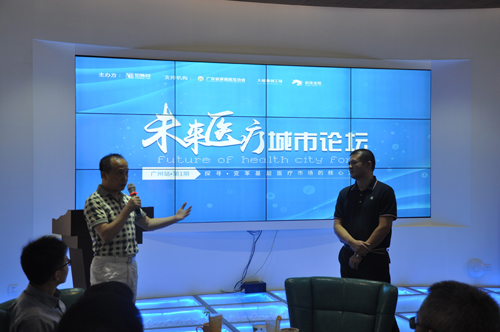
Li Yue, General Manager of Guangzhou Ruike Rehabilitation Technology Co., Ltd. & Wu Yuxiong, Executive Vice President of the Guangdong Family Doctor Association
That is, whether it is enhancing the service capabilities of primary care physicians and primary healthcare institutions through new technologies, or improving physicians’ competencies through medical education, there is first an issue of evaluation criteria. This also involves the undefined boundaries of medical services covered by primary care, for which there are no clear answers.
When VCBeat asked the director of a community health center in Guangzhou about the biggest challenge in their current work, the director responded that funding and staffing shortages were cliché topics, emphasizing instead that the primary constraint lies within the grassroots healthcare system.
VCBeat further suggested that primary healthcare institutions might undergo large-scale restructuring, similar to the state-owned enterprise reforms of the past. The respondent indicated that this was highly likely, noting that, compared with large hospitals, primary healthcare is better suited for market-oriented operation.
As the inaugural event marking the official launch of the “VCBeat Future Healthcare City Forum” in Guangzhou, it has also officially ignited the engine that connects local healthcare industry professionals in Guangzhou and the broader Guangdong region to VCBeat’s national healthcare industry platform.
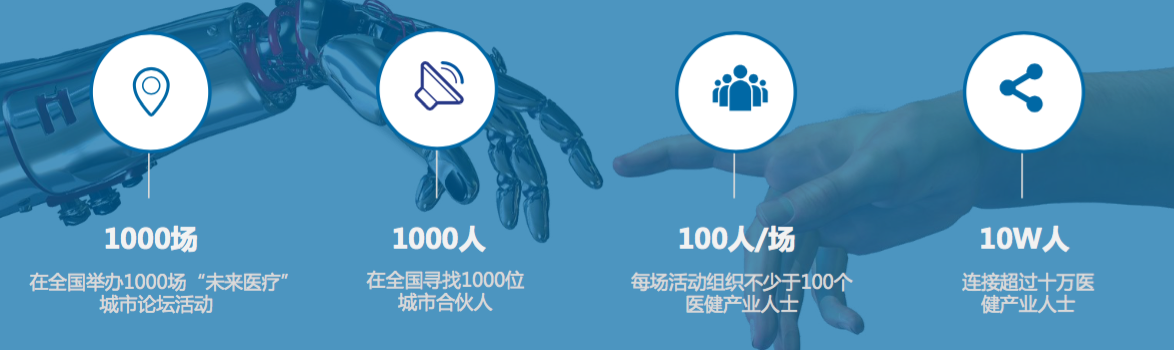
The Future Healthcare City Forum plans to host 1,000 events across China, creating a precise ecosystem encompassing over 100,000 professionals in the healthcare industry, enabling you to establish deep connections with 1,000 individuals—
l Explore cutting-edge medical applications and reform issues
l Exchange the latest global technologies and products
l Achieve collaborations and transactions more efficiently
l Jointly Build Industry Influence and Personal Brand
In the future, the VCBeat Future Healthcare City Forum · Guangzhou will continue to host thematic forums on various topics and specialized fields, and welcomes collaboration with all sectors of the healthcare industry for co-hosted events.
…………
Partnership Negotiations — Wang Rifei, Partner of the VCBeat Future Healthcare City Forum (VCBeat Special Correspondent for South China)

(Scan the QR code to add on WeChat; please include your name + company)