

WeChat Partners with Over 60,000 Pharmacies to Drive 'Internet + Pharmacy' Transformation
WeChat’s Q2 financial report reveals that its monthly active users have reached 806 million, making it a habit and lifestyle for people. WeChat’s mission is to connect users, then integrate commerce, and ultimately provide services to users. Under this mission, how does WeChat deploy its “Internet + Pharmacy” business?
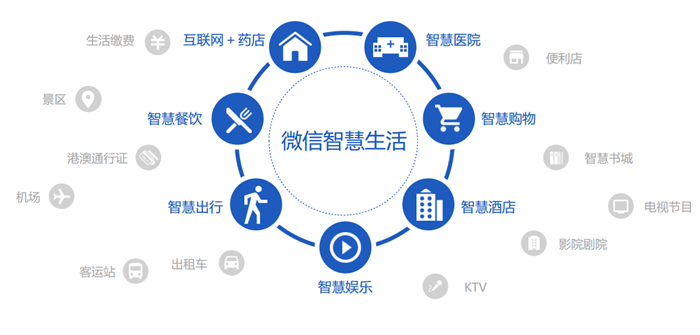
Within Tencent’s healthcare ecosystem, WeChat serves as a critical payment tool for optimizing medication purchasing. The medical services currently offered include WeChat Smart Hospitals, WeChat “Internet+ Pharmacy,” WeChat City Services, the WeChat Hardware Platform, Tencent Tangdaifu (Glucose Buddy), and Tengai Doctor. This article by VCBeat (WeChat ID: vcbeat) provides an analysis of WeChat’s “Internet+ Pharmacy” initiative.
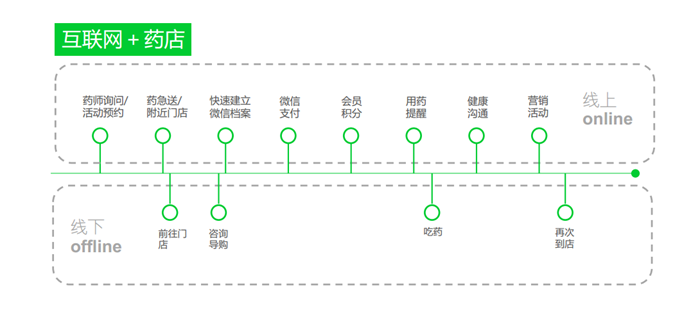
Last April, WeChat unveiled its “WeChat Smart Pharmacy” solution for the first time, offering services that connect consumers with pharmacies. By adopting the WeChat Smart Healthcare solution, traditional pharmacies can conduct online pre-consultations, arrange medication delivery, establish patient records, enable WeChat Pay, manage loyalty points, send medication reminders, and facilitate follow-up health communications and participation in marketing campaigns.
This August, WeChat Smart Pharmacy was renamed “Internet + Pharmacy”. To date, more than 60,000 pharmacies have enabled WeChat Pay, and partnerships with numerous pharmacies have been established to provide pharmaceutical services such as membership management, disease profiling, chronic disease management, and home delivery of medications.
Following the provision of “Internet + Pharmacy” services, WeChat is urgently encouraging pharmacies to undergo a “smart transformation,” aiming to evolve them from single-purpose medication outlets into diversified health service centers. Compared with traditional pharmacy models, WeChat’s “Internet + Pharmacy” offers advantages in five key areas:
I. Traditional brick-and-mortar stores struggle to accumulate foot traffic, making it difficult to expand business opportunities based on user flow. In the interaction between stores and customers, costs are high, resistance is significant, and services are hard to penetrate and communicate effectively. By leveraging WeChat Official Accounts, stores can establish one-on-one connections with users, build an online customer base, and enhance services while exploring new business avenues based on this user traffic.
2. Traditional membership systems struggle to reach users, and the data they generate lacks analytical value due to its single-dimensional and limited nature, making it difficult to create value. In contrast, WeChat Membership Cards are easy to carry and use. The WeChat data generated from these cards can be analyzed in detail, enabling brands and marketing efforts to directly engage users, thereby enhancing brand influence and sales revenue;
3. Traditional stores have limited revenue streams and struggle to expand new commercial growth points. Through WeChat connections and multi-dimensional data, pharmacies can shift their focus from individual points to broader areas, from individuals to families, and from mere disease treatment to the broader health sector, thereby adding new business opportunities;
IV. Traditional brick-and-mortar stores rely on limited marketing tactics, where simplistic promotional campaigns and price wars have become an industry-wide pain point, hindering refined operations. By leveraging WeChat’s interactive influence and marketing tools, businesses can access a broader range of strategies and achieve more precise marketing.
5. Traditional stores have limited payment options, leading to cash management cost issues. WeChat Pay has gradually become a standard feature across various industries, enabling rapid payments and allowing electronic receipts to be stored for one year.
The core strengths of traditional pharmacies lie in their pharmaceutical products, physical stores, and customer base. By upgrading to a WeChat-based “Internet + Pharmacy” model, they leverage drug sales as the foundation, use physical stores as channels for communication and service delivery, and place customers at the center to provide comprehensive health services. This approach creates a dual closed-loop system integrating service workflows with marketing conversion, transforming pharmacies into diversified user health service centers.
In the “Internet + Pharmacy” application scenario, users complete only four steps at the pharmacy: visiting the pharmacy, consulting with sales staff, taking medication, and returning to the store. All other steps—including pharmacist consultations, medication delivery, pharmacy location search, member profile creation, payment, points accumulation, medication reminders, health communication, and marketing campaigns—can be facilitated through WeChat.
The deployment of the “Internet + Pharmacy” model demonstrates that WeChat has not developed specific products but instead acts as a conduit. WeChat provides services to pharmacies, which can leverage WeChat’s service providers for secondary functional development to integrate the “Internet + Pharmacy” workflow. For instance, pharmacies can utilize WeChat to develop appointment-based pharmacist consultation services, integrate JD Daojia’s delivery services through WeChat, establish WeChat-based patient profiles to enable WeChat Pay, and allow users to follow official accounts to manage membership points and receive medication reminders, among other WeChat-enabled services.
On the surface, WeChat appears to be leveraging offline pharmacies to drive traffic. In reality, however, with its user base already reaching 806 million, there seems to be little need for WeChat to concern itself with the modest volume of offline traffic. Rather, WeChat places greater emphasis on the precision of offline users and their behavioral data, facilitating data analysis to better help pharmacies target their customers. WeChat will not alter the existing processes and models of the pharmaceutical industry; instead, it utilizes internet capabilities and its own platform features to optimize essential steps.
To this end, Li Long, Product Director of Tencent’s WeChat Pay for the pharmaceutical industry, explained to a reporter from VCBeat (WeChat ID: vcbeat) that WeChat provides service capabilities and platform users to the pharmaceutical sector, thereby enhancing user convenience while creating more service scenarios and increasing user stickiness. Meanwhile, Li Long shared two case studies: Xinxing Pharmacy and Shuyu Pingmin Grand Pharmacy.
Xinxing Pharmacy has partnered with WeChat for over a year, acquiring more than 100,000 new users through WeChat-enabled smart hardware devices. The various measurement devices have been used over 300,000 times, and the total traffic to articles on its official WeChat account has exceeded 300,000 views. Additionally, through its WeChat Official Account, Xinxing Pharmacy has streamlined corporate processes such as important company announcements, headquarters administrative attendance tracking, and meeting check-ins. More than 1,500 employees collaborate using the WeChat Enterprise Account.
Three joint campaigns were held with Shuyu Pingmin Pharmacy, including a scratch-card event, a lucky spin wheel, and an online voting activity, achieving a total participation of 250,000 person-times. Meanwhile, Shuyu Pingmin’s WeChat official account has amassed over 700,000 followers, and its “Youyao Song” medication delivery service launched on WeChat accounted for up to 29% of customer traffic at its highest-performing store.
In addition to serving pharmacies, WeChat is also pursuing innovative initiatives. For instance, its widely used “Scan” feature, when integrated with pharmaceutical products, allows users to scan a QR code to instantly display detailed drug information, provide a list of nearby pharmacies where the medication is available, and even offer extended services such as discount coupons.
Another example is the “Payment as Membership” collaboration between WeChat and Qingyuan Baixing Pharmacy, whereby customers automatically become pharmacy members upon completing a payment via WeChat Pay. While this innovation appears straightforward, it has driven a membership registration success rate of 92%, boosted membership growth by 566%, and reduced annual member churn by 1.31 million for Qingyuan Baixing Pharmacy.
According to VCBeat (WeChat ID: vcbeat), WeChat Pay and Tencent Cloud have signed a strategic cooperation agreement with Yunuo Shares, an ERP company, to jointly promote the pharmaceutical distribution industry and enhance efficiency in the sector through the “cloud + WeChat Pay” combination. Additionally, WeChat is collaborating with JD Daojia to explore solutions for improving delivery services for pharmacies.
In the “Internet + Pharmacy” blueprint, implementation is the next urgent issue WeChat needs to address. It is reported that WeChat will join forces with Sinopharm Information to establish an Internet Healthcare Club, offering services such as internet technology sharing, training on “Internet + Healthcare” tools, member integration, resource sharing, and mutual visits among member enterprises, all aimed at resolving the “implementation” challenge.
The Internet Healthcare Club operates on an invitation-only basis. Only pharmaceutical elites or enterprises invited by the Club’s Board of Directors may become members. Members are entitled to recommend their colleagues and business partners in the healthcare sector to the Board; however, such candidates remain subject to final approval by the Board.
Finally, Li Long reiterated that WeChat is merely a platform and has no intention of encroaching on the pharmacy sector’s “cake”; its sole purpose is to help pharmacies better serve their users.