

Fluorescent Detection Breakthrough Enables Rapid, Accurate Identification of Live Tuberculosis Bacteria

Tuberculosis is one of the most hazardous infectious diseases, causing nearly 2 million deaths annually, with the majority occurring in developing countries. Furthermore, the detection of tuberculosis is considerably challenging. Currently, patients must undergo a series of complex and cumbersome tests for a definitive diagnosis, including white blood cell counts, sputum smear microscopy for Mycobacterium tuberculosis, specific antibody assays, pleural effusion analysis, and imaging studies. Moreover, these methods fail to detect the virus during its latent period or in cases of low-level infection, let alone determine drug resistance of the pathogen.
Recently, Stanford University chemist Carolyn Bertozzi announced at the American Chemical Society (ACS) meeting that her team had developed a simple new method for detecting tuberculosis. South Africa has the highest incidence of tuberculosis globally, and researchers tested their approach on a TB patient in South Africa. The method not only detects Mycobacterium tuberculosis but also determines whether the TB cells are viable. This enables physicians to easily assess whether anti-tuberculosis medications are effective.
Conventional Detection Methods: Slow and Inaccurate
According to data from the World Health Organization, nearly one million people contract tuberculosis each year. When an individual with tuberculosis coughs or speaks, nearby individuals may inhale tiny droplets containing the bacteria, thereby risking infection. In developed countries, physicians diagnose tuberculosis by using X-rays and examining sputum (a mixture of mucus and saliva) samples for bacterial DNA markers. However, such technologies and resources are unavailable in some impoverished and underdeveloped nations.
The current clinical test is called the Ziehl-Neelsen (ZN) acid-fast staining test, a technique that dates back a century. In this method, stains are sprayed onto the surface of sputum specimens and undergo a series of processing steps; these dyes bind to hydrophobic compounds associated with mycobacteria. However, this test is slow and lacks sensitivity, often leading to misdiagnosis, because many bacterial cell membranes also contain hydrophobic compounds.
New Technology: Enables Rapid and Accurate Detection in Highly Diverse Samples
Bertozzi and her colleagues hoped to find a better method for labeling tuberculosis cells. Her team spent more than a decade studying how various organisms, including pathogenic bacteria, attach diverse sugar compounds to proteins and lipid molecules to construct cell membranes. Through early research, they discovered that, unlike most other bacteria and organisms, Mycobacterium tuberculosis and its close relatives use a sugar compound called trehalose to build their cell membranes. Consequently, Bertozzi hypothesized whether this sugar compound could be used to label tuberculosis cells.
Researchers designed a series of different trehalose molecules and labeled them with the DMN fluorescent dye. When exposed to light, the dye emits green fluorescence. However, if the dye is surrounded by water, even in trace amounts, it does not exhibit fluorescence. In contrast, when the dye-labeled trehalose binds to the lipids of the cell membrane, the sugar compound resides within the hydrophobic interior of the lipid bilayer, excluding water. Under these conditions, the dye fluoresces upon illumination. Bertozzi hopes her team can apply their dye-labeled sugar compounds to the detection of Mycobacterium tuberculosis. The microorganisms transport these compounds into the lipid layer of their cell membranes, enabling them to function. Since dead Mycobacterium tuberculosis cells and most other biological cells cannot take up these sugar compounds, they do not produce a fluorescent signal. Thus, this method enables the detection of viable Mycobacterium tuberculosis in highly complex sputum samples.
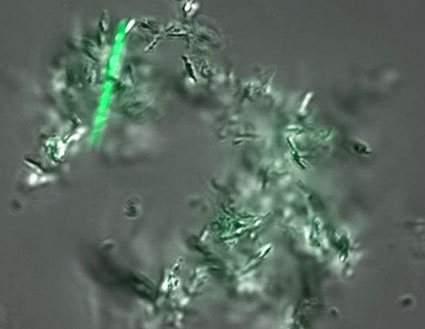
Researchers also found that, in addition to the live mycobacterial samples mentioned by Bertozzi at the conference—which showed detectable fluorescent substances under a microscope—common bacteria such as Escherichia coli and Staphylococcus aureus did not exhibit any detectable fluorescence. More importantly, live Mycobacterium tuberculosis began to emit a faint glow within five minutes after absorbing sugar compounds, becoming bright green within an hour. In contrast, the acid-fast (Zn) staining test often takes several hours and typically fails to detect mild infections. In another standard test, tuberculin protein was injected into the human body, and doctors monitored the immune response, ultimately indicating that the pathogen can remain latent in the body for three days.
Breakthrough: Rapid detection of drug resistance
Bertozzi and her colleagues have also collaborated with Bavesh Kana, a biochemist at the University of the Witwatersrand in South Africa. Kana provided them with sputum samples from patients suspected of having tuberculosis. Tests conducted on these samples demonstrated that the method can rapidly label live Mycobacterium tuberculosis bacteria and shows a strong correlation with DNA-based analyses. Bertozzi revealed that she and her colleagues plan to launch clinical trials for this biochemical assay to evaluate its effectiveness under real-world conditions.
“This is truly spectacular,” said Dale Boger, a chemist at the Scripps Research Institute in San Diego, after listening to Bertozzi’s report. He added that, to this day, the rapid detection of drug resistance in tuberculosis remains a challenging issue.
Bertozzi also mentioned that if this technology achieves clinical application, it will help us address many challenges, such as assisting physicians in determining whether a drug can exert its intended effect and effectively cure the most intractable and dangerous infectious diseases.