

Australian Health Tech Startup DoseMe Secures $2.6M Series A to Advance Precision Dosing Platform
Improper medication use can directly lead to death, including medication errors, overdoses, and the concurrent use of prescription drugs. However, improper medication use is not as distant from our daily lives as one might think. Statistics show that worldwide, one in every ten hospital admissions is due to medication errors or overdoses.
Recently, DoseMe, a company based in Brisbane, Australia, secured $2.6 million in Series A financing, bringing its total valuation to $20 million. True to its name, DoseMe specializes in pharmacokinetic calculations, providing clinical healthcare professionals with data-driven tools for precise medication dosing, thereby addressing the long-standing demand forThe Need for Precise Medication Dosage.
Currently available on the market, similarDoseMe's platforms are not many,Few companies are in direct competition with DoseMe.。Dean Ho, an expert in oral biology and medicine at the University of California, Los Angeles, has invented a similar tool called the “Personalized Dose Parabola (PPD),” which visualizes patient responses to varying doses of a medication, thereby enabling the identification of the optimal long-term dosage from population-level average data.MedAware, a company backed by Jewish financial consortia, is dedicated to helping hospitals prescribe the correct medications and avoid the side effects of polypharmacy; other more avant-garde companies, such as Italy’s Amiko, can assess whether patients’ medication prescriptions are rational and effective.
DoseMe was founded in 2012 and is currently valued at $20 million. In April this year, the company was named “Queensland’s Best Startup,” and in June, it won the Community Service Application category of Queensland’s “iAwards.” DoseMe has established partnerships with Canadian pharmaceutical company Apotex, Australian digital health platform Charm Health, St Vincent’s Hospital Sydney, and Siemens Healthineers, among others. Even Prime Minister Malcolm Turnbull personally visited the company to express his support for DoseMe’s mission to “showcase Australian entrepreneurial innovation on the global stage.”
In its 2014 seed round, DoseMe secured $500,000 in investment. The current $2.6 million funding round was led by Greg Spurgin and Gary Cunningham, founders of the physiotherapy clinic chain Physiotherapy. The company selected these two investors from among many candidates due to their “proven track record of successfully introducing Australian healthcare ventures to the U.S. market.” Spurgin will join the DoseMe board of directors, which also includes seed investor Steve Baxter, CEO Charles Cornish, and company founder Dr. Robert McLeay.
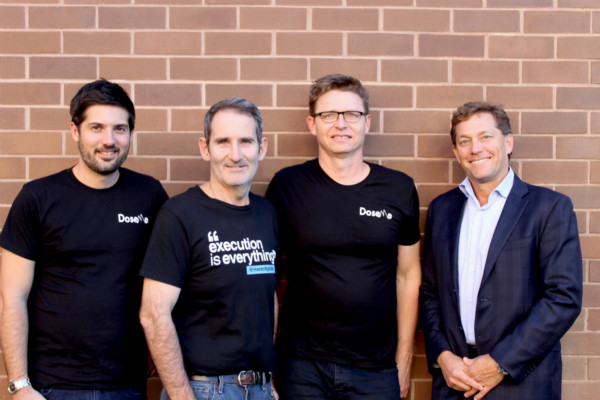
Board Members: Robert McLeay, Steve Baxter, Charles Cornish, and Greg Spurgin
Investors believe that DoseMe has significant growth potential. “Having worked in the healthcare industry for over 25 years, I can clearly see that DoseMe holds promise for substantially reducing medical costs and improving efficiency. Most importantly, it can save many lives around the world,” said investor Cunningham in a statement.
“Charles’ team has demonstrated to the world the remarkable outcomes that can be achieved by combining an idea capable of addressing critical global challenges with a pragmatic business spirit,” said Steve Baxter, seed investor and star of the TV series Shark Tank. “It is clear that DoseMe fills a significant gap in the market and will become a highly valuable software solution. I am delighted to partner with DoseMe to advance our shared mission of precision medication and saving lives.”
DoseMe’s core technology of “precise dosing” is by no means unfounded. At the heart of its software lies a dosing algorithm based on Bayesian statistics, integrated with machine learning techniques. By leveraging extensive patient data and clinical trial results, the system constructs sophisticated algorithmic models to study individual metabolic rates, thereby estimating the extent to which a patient in a specific condition can absorb, metabolize, and excrete a given drug. When applied to prescribing medication, the algorithm requires input of personal parameters such as height, weight, and gender. Within one second, the system establishes a personalized data model, rapidly calculates the most effective dosage for a specific drug, and simulates the outcomes associated with different dosing regimens. Additionally, the system evaluates potential interactions with other medications the patient may be taking.
Although the precision of calculated drug dosages already surpasses that of hospital-prescribed regimens, DoseMe incorporates experimental findings from special cases into its software models and continuously “learns” by recording patient responses to specific medications in clinical practice. This enables more accurate delivery of personalized medication plans, thereby further enhancing precision and therapeutic efficacy.
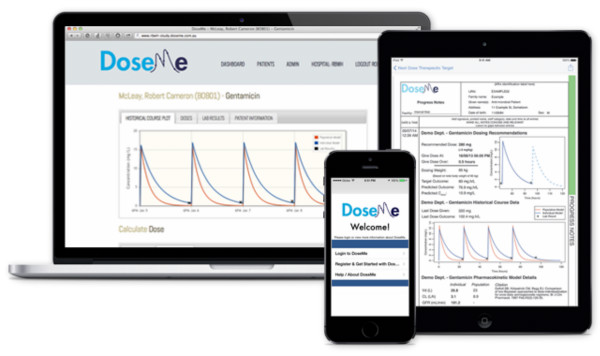
DoseMe Portable Mobile App Platform
DoseMe currently offers both a mobile app and a web-based platform. Healthcare professionals can use mobile smart devices at the bedside to perform on-site dose calculations for patients, leverage the feature-rich DoseMe web platform in their offices, or utilize a compatible version of DoseMe integrated with the hospital’s own patient management system. DoseMe is highly convenient and adaptable, whether for individual healthcare providers or entire hospital systems.
Co-founder Bruce Green stated, “Certain medications require precise monitoring, as they are effective only within a specific therapeutic window; subtherapeutic levels result in inefficacy, while supratherapeutic levels may cause adverse effects or even life-threatening complications.” Achieving precise monitoring of drug concentrations is indeed a formidable task demanding exceptionally high technical expertise.
The algorithm needs to understand not only the basic information of patients but also their medication history, combined with previously recorded laboratory results. The final accuracy achieved can even predict the patient's blood flow rate, thereby simulating the most suitable concentration range of drugs in the patient's body.
There are other drug dosage calculation tools on the market that operate within Excel spreadsheets. However, according to the founder, software relying on Excel for data processing cannot achieve high levels of accuracy and falls far short of the sophisticated algorithms employed by the DoseMe platform. For example, to approve a new drug, the U.S. Food and Drug Administration (FDA) requires the development of various complex mathematical models to describe how the drug is absorbed, metabolized, and excreted in the human body. The DoseMe platform not only builds these complex models but also integrates individual patient data and laboratory results, resulting in extremely high computational density. The volume of data involved is so substantial that using Excel spreadsheets is simply impractical.
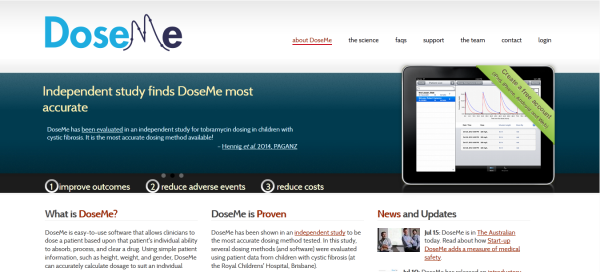
DoseMe's Dosing Accuracy Gains Recognition
DoseMe’s IT technology, which can be described as “quite sophisticated,” is employed to build comprehensive, personalized pharmacokinetic models; this is precisely why it has been classified as a complete “medical device” in Europe.
What DoseMe aims to achieve is to enable clinicians to anticipate a broader range of therapeutic options and optimal outcomes when managing complex cases. In an independent study conducted at the Royal Children’s Hospital in Brisbane, experts utilized DoseMe’s dosing algorithm—based on Bayesian inference—and its software application to predict appropriate medication doses for children with cystic fibrosis, yielding highly favorable results.
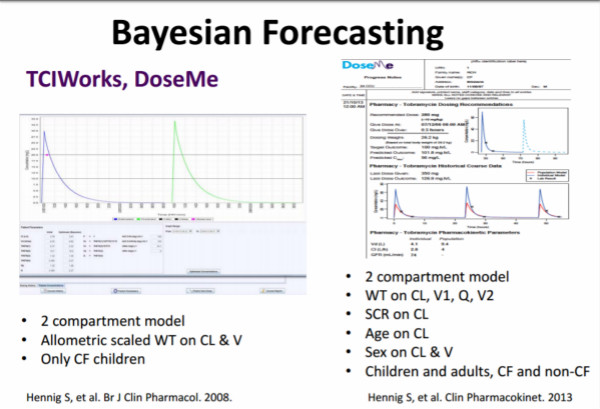
DoseMe’s algorithms and software have been recognized for their use in independent research at the Royal Children’s Hospital, Brisbane
The company also detailed the benefits that the DoseMe platform can bring to clinical care:
I. In terms of therapeutic efficacy
The survival rate of children with leukemia has increased by more than 10%; the survival rate of patients with sepsis has been improved; the effectiveness of medications such as warfarin, enoxaparin, vancomycin, and aminoglycoside antibiotics has been enhanced; the time required to stabilize patients' conditions has been reduced; and the duration of fever symptoms in patients using gentamicin and aminoglycoside antibiotics has been shortened.
II. In terms of reducing adverse reactions
Reduce the risk of drug toxicity; alleviate bleeding and bruising symptoms; halve the side effects of chemotherapy; reduce medication discontinuation due to adverse reactions; mitigate the nephrotoxicity of gentamicin and vancomycin; and cut mortality rates in half.
III. Regarding Medical Expenses
Saves at least $2,500 per patient; reduces average hospital stay by 10 days per patient; cuts laboratory testing volume in half; cost-benefit ratio ranges from 4:1 to 52:1.
Currently, DoseMe has received approval from Australian regulatory authorities and obtained European CE certification, and is awaiting review and approval by the U.S. Food and Drug Administration.
DoseMe believes that its target market encompasses all hospitals worldwide. Seed investor Steve Baxter once stated that cases of medication errors are deeply distressing, with data indicating that such errors frequently result in death. However, the advent of DoseMe, a user-friendly yet precise tool, can significantly prevent these incidents. The DoseMe platform offers tiered pricing services, with the lowest fee starting at $29.99 per month. Tailored services and pricing structures are available for medium-sized hospitals, large hospitals, and even companies within the pharmaceutical industry. Additionally, under strict confidentiality safeguards for patient private information, DoseMe can sell medication usage data collected from actual platform utilization to pharmaceutical manufacturers.
DoseMe’s Series A funding will primarily be allocated to five key areas: supplying Australian commercial healthcare institutions, expanding into the U.S. market, increasing sales volume in Europe, integrating its app with mainstream electronic health record (EHR) systems, and expanding the range of drug compounds supported by its platform research. This strategy underscores DoseMe’s ambition to become a global leader in cutting-edge medical technology. The platform has already become the first precision dosing prediction tool registered with the Australian Therapeutic Goods Administration (TGA), and the investment received will further facilitate its entry into the commercial healthcare sector. DoseMe primarily performs dosage calculations for 13 drugs across four major categories—chemotherapy agents, antibiotics, anticoagulants, and clotting factor promoters—due to the high precision requirements for dosing these medications.