

Survival Report on Internet Healthcare (Part I): Where Are the 533 Companies That Secured Investment Over the Past Five Years?
Starting around 2011, the first wave of internet healthcare companies began to emerge. The period from 2014 to 2015 marked the peak of development for “Internet + Healthcare,” with a large number of companies securing substantial financing. However, since the second half of 2015, debates have persisted over whether the model should be termed “internet healthcare” or “healthcare internet,” centering on the critical issue of commercial monetization.
Since 2016, as the secondary market has cooled, the theory of a “capital winter” has gained widespread traction across various sectors. The internet healthcare industry has also been affected, with every instance of layoffs, corporate transformation, or closure being cited as “irrefutable proof” of this capital winter. For example, the recent layoff controversies at Xunyi Wenyao and JiuYi 160, as well as the exit of YaoGeili, have dominated social media feeds.
As a media outlet deeply entrenched in the internet healthcare sector, VCBeat (WeChat: vcbeat) has undertaken a thorough review of the industry’s actual development over the past five years. Was capital investment in a “winter” or a “warm season”? Were startups fortunate or unfortunate? We let the data speak.
Over the past month, VCBeat has compiled data on 1,134 companies in the “Internet + Healthcare” sector established since January 2011. We have focused on analyzing over 20 dimensions of data for 533 funded enterprises, including industry categories, cumulative financing records, funding rounds, founders’ backgrounds, survival status, and time of closure. Based on this dataset, we performed data cleaning and analysis to produce a report on the industry’s survival landscape.
Let’s start by sharing some insights we’ve derived from data:
1. Among the 533 companies that received investment, the survival rate exceeded 80%, demonstrating the investors' keen insight.
2. Entrepreneurs with a medical background have a lower failure rate.
3. Multiple specialty fields have achieved significant development.
4. Capital has been continuously increasing its investment in internet healthcare
……
For more insights, please read the full report, which is divided into three sections:
Internet Healthcare Survival Report (Part I): How Are the 533 Companies That Received Investment Over the Past Five Years Faring?
Survival Report on Internet Healthcare (II): Why Do They Survive? In-Depth Analysis of Sub-Sectors
Now beginning.
Since January 2011, a total of 1,134 “Internet + Healthcare” enterprises have emerged in China, spanning ten sectors including health and wellness, physician search and diagnosis/treatment, specialized medical services, healthcare informatization, and biotechnology. Among these, 533 companies have secured financing from institutional and individual investors. We will focus our analysis on the data and survival status of these 533 firms, as those that have obtained funding tend to exhibit greater business maturity and thus offer higher analytical value.
Why We Chose to Begin Our Statistics in 2011: 2011 marked the inaugural year for the development of “Internet+ healthcare” enterprises, with the vast majority of healthcare companies bearing Internet DNA emerging after 2011. Among these 1,134 companies, approximately half have attracted investor interest. Of course, the actual number certainly exceeds 1,134, as many companies disappeared before they could be recorded.
1Internet+ Healthcare Companies Secured a Total of $3.321 Billion in Investment
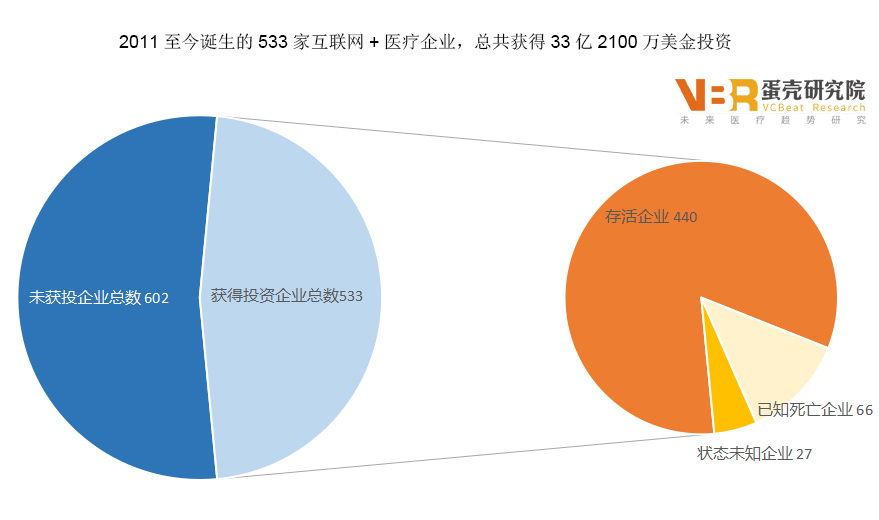
Since 2011, according to publicly available data, these 533 companies have collectively secured $3.321 billion in investment, with an average funding amount of approximately $6.23 million per company. Among them, a survey by VCBeat reveals that 440 companies are currently operational, 66 have definitively ceased operations, and the status of the remaining companies is unknown. Based on the data from the 66 defunct companies, the industry mortality rate is approximately 12.38%. While the failure rate for new startups in China exceeds 90%, Internet-plus-healthcare enterprises demonstrate significantly better development trajectories after securing investment. The relatively high survival rate among these 533 companies underscores investors’ astute judgment, their selection of capable founders, and the promising prospects of the projects. Furthermore, entrepreneurs have effectively advanced their businesses as planned after obtaining funding, enabling robust corporate growth.
2Distribution of Internet+ Healthcare Enterprises by Sub-Sector: Specialty Services Catch Up and Take the Lead
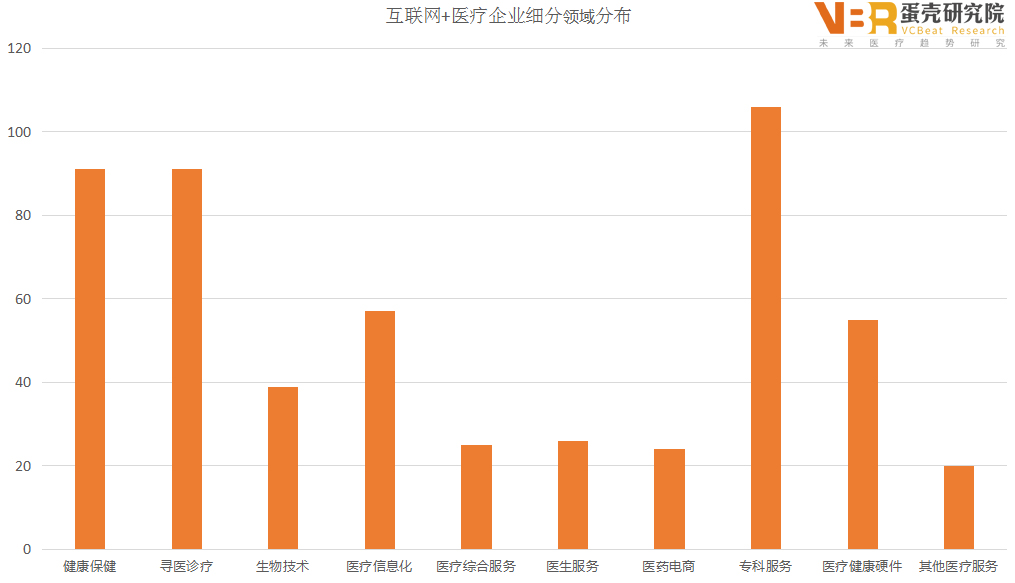
Which sectors have attracted the most startups? According to our statistics, among the 533 companies analyzed, the top three sectors are specialized medical services, health and wellness, and medical consultation and diagnosis, with 106, 91, and 91 companies, respectively. In the healthcare industry, the long-discussed pain points revolve around the three stages of hospital visits: difficulty in registering appointments before the visit, prolonged waiting times during the visit, and chronic disease management after the visit. Therefore, internet-plus-healthcare companies typically enter the market through the medical consultation and diagnosis category, which is closely related to the healthcare-seeking process (specialized medical services are also a subset of medical consultation and diagnosis). Due to the low barrier to entry in the health and wellness sector, a large number of companies have also entered this field.
3The highest number of new companies were established in 2014 and 2015.
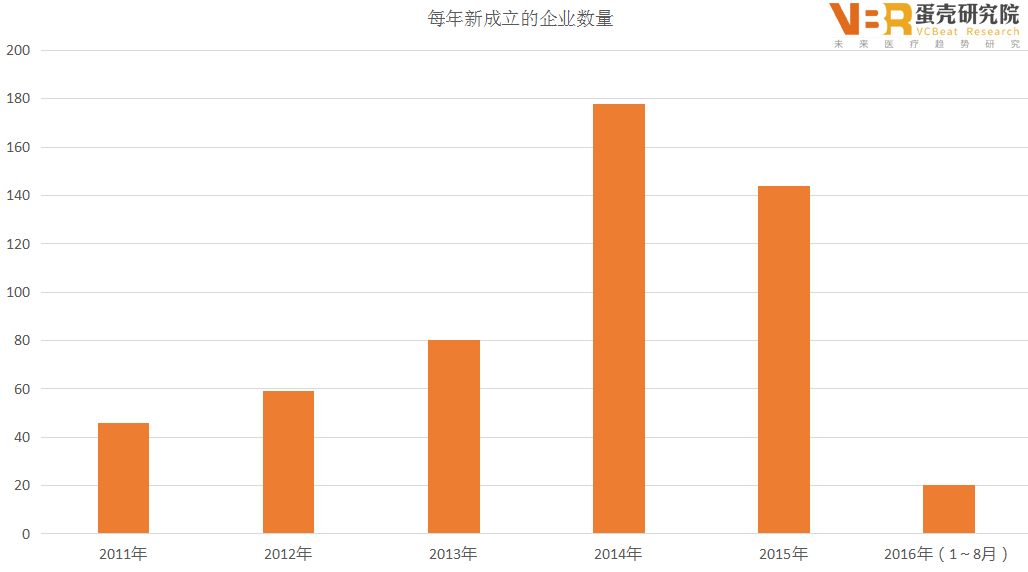
The chart above shows the number of newly established “Internet + Healthcare” companies each year from 2011 to the present. The figures peaked in 2014 and 2015, then dropped sharply in 2016, with only 20 such companies recorded as of August. Our statistics include only companies that have received investment. Did the 2016 “capital winter” result in a large number of new startups but few securing funding? When we consider the total number of newly established companies, this is not the case: only 44 “Internet + Healthcare” companies were founded in 2016, meaning nearly half still secured investment.
After more than five years of development, the landscape of the “Internet + Healthcare” industry has largely solidified. The number of startups has sharply declined, and only a handful have managed to secure investment. Therefore, the notion of a “capital winter” raised this year is not merely reflected in the statistical decline in venture capital funding for early-stage companies; more significantly, we believe it stems from the compressed survival space for startups, which find it increasingly difficult to penetrate new blue-ocean markets, making fundraising difficulties a widespread phenomenon.
4Number of New Companies in Sub-sectors
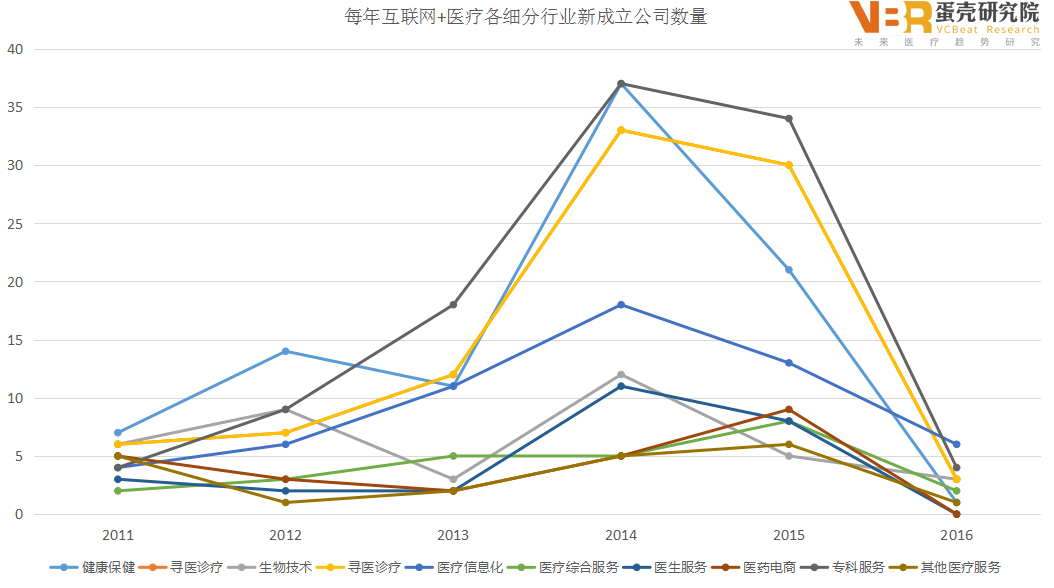
We segmented Internet-plus-healthcare enterprises by sector to analyze their growth trends. In 2014 and 2015, new ventures in specialized medical services and physician consultation/diagnosis maintained rapid growth, making these the most dynamic areas for entrepreneurship and giving rise to a large number of startups. The number of new companies in the health and wellness sector peaked in 2014, followed by a significant decline starting in 2015. Startups were relatively scarce in the fields of comprehensive healthcare services and pharmaceutical e-commerce, both of which exhibited relatively stable trends over these years.The total number of startups in 2016 was relatively low, for two reasons. First, the statistical data was slightly delayed, resulting in some startup information not being included. Second, currently, Internet-plus healthcare enterprisesAfter more than five years of development, the basic landscape of the comprehensive sector has been largely established.
5Comparison of Investment Amounts Across Sub-sectors of “Internet + Healthcare” Enterprises
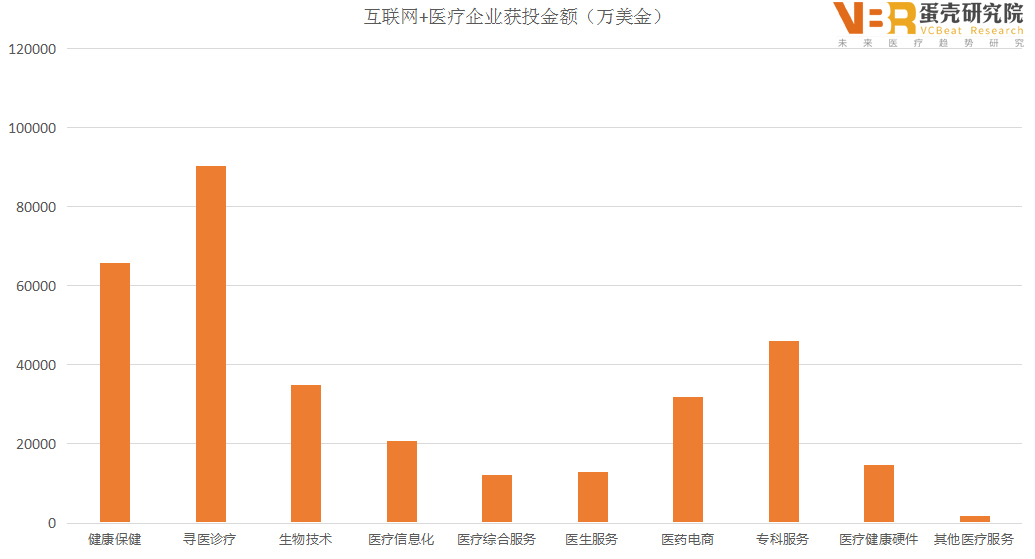
The top three sectors by funding amount, ranked from highest to lowest, are medical consultation and diagnosis, health and wellness, and specialized services. Medical consultation and diagnosis and specialized services are directly related to patients’ healthcare-seeking activities, while the health and wellness sector boasts a broader user base; consequently, these three sectors have seen the highest number of new startups and attracted the most investment. The high financing volumes in health security and medical consultation and diagnosis are primarily attributable to the emergence of projects beyond Series D, including unicorn companies.
6Background Analysis of Founders Across Sectors: A Clear Distinction
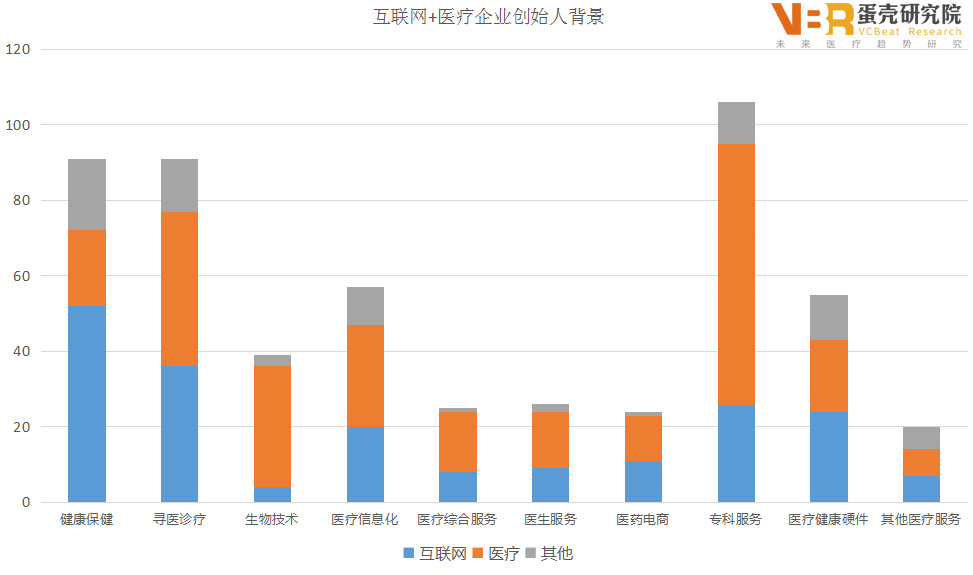
Companies participating in internet-based healthcare fall into two main categories: “Internet + Healthcare” and “Healthcare + Internet.” These represent two distinct founder backgrounds. One group comes from an internet background, leveraging their proven success in other industries to extend their reach into the healthcare sector. The other group has a medical background, understanding the bottlenecks of traditional healthcare models and seeking to transform the industry through the internet.
Enterprises with an internet background primarily focus their products on the pre- and post-treatment stages, most of which are fitness and wellness applications targeting consumer (C-end) users. As shown in the chart, individuals from internet backgrounds are most actively involved in specialized medical services, health and wellness, and patient navigation for medical consultations. Specialized medical services actually require a high threshold of medical expertise; fields such as oncology, dentistry, pediatrics, and nephrology are almost exclusively dominated by professionals with medical backgrounds. The relatively large number of founders with internet backgrounds depicted in the chart is attributable to their significant participation in areas with lower professional barriers, such as chronic disease management for diabetes and medical aesthetics. In contrast, entry into the intra-treatment phase—which includes appointment scheduling, payment, consultation, treatment, and medication dispensing—poses a higher barrier, requiring substantial medical resources, coordination capabilities, and robust partnerships with B-end hospitals. Consequently, enterprises founded by individuals with medical backgrounds are gradually increasing in this segment. Furthermore, in the diagnostic phase, high-barrier sectors such as personalized cancer treatment, genetic diagnostics, offline clinics, and innovative drug R&D are almost exclusively dominated by professionals with medical backgrounds.
Technical barriers to entry, entrepreneurial backgrounds, and business models vary across different sectors, leading to significant disparities in their attractiveness to investors. According to statistics from VCBeat, founders of companies in the biopharmaceuticals, gene sequencing, and personalized oncology treatment industries almost exclusively have medical or biological backgrounds. Moreover, these enterprises require substantial capital for establishment, and they tend to exhibit higher levels of both funding raised and survival rates.
7Number of Companies and Total Investment Amount by Funding Round
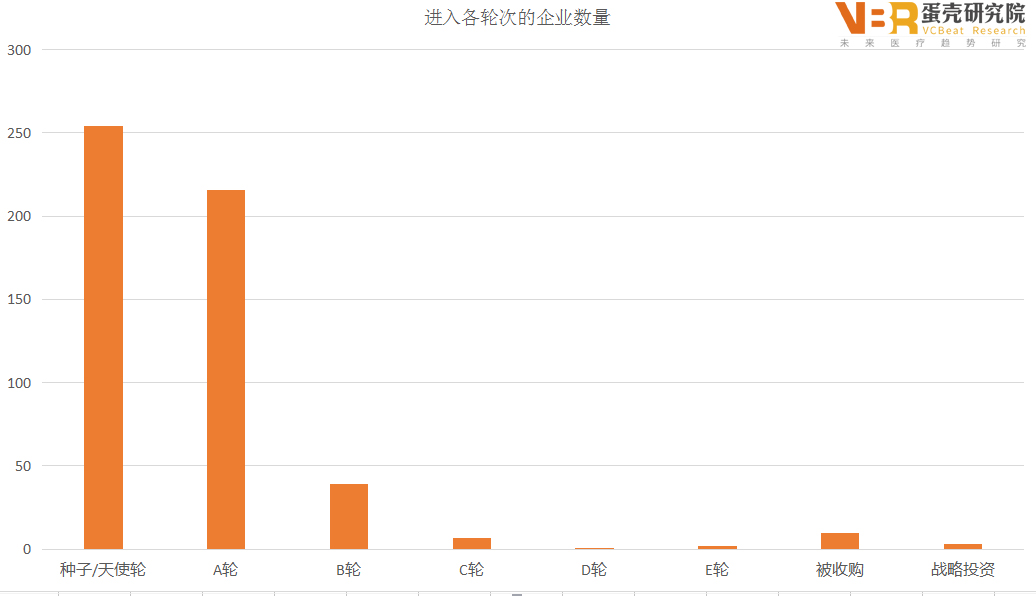
This chart presents the total number of companies advancing into each funding round. The highest number of companies are in the seed and angel rounds, which is logically consistent. As companies evolve, progressing from early-stage angel investment to growth-stage investment, then to mature-stage investment, and finally to private equity (PE) investment, the process becomes increasingly challenging, and the likelihood of securing subsequent funding diminishes. Only 11 companies have advanced beyond Series C, most of which have emerged as leaders in their respective fields.
8Series A funding saw the largest total investment amount, indicating that the industry has not yet reached the stage of decisive competition.
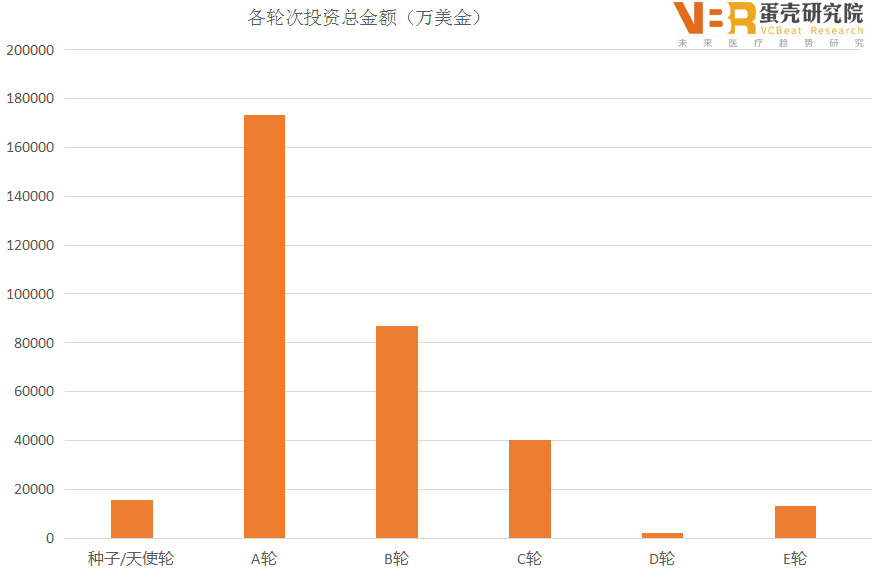
Although the largest number of companies are in the seed/angel stage, the total investment amount is not high due to the generally small size of angel investments, with an average of $610,000 per company. The number of companies entering Series A is substantial, and the investment amounts are larger, making Series A the stage with the highest total investment. Among companies in Series A, Ping An Good Doctor ranks first in total investment amount, securing $500 million in Series A funding at a valuation of $3 billion. The total financing amounts for startups entering Series B and C gradually decrease, but the average investment per round remains relatively high. Neusoft Xikang Network has the highest total financing among Series B companies, having raised $170 million in Series A and $64 million in Series B, for a total of $234 million.
A large number of companies remain at the seed/angel and Series A stages, indicating that the industry is still in its mid-development phase and has not yet entered a period of true explosive growth. In practice, competition is currently more intense in consumer-oriented healthcare sectors, such as medical aesthetics, and in the pure health sector, while the broader healthcare field remains in its early to mid-stages.
9Financing of Newly Established Startups Over the Past Five Years
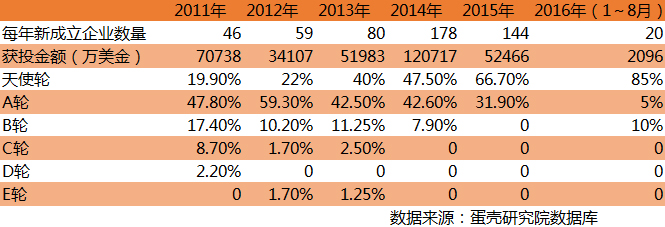
We have previously tallied the number of new startups established each year. The table above presents the total funding amounts secured by these companies (note: these investments did not necessarily occur in the same year as the companies’ founding). Companies founded in 2011 entered the industry early, faced less competition for their products, experienced easier growth, and attracted greater investor attention. As these companies progressed into subsequent financing rounds, they accounted for the largest proportion of firms reaching Series B, C, and D stages. In 2012, although the number of newly established enterprises increased, the total funding they secured remained relatively low. The years 2014 and 2015 marked a peak in the establishment of “Internet + Healthcare” companies, coinciding with the industry’s most favorable period; numerous new ventures were launched, and they secured substantial funding. However, despite the high number of companies founded in 2015, their late entry into a highly competitive market meant that most remained at the angel investment stage, with few achieving rapid growth. Fortunately, significant capital flowed into the sector in 2015, enabling these newly established companies to attract considerable investment. Collectively, they secured $524.66 million in funding, surpassing the total raised in 2013.
By examining the proportion of companies at each funding round shown in the table below, we can also discern the development patterns of unicorns in the “Internet + Healthcare” sector. During the initial startup phase, which lasts approximately one year, companies generally only have access to angel investment. After 2–3 years of growth, the likelihood of securing Series A and Series B funding increases significantly. Upon reaching maturity around the five-year mark, Series C and Series D investments tend to flow in abundantly.
10Annual Investment Amount: No Decline in Financing and Investment Volume in 2016
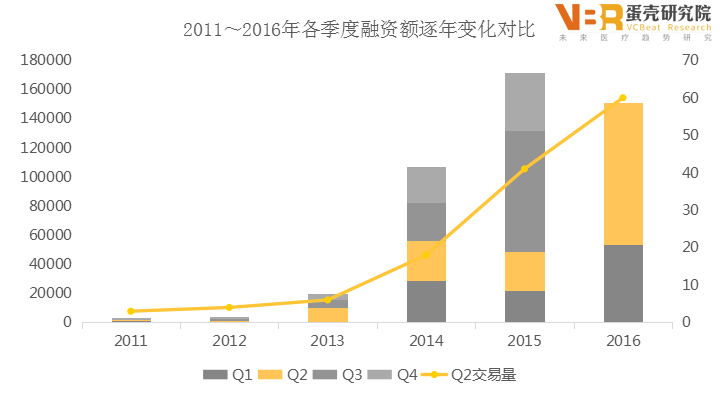
2011–2016: Investment and Financing Amounts in Internet+ Healthcare Enterprises Continued to Surge Significantly
According to investment and financing data compiled by VCBeat’s Eggshell Research Institute, capital inflows into the digital healthcare sector have risen substantially since 2011. In 2014, driven by capital injection, the development of the “Internet + Healthcare” industry accelerated significantly, ushering in a “springtime for capital,” with total financing and investment amounts nearly quintupling compared to 2013. During this period, mainstream corporate groups began to take shape, and mobile healthcare platforms such as DXY, Chunyu Doctor, and Haodf emerged prominently.
During the first half of 2016, a period characterized as a “capital winter,” there were 60 investment and financing transactions in the second quarter alone, with total funding reaching $977.73 million, an 83.1% quarter-on-quarter increase. In August alone, the healthcare sector repeatedly attracted significant capital injections, with Happy Dental, Jingyi Shares, Quyi Network, and Gene+ securing a combined total of nearly RMB 900 million. Although Ping An Good Doctor’s $500 million Series A round in the first half of the year substantially boosted the total funding figure for 2016, even excluding this $500 million, the total amount raised in Q2 2016 still exceeded that of the same period last year. Therefore, in terms of funding volume, investor enthusiasm for the “Internet + Healthcare” sector has not waned; rather, these funds have been almost exclusively directed toward larger, more mature companies with clearer business models.
The above constitutes VCBeat’s comprehensive analysis of the “Internet + Healthcare” industry over the past five years. Next, we will release detailed data interpretations for each subsector, along with an analytical report on 66 defunct companies. Stay tuned.
Planning︱Liu Huiguang
Drafting| Liu Zongyu
Mo Renying and Wang Guanglong also contributed to this report.
Note: The information in VCBeat’s series of reports is primarily sourced from the VCBeat database and select publicly available materials. While we ensure objective analysis of the data, we cannot guarantee the authenticity of certain original data sources. We have strived to maintain objectivity and impartiality in the report’s content; however, the views, conclusions, and recommendations presented herein are for reference purposes only.
For any feedback on the report, please feel free to contact the author, Liu Zongyu, via WeChat: q19930797.