

Weiwei Doctor Files IPO Prospectus: A Bone Surgery Triage Platform with Nearly RMB 10 Million in Angel Funding and Over 400 Surgeries Completed Within Three Months of Launch
In the second half of 2015, physician groups began to be established in rapid succession, with the number coming to light drawing repeated exclamations from the industry. However, there are likely many more physician groups operating under the radar. A source familiar with the matter revealed to VCBeat that, in Guangzhou alone, he was aware of at least twenty physician teams forming physician groups. This contact, who works in the insurance industry, noted that most of these teams had consulted him regarding medical malpractice liability insurance for their additional practice locations.
Qi Wenbin, Founder of Weiwei Doctor
In fact, as early as the first half of 2015, Qi Wenbin, founder of Weiwei Doctor, had already assembled a team. Having previously worked at Sina and Alibaba, Qi boasts over ten years of experience in internet operations, promotion, and market development. His marketing and ground-promotion teams are primarily composed of alumni from the Alibaba ecosystem. Additionally, the company’s Chief Medical Officer is Lü Houshan, former president of Peking University People’s Hospital.
However, Qi Wenbin’s team conducted nearly a year of market research, consulting experts at major tertiary Grade A hospitals in Beijing and engaging with local hospital directors, physicians, and patients at municipal- and county-level hospitals in Hebei Province and Inner Mongolia to understand frontline needs.
It was not until March 2016 that the company was formally established and its business model finalized. One month later, the Weiwei Doctor product was launched. Official operations commenced in May, during which the number of registered collaborating experts exceeded 100, and 40 surgeries were successfully completed.
Weiwei Doctor also completed its angel round of financing in May, with the investor being a newly established firm—Sanhang Capital. Its first RMB fund was established in March 2015, with a size of approximately RMB 200 million. The three founders of the fund had previously worked for many years at Hony Capital or Legend Capital, both part of the Lenovo Holdings system.
In the following June and July, the number of surgeries exceeded 100 and 200, respectively. Amidst the industry’s widespread lamentations of a “winter,” Dr. Weiwei appeared somewhat “out of place.”
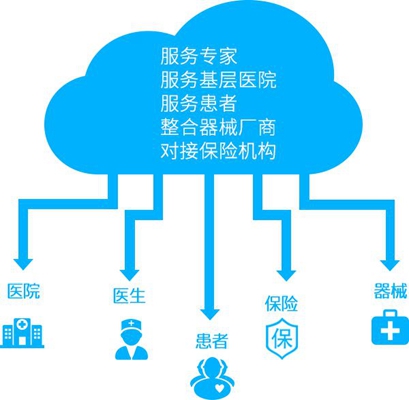
Dr. Weiwei has established a “One Cloud, Five Endpoints” medical service model. By leveraging a tiered diagnosis and treatment data center, it connects patients, physicians, healthcare institutions, medical device manufacturers, and health insurance providers to enable precise diagnostic and therapeutic management. This system matches patients with the most suitable specialists, the most favorable health insurance policies, and the most convenient hospitals for expedited care.
Currently, the expert pool of Weiwei Doctor primarily consists of orthopedic specialists from the Beijing area, with over 700 orthopedic surgeons having joined the Weiwei Doctor platform. It is reported that although experts at major hospitals have full schedules, they still retain a certain amount of discretionary time, allowing them to allocate approximately six days per month to multi-site practice.
The company currently prioritizes the Beijing-Tianjin-Hebei integrated economic belt as its primary strategic market. This includes city- and county-level hospitals in areas surrounding Beijing, such as Hebei Province and Inner Mongolia, where medical resources are relatively scarce. These regions are also major sources of out-of-town patients who travel to Beijing for medical care. For Weiwei Doctor, the closer the experts and their multi-site practice locations are, the lower the management and other operational costs. Currently, Weiwei Doctor has established collaborations with a total of 37 private and public hospitals. For these hospitals, partnering with specialists not only provides technical guidance but also successfully retains patients locally, which has a positive impact on revenue generation.
It is worth noting that Weiwei Doctor has also effectively addressed relevant regulatory issues. First, physicians in Beijing are no longer required to register their additional practice locations with their primary practice site. Moreover, these specialists already have mandates from higher authorities to provide support to grassroots medical institutions. Second, when Weiwei Doctor launches operations in a given locality, the local hospital submits the collaboration to the local health administrative authorities as a project for introducing expert resources. Previously, municipal and county-level hospitals often faced pressure from supervisory bodies due to difficulties in attracting high-caliber experts. Today, Weiwei Doctor’s services precisely help these grassroots hospitals strike a balance between clinical operations and the achievement of performance-related administrative targets.
Certainly, patients also benefit significantly. On the Weiwei Doctor platform, patients can either search for specialists themselves or have Weiwei Doctor recommend physicians of equivalent or higher seniority to provide diagnosis and treatment at hospitals in the patients’ local areas. Compared with seeking medical care in other regions, patients can enjoy a higher reimbursement rate at their local hospitals. Moreover, patients are spared the hardship of traveling long distances for medical care. It is worth noting that when one person travels to Beijing for treatment, they typically require at least one or two companions, all of which entail substantial expenses.
Newly established physician groups, regardless of the various banners they fly, continue to face scrutiny under the new guise of “fly-knife” practices in most cases. After nearly a year of research, Qi Wenbin chose orthopedics—a niche sector that appears to be another area rife with such “fly-knife” activities.
In Qi Wenbin’s view, to dispel such criticisms while simultaneously establishing a business model that differentiates the company from its peers and creates a competitive advantage with certain barriers to entry, it is essential to build a sustainable, long-term commercial relationship centered on addressing the pain points of key stakeholders, including specialists at major hospitals, primary care institutions at the county and city levels, and patients. Furthermore, by integrating supporting services from medical device manufacturers and insurance companies during business development, and expanding ancillary services beyond “visiting surgeon” procedures through deep, specialized, and segmented professional services, the stickiness among all collaborating parties can be strengthened. This approach aims to normalize “visiting surgeon” activities as a routine business practice, rather than merely short-term actions driven by pure commercial motives.
The expert management and physician group system construction at Weiwei Doctor are overseen by Chief Medical Officer Professor Lü Houshan. A renowned orthopedic specialist, Professor Lü previously served as Director of the Institute of Joint Diseases at Peking University and Chief of the Department of Orthopedics and Joint Surgery at Peking University People’s Hospital. He is the former President of Peking University People’s Hospital and the founder of its Department of Orthopedics and Joint Surgery. Additionally, he serves as Editor-in-Chief of *Artificial Joint Surgery*, *Rheumatology*, and the *Manual of Modern Diagnosis and Treatment in Orthopedics*.
The services provided by Weiwei Doctor to experts are primarily undertaken by two teams: the physician assistant team and the triage center. These services include one-stop surgical coordination, academic exchanges, consultation and clinic visit coordination, and liaison with medical insurance institutions.
Among the one-stop surgical coordination services, Weiwei Doctor matches patients with specialists based on their needs, specific case details, the experts’ areas of expertise, and scheduling availability. Once the surgery is confirmed, precise preoperative examinations and preparations are conducted. The service includes coordinating specialist hospital visits for seamless handover, implementing comprehensive surgical risk control, and assisting with postoperative follow-up and rehabilitation tracking.
According to Qi Wenbin, the company’s promotion team initially faced significant communication barriers when engaging with experts from these three hospitals, as prior ground-promotion efforts by other mobile health companies had fostered a degree of resistance among these specialists. However, as the company’s operations have taken root, Weiwei Doctor has established a strong positive reputation. Some experts now even entrust Weiwei Doctor with the full management and planning of their multi-site practice arrangements.
For grassroots partner hospitals, these experts are not merely “guest stars” who appear only when there is work to be done; they also assume certain responsibilities for departmental development. Through activities such as outpatient consultations and academic exchanges, they help rapidly enhance the clinical proficiency and service capabilities of both grassroots physicians and the hospitals themselves.
On July 23, Dr. Weiwei and Dingzhou Traditional Chinese Medicine Hospital formally signed a strategic cooperation agreement and concurrently held the Dingzhou Orthopedic Academic Exchange Conference. The two parties will engage in comprehensive collaboration in orthopedics, leveraging tiered diagnosis and treatment policies and multi-site practice regulations to optimize top-tier medical resources, such as specialists’ available time, through an information technology platform. Multiple orthopedic experts from Beijing’s Grade A tertiary hospitals will provide outpatient consultations, conduct academic exchanges, offer surgical guidance, deliver clinical teaching, and perform consultations and surgeries for complex and refractory cases.
Furthermore, in July, medical device manufacturers also began to join the platform, marking another step forward in the company’s implementation of a comprehensive, end-to-end orthopedic platform.