

Xia Huimin, President of China's First Smart Hospital: Get Ready for a Jaw-Dropping Transformation in the Next 5 Years!
Is “Internet + Healthcare” Really Just About Skipping the Queue?
How will technology, the internet, and business models disrupt the entire system and processes of public hospitals?
As the president of Guangzhou Women and Children’s Medical Center, the first smart hospital in China to implement a “treatment first, payment later” model, Xia Huimin has broadened our horizons regarding the evolution of smart hospitals and the future of healthcare.
Below is the verbatim transcript of President Xia’s on-site speech delivered at the “Health Elite Club · Shidao Renxin Salon” on July 30 (video included).
The first point I wish to make: Over the next five years, public hospitals will undergo more changes than they have in the past three decades.
Our Maternal and Child Health Center has completed the construction of its information system and the bidding process. By the end of this year, we will close the western medicine warehouses at our three campuses and the outpatient pharmacies. This change,If the changes over the past 30 years are characterized by an enhancement in service delivery capabilities, then future changes will involve transformations in the systems and processes of public hospitals, as well as structural reforms.。
Over the next five years, these changes will be mainly reflected in several aspects:
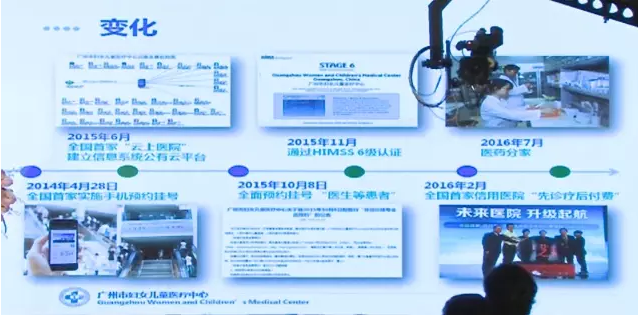
Taking our hospital as an example, we implemented mobile appointment scheduling and payment in 2014. On October 8, 2015, we rolled out comprehensive non-emergency appointment-based registration. Previously, patients queued to see doctors; after the implementation of appointment-based registration, a peculiar phenomenon emerged: doctors were waiting for patients. By February 2016, we became the first hospital in China to adopt the “treatment first, payment later” model. From appointment-based registration to non-emergency appointment scheduling, and then to credit-based medical services, despite handling 12,000 to 13,000 outpatient visits daily, neither registration nor upfront payment is required. The traditional “three long waits and one short consultation” problem prevalent in public hospitals may thus be eliminated. Our billing departments have been abolished, registration counters closed, and in the future, pharmacies will also be relocated outside the hospital. These are merely the initial steps in our understanding of the evolving industrial chain.
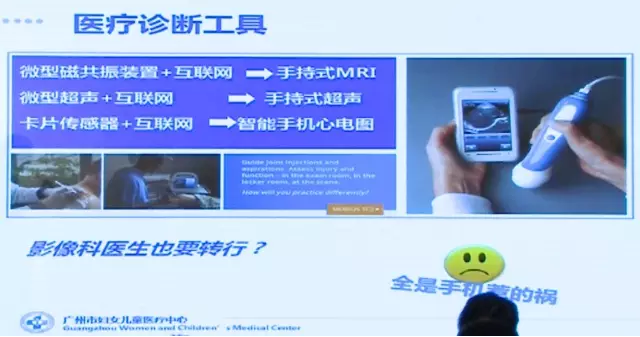
For example, Silicon Valley is researching the use of a single drop of blood to perform the full range of tests conducted in clinical laboratories. This technology has the potential to replace all existing functions of clinical laboratories, implying that hospital-based clinical laboratories may cease to exist in the future. Another example is our current work: real-time transmission of ultrasound images to the cloud enables computer-assisted diagnosis, allowing fetal monitoring and diagnosis at home via smartphones. This suggests that both clinical laboratories and ultrasound departments may eventually become obsolete. Furthermore, emerging technologies enable home-based magnetic resonance imaging (MRI) using smartphones and two magnetic discs. All these developments illustrate the impact of future internet technologies on public hospitals.
# The Power of Superposition Drives Healthcare Transformation: The Core of Future Changes in Healthcare Lies in the Power of Superposition, Driven by Government, Technology, and Business Models.
Converging forces are driving changes in the hospitals of the future. In what directions will these transformations unfold, and what will be their key components?
Future changes are transforming our current market into a diversified, multi-tiered landscape with more refined positioning. As technology becomes more accessible and decentralized, the physician-led model is becoming more democratic and offers greater autonomy.From another perspective, the opening up of resources and research platforms will transform our existing diagnosis and treatment protocols. Therefore, we anticipate that regional medical centers, along with supportive and primary-care models, will likely become the dominant directions in the future. Throughout this process, large regional hospitals will remain the mainstay of healthcare reform. Furthermore, physicians working in these major hospitals will continue to lead and drive the efforts of key healthcare providers.
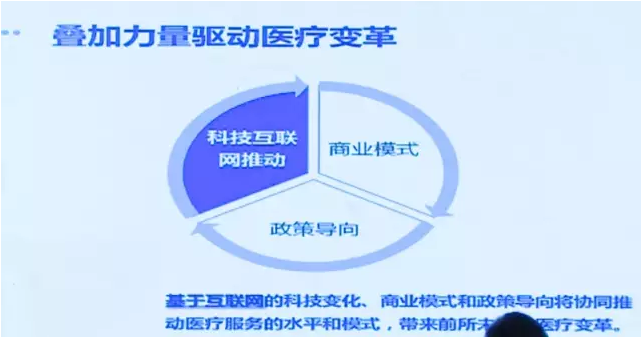
Why is this so? We will illustrate this with several figures.
The current tiered medical care market, originally an inverted triangle, is shifting toward a standard triangular structure in the future. In other words, large public hospitals will increasingly focus on the treatment and research of complex and rare diseases.
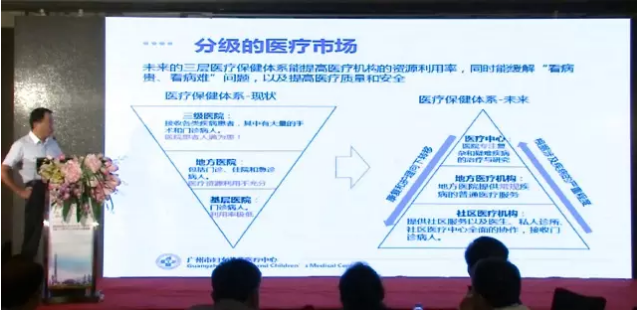
How to understand?We employ this triangular framework to construct the core knowledge architecture of future hospitals, encompassing clinical data, research foundations, and big data, thereby establishing a system for data mining and application, upon which artificial intelligence is built. This constitutes the most critical and central pillar for translating research from large-scale hospitals into clinical applications at the primary care and community levels.This is the responsibility of large hospitals. It represents the outcome of our reflections and efforts in recent years, aimed at transforming major hospitals into smart, research-oriented, and intelligent institutions.
The key components of this section include, first and foremost, the establishment of an electronic data platform based on a standardized architectural framework. This aligns with the national information system standards, specifically targeting Level 7 for large hospitals and at least Level 4 for interoperability. Currently, few large hospitals in China have fully achieved these benchmarks; thus, central hospitals represent our primary focus for future development. Another critical aspect of the structured platform is the integration of population-based data, particularly through the linkage of large-scale cohort data. In addition to disease-specific data, health data from healthy populations are required for comparative analysis. Under such circumstances, a comprehensive and in-depth data chain can be constructed, which constitutes the essence of cohort studies.
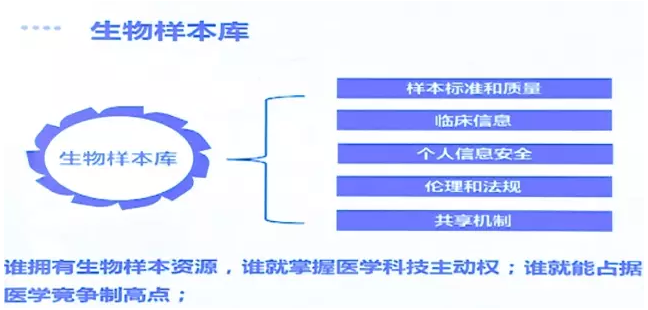
At the Guangzhou Women and Children’s Medical Center, we have conducted a five-year study, which is currently the largest mother-and-infant cohort study in the world. Our data and cohort integrate epidemiological, biomedical, and clinical information, laying a foundation for future artificial intelligence research. All such data are linked through the integration of the Guangzhou Women and Children’s Medical Center’s information system with the Guangdong Health Information Platform. At my level of access, I can extract all available data for any given child or patient within the health community at any time. This capability is essential for the future development of hospitals, and achieving it relies on a volumetric, framework-based platform.
Second, the data-driven platform we refer to must encompass all specific content in accordance with international and domestic standards.Our Women and Children’s Center took two years to complete the construction of its main framework. The scope of a smart hospital includes intelligent data mining. This intelligence is realized through integrated electronic physician orders, platform-based electronic requisition forms, and comprehensive electronic signatures, achieving a fully paperless workflow. Specifically, all printers at nursing stations and physician workstations were removed, resulting in more efficient hospital operations. Based on such data mining, highly valuable information can be extracted, laying a solid foundation for the future development of smart hospitals. This places high demands on the data mining capabilities of our modern information systems. Meanwhile, the system features a robust follow-up module that enables seamless information integration with community health centers and primary care hospitals.
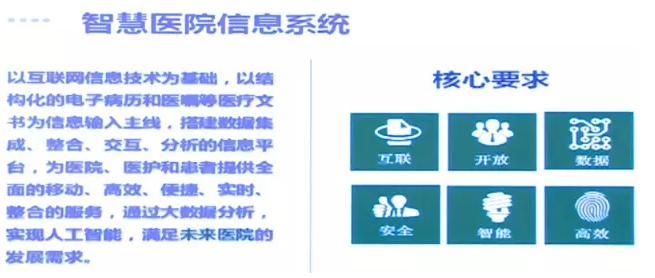
Smart Hospital Construction, including intelligent intensification, encompasses all systems to enable a single trusted shared cloud platform. This cloud platform is scalable and capable of interoperating with other systems.We completed this process by the end of last year, integrating all decision support systems, decision management, quality control, research, and clinical operations onto a centralized platform.
The requirement for hospital intelligence is that the core business operations must be managed through a fully closed-loop system.So-called closed-loop management means that throughout the entire process, all workflows and every step involve the right time, location, personnel, and dosage, with full traceability within the system. This is an essential requirement for building smart hospitals. Disease stratification, antimicrobial stewardship authorization, and intelligent clinical pathways are all fundamental requirements for standardized, closed-loop business process management.
Another connotation of a smart hospital is personalized user experience.To date, appointment registration time has been eliminated via China Mobile; waiting time has been eliminated through non-emergency appointments; and payment time has been eliminated by integrating Sesame Credit with medical insurance and credit cards. We aim to eliminate the time spent queuing for medication by the end of this year through the separation of prescribing and dispensing. In the future, patients visiting public hospitals will only consult physicians and undergo examinations, while all remaining tasks will be delegated to community health centers or other stages of the care continuum.
The construction of smart hospitals is only one component of a research-oriented hospital. Additional efforts must include precise research into current diseases, which will be the focus of future large-scale hospitals. This first requires disease-related biological samples.For instance, the 33-year-old scientist we recently recruited has been conducting research based on our cohort. When children presented with allergies, he traced back to their mothers and discovered that intrauterine conditions differed between mothers of allergic children and those of non-allergic children. This finding paves the way for implementing preventive measures within our information system: if a pregnant woman exhibits an increased proportion of monocytes and T cells, we can issue an alert predicting that her child is likely to develop allergies by the age of one or two. These initiatives are grounded in big data and omics-based research, representing a key direction for future development in public hospitals.
In the future, public hospitals must undertake another critical task: building an intelligent clinical decision support system based on underlying platforms that integrate clinical data and omics data. By processing massive datasets in accordance with current disease cohorts, clinical cohorts, and our framework architecture, this system will generate robust new insights, outcomes, and treatment protocols. Such algorithms constitute a fundamental component of future artificial intelligence infrastructure. This system represents the foundation and an essential capability for public hospitals going forward.
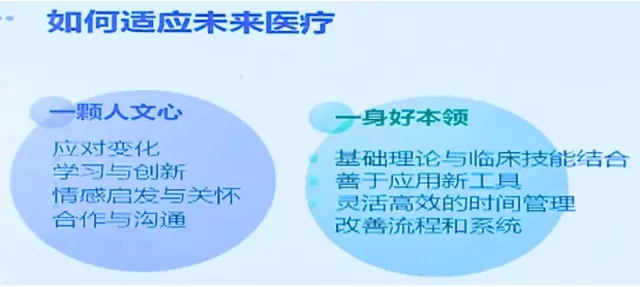
"To address these changes, we should make prudent choices and determine the right direction. We will respond to future changes with deep engagement, firsthand experience, and cautious acceptance. This is the second message I wish to convey to you all."No matter how healthcare evolves in the future, its essence remains unchanged. Therefore, hospitals and physicians are expected to possess both a humanistic heart and exceptional professional competence.If we have the basic conditions, we will be calm about future changes, we will lead, we will pioneer, and truly make our due contribution to China's health. Thank you all.
Source:999: Aligning with the Way, Embracing Benevolence