

Luofei of Songhe Capital: Building an Investment Ecosystem in Healthcare with a Focus on Genomics and Global Integration
On August 22, 2016, Genetron Health completed a $20 million Series A financing round. The company specializes in the research and development, as well as commercialization, of non-invasive genetic sequencing products for cancer and other genetic disorders. Investors in this round included Sinovest Capital, Lilly Asia Ventures, and Chende Capital.
On August 29, 2016, Genetron Health completed the largest Series A financing round to date in China’s precision medicine sector—specifically in the field of liquid biopsy—with a total amount of RMB 200 million. The round was led by BGI Genomics, with participation from Sinoway Capital, Volcanic Stone Investment, and others.
Within just 10 days, two Series A investments exceeding RMB 100 million each in the industry have compelled us to take note of one name: Sinopharm Capital.
Songhe Medical & Healthcare Fund to Officially Begin Strategic Deployment
According to VCBeat, Sinoway Capital is poised to close the fundraising for its latest healthcare fund, which has a target size of RMB 1 billion. This move not only means that Sinoway Capital will add another fund to its roster—making it the largest among its many specialized funds to date—but also signifies that Sinoway Capital will formally embark on in-depth deployment in the healthcare sector.
Previously, Pinehe Capital established multiple specialized funds under its umbrella, such as the Pinehe Qiyi Pan-Entertainment Fund, Pinehe Yuanwang Big Data Fund, Pinehe Dream Traditional Industry Internet Application Fund, Pinehe Innovation No. 1 and No. 2 Funds (supporting incubators), Yimeng Qidian Mobile Internet Fund, and Pinehe Baofeng AR/VR Fund, with each specialized fund focusing exclusively on a single sector.
To explore the investment preferences and logic of Sinowood Capital’s Healthcare Fund, VCBeat conducted in-depth interviews with Luo Fei, Founding Partner of Sinowood Capital and head of the Healthcare Fund, and Yang Jin, Partner of the fund, at the “Medical Big Data & Smart Healthcare” session of the Sinowood Premium Forum.
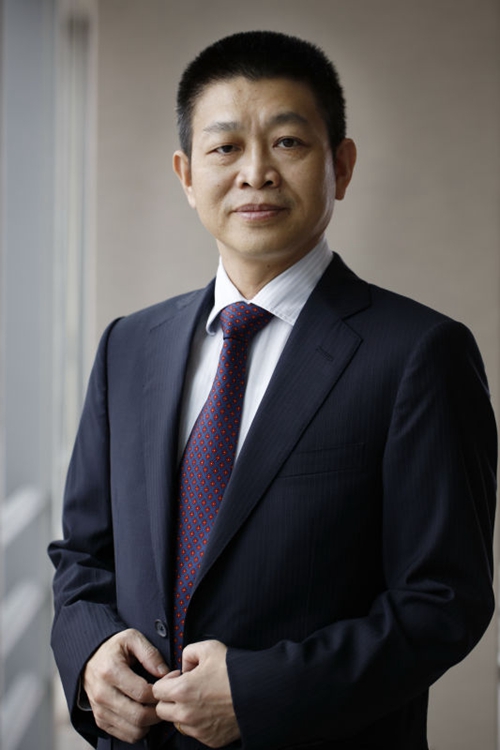
Mr. Luo Fei
Building an Investment Moat Centered on Gene Technology
As one of the angel investors in BGI, China’s pioneer in gene sequencing, Sinovest Capital has focused on gene technology from the outset. Through nearly a decade of collaboration with BGI, Sinovest Capital has developed a deeper and more distinctive understanding of gene technology.
“Over the past two years, I have devoted considerable effort to examining genome projects both domestically and internationally. In retrospect, BGI has achieved the broadest application scope globally in this initiative. This extends not only to sequencing technologies, research services, and clinical applications, but also to fields such as microbiomics, genomic big data, and agricultural genomics,” Luo Fei told reporters.
With continuous breakthroughs in genetic testing technology, individuals can predict their future health status through genetic testing and engage in targeted healthcare and treatment. This has overturned traditional health concepts, enabling people to shift from passive treatment to proactive prediction.
“For Songhe Capital, the healthcare fund must revolve around one technology: genetic testing,” said Luo Fei.
Physician Groups Will Be the Key to Breaking Through in Healthcare Services
On May 28, 2016, Shenzhen Bode Jialian Doctor Group Medical Co., Ltd. announced the completion of its angel-round investment from Sinovc Capital. Bode Jialian Doctor Group is the first independent economic entity in China to bear the designation “Doctor Group” in its name, and has established the “Shenzhen Bode Jialian Doctor Group Renowned Physicians Center,” a medical service institution approved by the Shenzhen health authorities.
Beyond its focus on gene technology for the purpose of “prevention before onset,” Songhe Capital’s investment logic also stems from a commitment to liberating physicians, exploring a novel business model in China’s healthcare sector.
“We have strategic considerations for investing in physician groups,” Luo Fei told reporters.
On the one hand, international experience demonstrates that physician groups are highly viable entities. They effectively manage the relationships among hospitals, physicians, patients, and insurance providers, integrating these stakeholders in a cohesive manner. This approach not only enhances patients’ healthcare experience but also effectively controls overall medical costs.
On the other hand, Songhe Capital will build a platform to attract and aggregate resources by investing in physician groups. This platform aims to integrate various segments linked to physician groups, such as medical big data, medical imaging, medical testing, and health management.
Luo Fei stated, “The healthcare sector involves a multitude of diverse stakeholders with relatively entrenched interest structures. As capital investors, we aim to serve as a bridge and link connecting all parties. By empowering physicians and benefiting patients, we seek to genuinely reduce the total societal cost of healthcare while improving the overall health of the population, thereby jointly driving healthcare reform toward greater depth.”
Dual-track strategy: leveraging the strengths of both China and the U.S. to shorten the direct path from innovation to market.
In many aspects of the healthcare sector, while the technological high ground lies overseas, the pinnacle of industrial application scenarios is in China, particularly in Shenzhen.
From the perspective of basic research, China is the second-largest global hub for gene-editing technology research, trailing only the United States. In particular, two to three decades ago, a large number of Chinese students pursued their studies in the United States. At that time, biomedical sciences were considered a grueling and less attractive field among local American students, who were often reluctant to enter it. Unintentionally, this trend fostered the emergence of a highly skilled Chinese-American cohort in this domain.
Luo Fei concluded, “It must be acknowledged that in the field of healthcare, U.S. technology is more than a decade ahead of China’s. However, Chinese domestic venture capital firms, represented by Sinovest Capital, will undoubtedly become important bridges linking overseas Chinese scientific research achievements with the domestic market. We aim to build Sinovest Capital’s investment ecosystem in healthcare by focusing on a single technology, breaking through in one service area, and establishing a presence in both China and the United States.”