

From Teen Diagnosed at 14 to Artificial Pancreas Pioneer: Dana Lewis Brings Hope to Millions with Diabetes
Diabetes is a chronic disease that cannot be cured, requiring continuous attention from every patient. Nowadays, artificial pancreases are beginning to enter the daily lives of diabetes patients, alleviating their burden and enabling them to live normal lives. This article provides a comprehensive overview of artificial pancreases through an interview with Dana Lewis, the inventor of the device. The content was compiled by VCBeat (WeChat ID: vcbeat).
With the maturation of sensor technology, diabetes management has entered a period of rapid development. Traditionally, patients with diabetes have commonly used insulin pumps and monitors to track their blood glucose levels. These devices issue alerts when blood glucose levels are too low or too high. However, such alerts are often inefficient. For instance, they fail to wake patients during the night to timely correct their blood glucose levels, a shortfall that has tragically resulted in the deaths of many individuals with diabetes.
This is why patients with diabetes have long awaited the “artificial pancreas” to save their lives. The artificial pancreas is a closed-loop system that continuously monitors blood glucose levels and adjusts insulin and glucagon to normal ranges at the appropriate times. As a result, chronic disease patients using the “artificial pancreas” can enjoy restful sleep.
How Technology Enables People with Diabetes to Manage Their Lives More Easily and Sustainably: Dana Lewis Is a Real-Life Example. Diagnosed with diabetes at the age of 14, Dana Lewis, a digital health analyst, together with her husband Scott Leibrand, a former Twitter engineer and computer networking specialist, decided to challenge existing technologies by building a DIY “artificial pancreas” to manage diabetes.
Their DIY “artificial pancreas” has demonstrated excellent efficacy. Consequently, they began exploring ways to disseminate their experience, hoping that more patients could benefit from it. However, bringing the product to market proved exceedingly difficult, as it requires completing clinical trials in accordance with legal regulations and obtaining FDA approval—a traditional commercialization pathway that entails a lengthy waiting period. Therefore, they established an open-source community to provide technical support and assistance to individuals interested in building DIY “artificial pancreas” systems. Additionally, they created a Twitter account to document the community’s efforts, aiming to simplify life for people with diabetes.
Intrigued by Dana Lewis’s experience, we spoke with her about how the artificial pancreas is transforming the lives of people with diabetes.
How did you come to pursue this line of work?
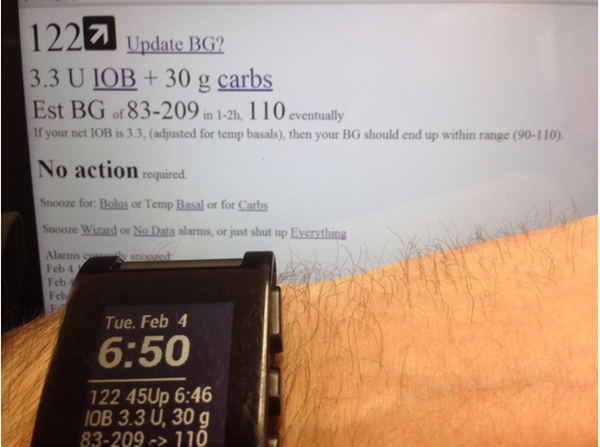
Dana Lewis: The artificial pancreas integrates an insulin pump with CGM data to automatically regulate blood glucose and manage fluctuations in blood sugar levels. Initially, I did not intend to create an artificial pancreas system. My original goal was simply to address the issue of receiving alerts from my CGM (continuous glucose monitoring) device. Therefore, I extracted data from my CGM device and transmitted it to a smartphone or computer, thereby replacing the existing medical equipment for providing me with alerts.
Upon completion of the database collection, I will develop a predictive algorithm based on this data to enhance the intelligence of the alert system. Since none of us appreciate being awakened from sleep by alarms prompting blood glucose adjustments, our algorithm will, within a year, be capable of sending commands to the insulin pump to automatically regulate blood glucose levels without causing any disruption to sleep.
I don’t want to be the only person with an artificial pancreas; I enjoy sharing. If we were to follow conventional channels—obtaining regulatory approval, conducting clinical trials, and pursuing market commercialization—it would take a long time before other people with diabetes could access such products. That is why we chose to collaborate with the open-source diabetes community to create OpenAPS, sharing our methods, data, and systems so that others can build their own artificial pancreas systems using their own diabetes medical devices.
How Do Artificial Pancreas Devices Work?
Dana Lewis: The DIY artificial pancreas is not a medical device in itself. It is a system that leverages your existing diabetes devices (an insulin pump and a CGM) along with a computer, running the OpenAPS algorithm to automatically send commands to the insulin pump for adjusting basal insulin delivery.
Since it is a DIY device rather than an all-in-one solution designed for all patients, how does the OpenAPS algorithm respond when blood glucose (BG) levels rise or drop sharply, when BG data are missing or exhibit sudden jumps, or when values deviate significantly from the normal range? To address these scenarios, we have implemented specific design measures: the system issues temporary basal rate commands to fine-tune blood glucose levels, rather than administering large boluses of insulin through an automated process. Our calculations are conservative, and all commands and operations must be executed under the premise of absolute safety. If any of these issues occur, the system will either power down or reset its data, reverting to pre-programmed standard therapeutic protocols, thereby ensuring that patients are not exposed to any health risks.
Users of OpenAPS generally do not need to manually administer additional insulin to regulate blood glucose levels. Since adopting OpenAPS, I have reduced the frequency of consuming extra candies to correct blood sugar fluctuations. When equipped with a compact artificial pancreas system, it responds to any blood glucose variations just like a healthy pancreas, maintaining blood glucose levels within the normal range for 90%–100% of the day. This represents a significant improvement compared to my previous lifestyle.
Currently, I have several such systems: one on my office desk, one by my bedside at home, and one clipped to my jeans when I am out. My blood glucose levels remain in a state of self-regulation most of the time. This allows me to spend less effort checking my blood glucose levels and reduces the frequency of manual medication administration, while keeping my blood glucose values consistently within the normal range.
How to Improve Diabetes Management and Measure Outcomes?
Dana Lewis: Since adopting the smart alarm system, my diabetes management has improved significantly. This closed-loop system has markedly reduced the effort required to maintain normal blood glucose levels. Two clear clinical outcomes have been observed: first, a reduction in average blood glucose levels (or HbA1c), and second, an increased time spent within the target glycemic range. Another way to measure the impact of this technology is by the reduction in time patients spend managing their diabetes, along with improved sleep, better glycemic control, and an enhanced overall quality of life.
Not only has quality of life improved, but as of July 2016, more than 103 diabetic patients worldwide had been using this artificial pancreas system. Follow-up studies of the initial 18 users demonstrated that the system effectively stabilized blood glucose fluctuations and enhanced the overall quality of life for their entire families.
"According to FDA regulations, devices cannot be distributed for use by others. Is there a solution?"
Dana Lewis: The FDA’s regulation of medical devices is a commercial matter. I have never been interested in founding a company or selling products. In fact, others have already done so. Two new medical technology companies, Bigfoot Biomedical and Beta Bionics, are dedicated to bringing artificial pancreas systems to market. Traditional companies are also conducting clinical trials on artificial pancreas systems. However, when I began this research three years ago, they were still far from emerging. Even if they had already started their research, their products would not reach the market until 2017 at the earliest, or even 2018.
OpenAPS aims to accelerate the widespread adoption of safe and effective artificial pancreas technology. Therefore, we have chosen to disseminate this technology rapidly through an open-source approach, rather than following traditional manufacturing and sales models. Although our solution is not FDA-approved and cannot be commercially sold, it drives greater societal impact compared to conventional approaches.
We have learned a great deal from our community work: members of the community collectively possess over 24,000 hours of usage experience, and I personally have been using this system for more than 600 days. We share the technical insights we have gained with all companies and individuals dedicated to advancing artificial pancreas technology, helping them enhance user experience. Meanwhile, hundreds of users who have established their own closed-loop artificial pancreas systems are educating their medical device providers and other patients about what they can expect and receive once this business model is approved.
The case of Dana Lewis serves as a strong precedent for how healthcare professionals can learn new insights from their patients.
Physicians, nursing experts, and regulatory bodies all believe they know what is best for patients, leaving everything from hospital processes to the design of new medical technologies in the hands of healthcare practitioners. However, truly visionary solutions should be co-designed by industry insiders and external experts. Technology has transformed how we manage disease and health. With an increasing number of health trackers and sensors being integrated into medicine, we must learn how to leverage this data to maintain wellness.
Another conclusion is that healthcare professionals must recognize the fact that regulatory bodies can never keep pace with innovation. If they fail to accelerate reforms, they risk being replaced by organizations such as open-source communities.