

Caregiver Home Bets on the Dawn of China's Elder Care Boom in Four Years
Elderly Care: How Much Longer Will This “Sunset” Market Take to Reveal Its “Sunrise” Prospects? In Guo Bo’s view, the spring for elderly care practitioners may arrive in just four years.
In August 2015, Guo Bo, who had spent 20 years in the pharmaceutical products industry, entered the elderly care sector. He presented a calculation to a reporter from VCBeat (WeChat ID: vcbeat): By 2015, China had 222 million elderly individuals, including 40 million with disabilities and nearly 10 million with dementia. If each elderly person spent 100 yuan per day, the daily market size of the elderly care industry would exceed 22 billion yuan. However, why do entrepreneurs in the elderly care sector struggle to make progress and even frequently incur losses?
Guo Bo’s entry into the elderly care industry was purely coincidental. For years, his life followed a monotonous routine, shuttling between his workplace, the hospital, and home. Over the course of two decades, he obtained certifications as a supervising pharmacist and a nutritionist. During his time at the hospital, he encountered many elderly patients whose children were unable to provide care due to work or other commitments, leading them to hire professional caregivers. At times, he would even recommend caregivers to his patients and friends.
It is fair to say that Guo Bo was no layman in the caregiving industry, but rather a seasoned veteran. Even so, when he himself needed to engage caregivers, he still encountered numerous problems. In 2011, Guo Bo, who was serving as a regional manager for a pharmaceutical company in Chengdu, was at work as usual when he suddenly received a phone call informing him that his mother had been hospitalized. He rushed back to his hometown in Hubei Province, and upon arriving at the hospital, was told that his mother had suffered a stroke and would need to remain in the hospital for a period of recovery before she could return home for further convalescence.
However, Guo Bo was simply too busy with work, and no suitable family member was available to care for his mother. At that point, it occurred to him that since he had acquaintances who were professional caregivers, why not hire one to help look after his mother? In her view, most caregivers possess some basic professional nursing knowledge, so having one care for his stroke-affected mother should be feasible.
Consequently, he engaged a housekeeping agency to recommend an experienced caregiver, Auntie Li, to look after his mother, who had suffered a stroke. After a week of interaction, he found Auntie Li’s medical nursing skills to be severely lacking. A month later, Guo Bo dismissed Auntie Li and turned to hospital-based caregivers instead. However, these hospital caregivers performed poorly in cooking and cleaning.
In short, Guo Bo remained dissatisfied despite the constant changes. Over six years, he went through as many as 22 caregivers.
Guo Bo was also reflecting on the fact that as China’s aging population intensifies, the future demand for caregivers will undoubtedly grow exponentially. There are certainly many other families in China facing circumstances similar to his, suggesting that this could well be a promising entrepreneurial opportunity.
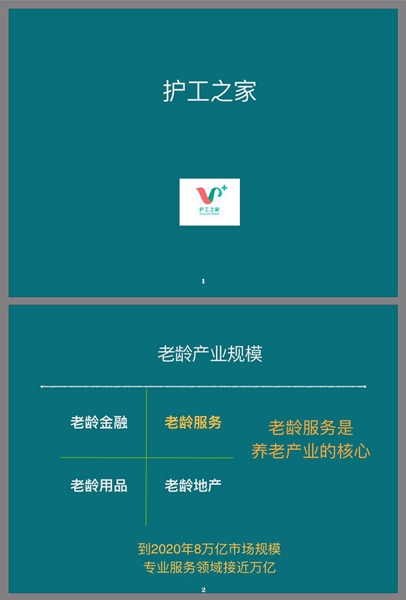
Guo Bo has worked in the pharmaceutical industry for 20 years, including three years promoting mobile healthcare products to hospitals, and has had extensive contact with the elderly. However, as an entrepreneur in the senior care industry, he is still considered a novice. In addition to Guo Bo, the company has two other co-founders: Zhong Xiaojun and Li Shuchen.
Zhong Xiaojun, a former cardiovascular physician, later worked in sales for a foreign-invested medical device company, specializing particularly in corporate operations. Given the close ties between elderly care and charitable foundations, his co-founder Li Shuchen is an expert in this field, currently working at a charitable management foundation in the UK with extensive relevant experience. Additionally, Guo Bo has successively recruited several internet industry professionals, forming a team of more than ten members.
Subsequently, Guo Bo reviewed extensive materials from the elderly care industry, first studying their business models before applying them to his own projects. In summarizing his initiatives, he particularly highlighted two models to reporters.
1. “Home-Based Community” Elderly Care: A New Model Centered on Home Care with a Focus on Developing Community Service Networks. By participating in elderly care as third-party institutions, this model enhances seniors’ sense of belonging and security, preserves their dignity, alleviates the pressure and burden on their children, and eases the government’s strain in addressing societal aging challenges.
2. Internet + Smart Elderly Care Model: Leveraging advanced next-generation information technologies such as the internet, cloud computing, and wearable devices to build IoT systems and information platforms, thereby providing a more convenient, efficient, and flexible innovative public management service model for elderly care.
By comparing these two models, Guo Bo shows a stronger preference for the “Internet + Smart Elderly Care” model. This is because simple home- and community-based elderly care, without hospital involvement, results in inherently incomplete elderly care services. Only a comprehensive elderly care industry model can better help seniors enjoy their later years.
After a period of observation, Guo Bo discovered that the professional skills and personal qualities of current caregiving aides vary significantly, as do their fee structures. In the event of a care-related incident, liability is difficult to determine. Meanwhile, caregivers engaged in fragmented work arrangements are unable to effectively accumulate and demonstrate their personal value. Therefore, Guo Bo aims to address the pain points in both the elderly care and caregiving industries through “Caregiver Home.” After identifying the key challenges faced by caregivers, he recruited a team of internet technology professionals to develop the “Caregiver Home” app. The platform is intended to serve as a home for caregivers, meet the needs of users, and ultimately ensure that elderly individuals enjoy greater comfort whether receiving care at home or in hospitals.
However, since the product’s launch, it has not unfolded as he had anticipated: a surge in user downloads and a steady stream of caregiver appointment bookings.
“Having clearly identified the pain points in the elderly care industry and focused on online services, why can’t I disrupt the elderly care and nursing sectors just as Cheng Wei of Didi disrupted the taxi industry?” Guo Bo was also perplexed.
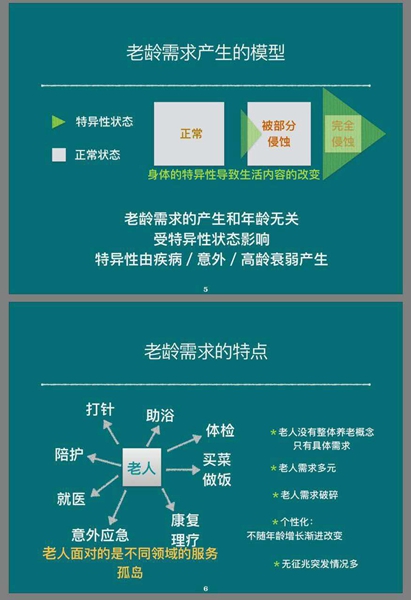
The launch of the “Caregiver Home” app failed to deliver the expected results, leaving Guo Bo both distressed and disheartened. After reflecting on the setback, he decided to thoroughly reassess the product design of the project.
Let’s first examine the elderly care market: By 2020, elderly care service facilities will cover all urban communities, over 90% of townships, and more than 60% of rural communities in China. The number of jobs in the elderly care services sector will exceed 10 million, and the potential market size for daily living assistance and nursing care services for disabled older adults will reach RMB 1 trillion.
How to Tap into the 1 Trillion-Yuan Elderly Care Market? This Time, Guo Bo Decided to List the Needs of the Elderly in Hopes of Finding a Breakthrough.
By the end of 2015, China’s population aged 60 and above had reached 222 million, accounting for approximately 16.1% of the total population. Although this elderly population is substantial, the majority reside in rural areas and are cared for by their children or spouses, falling under the category of home-based care. As such, they have limited relevance to professional nursing facilities. Furthermore, after excluding those who cannot afford caregiving costs, the addressable market for elderly care becomes even smaller, which explains why nursing care enterprises struggle to achieve significant scale.
What Exactly Should Professional Elderly Caregivers Do? The reasons for disability among the elderly are varied; some require short-term caregiving due to illness or fractures, while stroke survivors may need rehabilitative care. However, the current market vaguely defines and fails to clearly distinguish between the four key needs of the elderly: physical assistance, medical nursing, daily living support, and rehabilitation. This lack of clarity among practitioners further confuses users.
When it comes to elderly care, everyone immediately thinks of caregivers or nursing institutions. In reality, most seniors do not require personal attendant care. For instance, consider an elderly woman who helps her children look after their grandchildren—does she have no needs of her own? If she is unable to carry heavy bags of rice, that too constitutes a legitimate need among the elderly population.
As Guo Bo continued to outline and refine the needs of the elderly, his plan for revamping the Caregiver Home APP became increasingly clear. After categorizing the needs of the elderly into modules, he redefined their needs as dependence on the external world.
Getting the direction right often yields twice the results with half the effort. Guo Bo stated, “We have shifted our focus from general care for disabled seniors to matching specific service needs of the elderly. We believe that their greatest need is daily living support, their most critical need is medical nursing—since unaddressed health issues can adversely affect quality of life—and their most urgent need is physical assistance during periods of disability. This amounts to transforming previous scenario-based descriptions into concrete, task-oriented specifications.”
By adopting a “demand-driven supply” model, we are reshaping elderly care products and integrating professional medical nursing institutions, home-based elderly care providers, and domestic service agencies in a modular fashion to build a platform that truly meets the needs of older adults.
“However, ‘the revolution is not yet complete; we must continue to strive,’ Guo Bo remarked. ‘At present, we have only secured seed-round investment from Shenzhen Time Machine Co., Ltd., a company with expertise in database technologies. Although an internet technology team that once held equity stakes departed due to the company’s financial difficulties, the original employees and core founders from the startup’s early days remain. The road ahead is long, but we remain steadfast in our original mission.’”
In just six months, thanks to the pioneering efforts of a team of more than ten members at Hugong Zhijia (Caregiver Home), the platform has assembled over 100 professional nurses specializing in medical care. Additionally, through collaborations with selected elderly care institutions, 40 caregivers have been chosen for specialized training to enhance their caregiving skills and meet specific needs. “Our platform serves two main functions: on one hand, it connects users with medical nursing services, including home-based injections, wound care, catheter management, and phlebotomy for health check-ups; on the other hand, it provides in-home personal care services, such as bathing assistance and companionship for disabled seniors, as well as daily living support like housekeeping for the elderly.”
Looking at the development of the domestic housekeeping industry, the concept of “housekeeping” did not exist from the outset. Initially, people cleaned their own homes; later, they began hiring others to do so. In the past, families cared for children and postpartum mothers themselves; now, they engage confinement nannies (yuesao). As diverse household needs emerged, they were summarized and categorized, giving rise to the “housekeeping” industry. Similarly, “we do not speak in terms of ‘elderly care services,’ but rather focus on ‘elderly care needs.’ The elderly do not think in terms of platforms or know what constitutes elderly care services; they simply recognize their own needs and seek out whoever can help resolve them,” said Guo Bo.
Currently, many “Internet Plus” companion care services cater only to a segment of the population, overlooking the majority, and fail to carefully segment the specific needs of the elderly. Older adults are left to navigate isolated providers scattered across various industries. Individual seniors require professional medical nursing, often lack adequate daily living care, and may intermittently need physical assistance. Their needs are fragmented, diverse, unique to each individual, and dynamic over time. Therefore, only by integrating daily living support, physical assistance, and medical nursing can we comprehensively meet the needs of the elderly and inject renewed vitality into the eldercare industry. In fact, Japan’s eldercare model is highly mature, having long integrated visitation services, medical nursing, and long-term care.
Caregiver Home: Based on the specific needs of the elderly, it screens for sufficiently professional service providers and institutions, then connects them with localized services. This integrates previously isolated suppliers into a cohesive network, optimizing resources to better serve the elderly.
Even with upgrades to products and services, Guo Bo speculates that the demographic dividend for elderly care will still require at least another four years to materialize. “Most investors remain on the sidelines; despite numerous funding discussions, none have come to fruition,” he said helplessly.
In his view, most elderly people today were born in the 1940s and 1950s. They tend to have multiple children, and many of their needs are “non-professionally” met by spouses or other family members. However, home-based care remains deeply ingrained both in China and abroad. In four years, the post-1960s generation will enter old age. Their children are mostly only children, typically living in “4-2-1” family structures (four grandparents, two parents, and one child). Burdened with both work and family responsibilities, these children are naturally unable to provide adequate care for their aging parents. This cohort of seniors is internet-savvy, has strong purchasing power, and holds modern views, marking the true tipping point for an explosion in eldercare demand.
“After a decade of honing our craft, we are now focused on delivering exceptional service, identifying key trends, and strategically positioning ourselves early for the next decade’s opportunities—only then can we soar to greater heights.”