

Third Nobel Laureates Medical Summit Highlights: Big Health as the Future Direction of Precision Medicine
On the morning of September 2 at 9:00 a.m., the opening ceremony of the 2016 Third Nobel Laureates Medical Summit and the China-US Academicians Forum was held at the Shangri-La Hotel in Chengdu.Attracted hospital directors and experts from medical institutions at all levels across China, clinicians, as well as emerging leaders in the domestic and international biopharmaceutical industry and investment institutions.
At the summit, Wang Guoqiang, Deputy Director of the National Health and Family Planning Commission and Director of the State Administration of Traditional Chinese Medicine; Shu Wei, Member of the Party Leadership Group and Secretary of the Secretariat of the China Association for Science and Technology; and Fu Yonglin, Deputy Mayor of Chengdu, delivered speeches respectively. Together with dozens of academicians and experts from China and the United States, they shared insightful perspectives on topics such as global trends and the future of the biopharmaceutical industry, new applications of precision medicine, and the integration of traditional medicine with modern medicine. The two-day summit is being covered continuously by VCBeat (WeChat ID: vcbeat).
Wang Guoqiang: Adhere to Implementing the Shift from a Disease-Centered Approach to a Health-Centered Approach
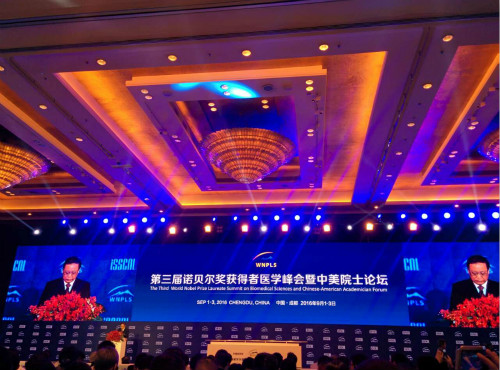
Wang Guoqiang, Deputy Director of the National Health and Family Planning Commission and Director of the State Administration of Traditional Chinese Medicine, provided an interpretation of China’s healthcare policies. The recently convened National Conference on Health and Wellness outlined strategies for building a “Healthy China,” emphasizing the adoption of a comprehensive concept of health and healthcare. It highlighted the need to shift the focus from disease treatment to health promotion, striving to safeguard people’s health through all-around, full-life-cycle coverage.
Precision medicine, characterized by accurate diagnosis and personalized treatment, has emerged as a highly anticipated new direction in contemporary medical development and is gaining increasing attention from countries worldwide. China has incorporated precision medicine into its National Key R&D Program. In the future, the country will focus on common, high-incidence, and severely harmful diseases, as well as several high-prevalence rare diseases, to establish a multi-level precision medicine guidance system and a shared platform for biomedical big data. This initiative aims to develop capabilities for risk assessment, predictive warning, early screening, disease subtyping and classification, personalized treatment, and prediction and monitoring of efficacy and safety for major diseases. It will also create precise prevention, diagnosis, and treatment protocols alongside clinical decision support systems, while building a demonstration, application, and promotion framework for precision medicine clinical protocols tailored to typical diseases in the Chinese population.
To promote the integrated development of traditional and modern medicine, he emphasized that both fields should focus on integration, mutual learning, and collaborative advancement. The core of precision medicine lies in formulating tailored, personalized treatment plans based on each patient’s individual characteristics. Although traditional medicine and modern medicine differ in their theoretical frameworks and technical methodologies, they share similar philosophies and common goals. Traditional Chinese Medicine (TCM) can offer conceptual and philosophical insights for precision medicine, while the technologies and methods of precision medicine can significantly accelerate the development of TCM. Through integrated development, by leveraging the respective strengths of both TCM and Western medicine in disease prevention, treatment, and rehabilitation, optimal personalized strategies can be established to achieve precise disease prevention and accurate treatment.
Fu Yonglin: Vigorously Promote the Biopharmaceutical Industry
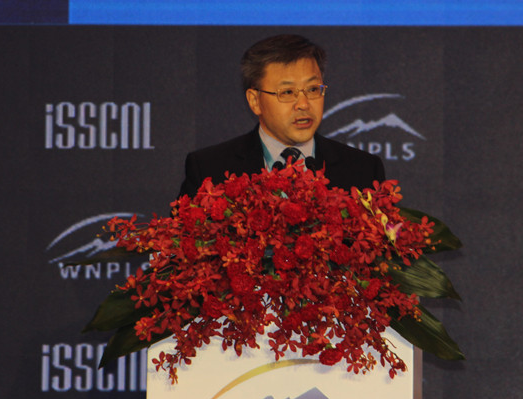
Embracing the World with Beauty: Chengdu Deputy Mayor Fu Yonglin Highlights the City’s Strategic Position and DevelopmentSichuan has long been renowned for its distinguished physicians and premium medicinal products, earning the industry acclaim that “no prescription is complete without Sichuan herbs.” Chengdu has been designated as a National Base for Modernization of Traditional Chinese Medicine Science and Technology, an International Biotechnology Industry Base, a National Pharmaceutical Export Base, and a National High-Tech Industrialization Base for Biomaterials and Medical Devices.
As internationally influential research and clinical institutions within a comprehensive hospital system, West China School of Medicine, Sichuan University, and the Affiliated Hospital of Chengdu University of Traditional Chinese Medicine continuously cultivate and supply talent to China’s pharmaceutical industry. They host four National Pharmacopoeia Commission (PP) Centers and possess world-class capabilities in pharmacodynamic and safety evaluation, clinical trial research bases, and translational science R&D services. Products from their traditional Chinese medicine disciplines hold a significant market share domestically, with leading technologies exemplified by injectables such as Kangbo Xipu and Di’ao Xinnaokang.
Zhan Qimin: Precision Medicine, the Focal Point in the Medical Field
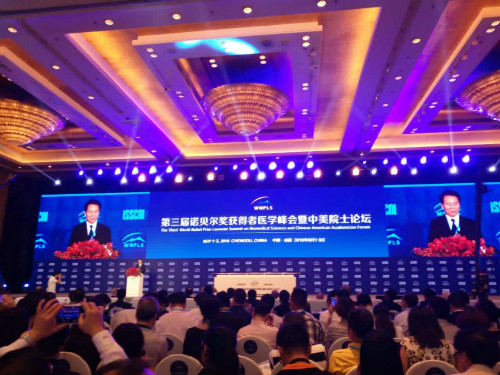
Academician Zhan Qimin, Dean of the Peking University Health Science Center and Chair of this conference, believes that in recent years, precision medicine, as the forefront of a new transformation in medical development, has consistently been a topic of intense discussion and a focal point of attention within the global medical community.
This summit focuses on the forefront of international medical development, supported by experts, scholars, and research institutions in relevant fields. With precision medicine as its entry point, it primarily emphasizes academic discussions and technological applications of precision medicine in the medical field, particularly in oncology. The Chinese government has also attached great importance to and supported the development of precision medicine; national competent authorities have included precision medicine as a major special project in the 13th Five-Year Plan for scientific and technological development and have increased investment to support its advancement. Therefore, with precision medicine as its theme, this summit not only aligns with the current hotspots in international medical development but also responds to national strategic development plans. It demonstrates strong foresight, policy relevance, and practical significance, actively creating a new platform for bilateral exchange and interaction.
Richard Roberts: Granting Young Researchers Greater Scientific Freedom
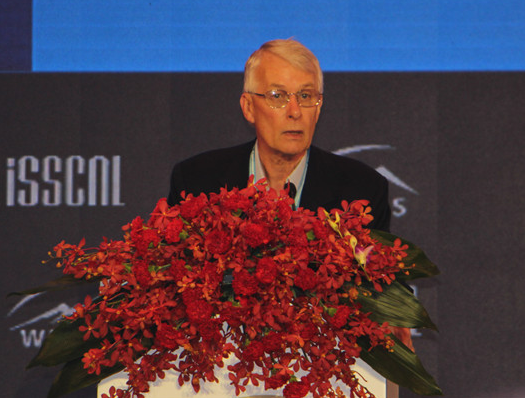
Richard Roberts, the 1993 Nobel Laureate in Physiology or Medicine, a Fellow of the Royal Society, a Member of the American Academy of Arts and Sciences, and the pioneer behind the discovery of split genes and RNA splicing, drew upon the history of cancer research to encourage young scientists to embrace freedom in their work. He emphasized that young researchers must independently discover and adhere to their own scientific paths, rather than being directed by “elderly figures like myself.” National and societal institutions, as well as senior medical professionals, should provide young scientists with a more flexible research environment and greater access to medical resources. Only in this way can the correct path for scientific research be forged.
Related Reading:
2016 Nobel Laureates Medical Summit and China-US Academicians Forum Held in Chengdu