

International Precision Medicine Summit Highlights Diagnosis and Prevention as Core of Precision Medicine
Precision medicine, or more accurately termed precision diagnosis, includes a significant branch dedicated to studying how genetic variations can lead to disease development. However, precision medicine cannot be simply equated with gene sequencing. When discussing precision medicine, there is often an expectation of rapid diagnosis and treatment; in reality, the transition from disease diagnosis to therapeutic intervention cannot be achieved overnight.
On the other hand, since the completion of the Human Genome Project, the traditional workflow in biomedicine has been effectively reversed. Previously, the paradigm shifted from laboratory to clinic; now, it proceeds in the opposite direction, from clinic to laboratory. This approach begins with the identification and characterization of a disease, followed by an investigation into its pathogenic mechanisms, and then conducts gene-related research in the laboratory. Thus, the entire biomedical research workflow has undergone a comprehensive reversal.
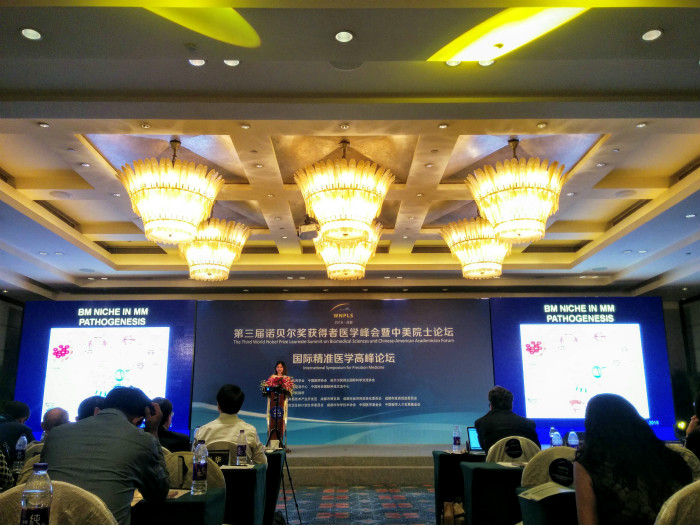
At the 2016 Third Nobel Laureates Medical Summit, dozens of experts and scholars in the field of precision medicine gathered at the International Precision Medicine Summit to share insightful perspectives on the future and trends of precision medicine. VCBeat (WeChat: vcbeat) has compiled these insights for you.
Jian Qimin: The Development of Precision Medicine Requires Joint Efforts from Industry, Academia, Research, and Government
Academician Zhan Qimin, Director of the Peking University Health Science Center and Chair of this conference, believes that precision medicine is not merely about personalized diagnosis and treatment in clinical settings; rather, it encompasses the entire life course—from birth through growth, development, rehabilitation, elderly care, and ultimately to the end of life. This constitutes the framework of “Big Health.” Therefore, precision medicine is a broad concept oriented toward the entire lifespan.
Regarding the development of precision medicine, he believes that it must first rely on technological innovation and interdisciplinary integration, including the convergence of medical engineering, medical physics, medical electronics, medicine with optical materials, and nanotechnology. Furthermore, it is crucial that the advancement of precision medicine depends on the joint efforts of industry, academia, research institutions, and government. Starting from original research, we should enhance the level of diagnosis and treatment, and accelerate industrialization to benefit public welfare.
Zhang Xue: Precision Medicine Facilitates the Diagnosis of Rare Diseases
Zhang Xue, Director of the Science and Technology Management Department at the Chinese Academy of Medical Sciences and Peking Union Medical College, and Chair of the Department of Medical Genetics at the Institute of Basic Medical Sciences, is an expert in the field of pathogenic genes for monogenic hereditary disorders. He stated that 80% of rare diseases are genetic disorders related to genes. Currently, only about 400 such conditions have available treatments; therefore, research into rare diseases based on molecular pathogenesis holds great promise. Whether for monogenic diseases or other disorders caused by gene mutations, 85% of pathogenic mutations occur within "exons." Genetic-level analysis can facilitate faster disease diagnosis and help identify the location of pathogenic genes. However, generally speaking, effective treatments for these rare genetic disorders remain unavailable. In China, severe rare genetic disorders can be prevented through prenatal diagnosis.
Diagnosis and treatment in this field have advanced rapidly. The United States established three genetic centers for Mendelian disorders, which later merged to form the International Rare Diseases Research Consortium (IRDiRC), with the goal of identifying the genes responsible for these rare genetic diseases and developing 200 therapies by 2020. Since this year, China has launched a special program for rare disease research, and, driven by policy support, rare disease research has been incorporated into major national research initiatives.
Bian Xiuwu: Large-Sample Cloud-Based Molecular Case Diagnosis Can Aid Precision Medicine
Bian Xiuwu, Director of the Institute of Pathology at the Third Military Medical University, discussed the role of molecular diagnostics in precision medicine. The most critical and core aspect of precision medicine is achieving accurate diagnosis; only with a correct diagnosis can appropriate treatment be administered and effective disease prevention strategies be developed. This is particularly relevant in oncology, where obtaining specimens for diagnosis is often impossible at very early stages. Therefore, it is essential to explore non-pathological, non-invasive methods for early detection. These areas represent key focuses for precise diagnosis and prediction within precision medicine.
The implementation pathway begins with large-scale samples. Through resource integration centered on biobanks, a series of tests are conducted in conjunction with clinical diagnostic signs and symptoms, ultimately generating biological big data. This data, in turn, guides the formulation of clinical decisions, achieving accurate diagnosis, treatment, and prevention through iterative validation. In this process, molecular pathology facilitates effective diagnostic support by conducting comprehensive detections of biological macromolecules ranging from the cellular level to entire organs, leveraging technologies such as molecular imaging and molecular testing to generate big data assets, including cloud-based case records.
Xu Ping: Quantitative Proteomics Systems Are Closely Linked to Precision Medicine
Xu Ping, a Principal Investigator at the Beijing Proteome Research Center and a researcher at the Academy of Military Medical Sciences, is an expert in protein research. He discussed the role of proteomics in precision medicine. Similar genomes can give rise to different protein organizations and expression patterns, which contain distinct biological information and underlie their specific functions.
To achieve efficient protein identification and quantification, as well as to elucidate the mechanisms of human diseases, it is essential to optimize quantitative proteomics systems, biomarker discovery platforms, and other related technologies. Currently, we are capable of identifying nearly all genes and their corresponding protein expression profiles. The goal of proteomics is to closely integrate with precision medicine. By establishing high-coverage technologies, we can effectively decipher complex signaling pathways within cells. Furthermore, these technologies provide effective means for precise prediction and the study of biological mechanisms in precision medicine, thereby offering a scientific basis for personalized medication.
Zhu Lan: Precision Medicine as a Fundamental Element of Personalized Medicine
Zhu Lan, Associate Director of the Department of Obstetrics and Gynecology at Peking Union Medical College Hospital, Chinese Academy of Medical Sciences & Peking Union Medical College, and holder of a Doctor of Medicine degree from Peking Union Medical College, stated that clinical diagnosis emphasizes four principles: standardization, individualization, humanization, and minimally invasive approaches. Individualized medicine refers to treatment decisions based on personal information, with precision medicine serving as a fundamental component of individualized care.
In the field of gynecology, significant achievements have been made in recent years. The most notable advancements include the supplementation of clinical staging for gynecologic tumors, the dualistic model of ovarian cancer pathogenesis, the recognition that cervical cancer is an HPV-related infectious disease that is preventable and curable, and the development of targeted therapies based on research into tumor gene mutations. The emergence of precision medicine was inevitable, driven by decades of innovation in human genome sequencing technologies, advances in biomedical analytical techniques, and the advent of big data analytics tools. The scientific community has proposed precision medicine initiatives to accelerate understanding of diseases at the genomic level. These initiatives aim to enable physicians to better diagnose and treat conditions based on their underlying etiologies in clinical practice, and ultimately to achieve effective disease prevention.
Related Reading:
2016 Nobel Laureates Medical Summit and China-US Academicians Forum Held in Chengdu