

Nobel Laureate Harald zur Hausen: Stay Persistent in Your Scientific Convictions
On the morning of September 2, the opening ceremony of the 2016 Third Nobel Laureates Medical Summit and Sino-US Academicians Forum was held at the Shangri-La Hotel in Chengdu.The event attracted hospital directors, experts, and clinicians from medical institutions at all levels across China, as well as emerging leaders in the domestic and international biopharmaceutical industry and investment firms. A reporter from VCBeat (WeChat ID: vcbeat) conducted a brief interview with Harald zur Hausen, the 2008 Nobel Laureate in Physiology or Medicine.
Harald zur Hausen, Professor of Virology at the University of Erlangen-Nuremberg in Germany, possesses extensive expertise in oncogenic tumor viruses. After more than a decade of research, he elucidated the relationship between human papillomavirus (HPV) and cervical cancer, earning him the 2008 Nobel Prize in Physiology or Medicine. This discovery marked the first time globally that the etiology of a specific cancer was clearly identified. Furthermore, this breakthrough laid the foundation for the development of cervical cancer vaccines.
Cervical cancer vaccines have been deployed in 160 countries worldwide. However, it was not until July 18, 2016, that GlaxoSmithKline (GSK) announced that its human papillomavirus (HPV) vaccine [types 16 and 18] had received marketing approval from the China Food and Drug Administration, becoming the first HPV vaccine approved in China for the prevention of cervical cancer.
Meanwhile, due to insufficient public education on cervical cancer and the high cost of vaccines, HPV vaccination has not been widely implemented in China. Hansoh hopes to promote the adoption of HPV vaccines across the country, targeting not only girls but also boys, who serve as vectors for viral transmission; indeed, vaccinating boys may yield even greater benefits than vaccinating girls alone. HPV is not only the pathogen responsible for cervical cancer but is also associated to varying degrees with other malignancies, including skin cancer and vaginal cancer.
Following the discovery of HPV, Hausen shifted his research focus to the link between red meat consumption and colorectal cancer, positing that beef may harbor undiscovered mechanisms involving persistent viral sources capable of transmitting to humans and gradually leading to cancer development. At the International Biopharmaceutical Industry Forum and Innovation & Entrepreneurship Competition held during this summit, Hausen delivered a specialized presentation lasting approximately two hours. The report primarily centered on data from the latest research findings, highlighting advances in understanding the etiologies of diseases ranging from colorectal cancer to rectal cancer and breast cancer.
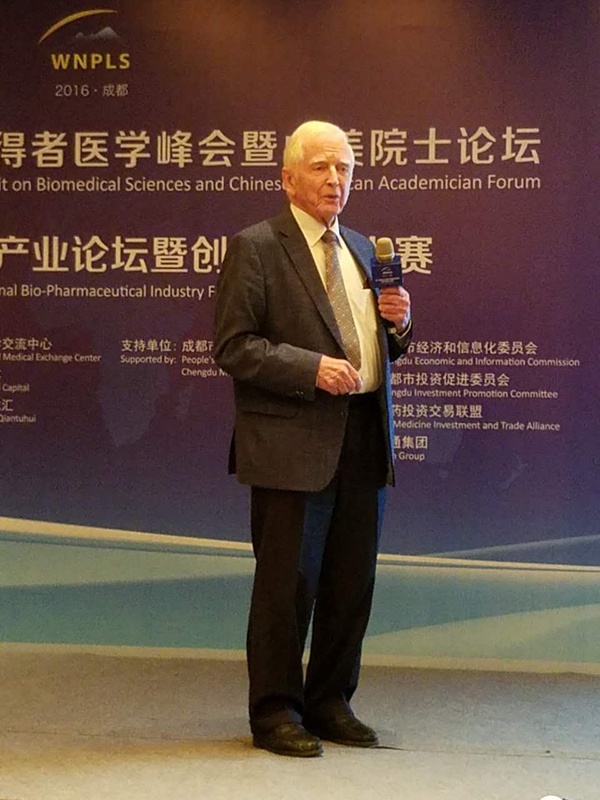
Harald zur Hausen: “The best approach is to gradually build knowledge within your own field of research. It is acceptable to be slightly anti-dogmatic and not to place blind trust in textbooks; as the Germans would say, this amounts to being stubborn. Based on my past experience, this means tolerating some dissenting opinions. However, in the long run, I believe one should demonstrate a degree of tenacity. If you have strong confidence in your own judgment, you should persevere.”
Related Reading:
2016 Nobel Laureates Medical Summit and Sino-US Academicians Forum Held in Chengdu