

Chen Rui, 'Nobel Star' Researcher, Links PM2.5 Exposure to Rising Colorectal Cancer Incidence
On September 3, 2016, the 3rd Nobel Laureates Medical Summit and the Chinese-American Academicians Forum concluded successfully in Chengdu. Prior to the closing ceremony, the summit held its culminating event: the “Nobel Star” awards. The “Nobel Star” initiative was organized by the International Association for Exchange among Nobel Laureates and supported by the Nobel Prize Special Fund under the China Foundation for the Development of Overseas Chinese Talent. After approximately six months of nominations and self-nominations recommended by experts and media, more than 100 scientists were shortlisted. Following two rounds of selection by academicians, three individuals were ultimately awarded the title of “Nobel Stars.”
The scientific discoveries and research achievements of Nobel laureates are valuable assets contributed to all of humanity. To establish channels for communication between young scientists and Nobel laureates, and to promote the academic development of frontline researchers in China, the Summit Organizing Committee has launched the “Nobel Star” selection program. The initiative aims to foster a global academic atmosphere characterized by the passing of the torch and collaborative innovation, with the ultimate goal of increasing the number of Chinese Nobel laureates.
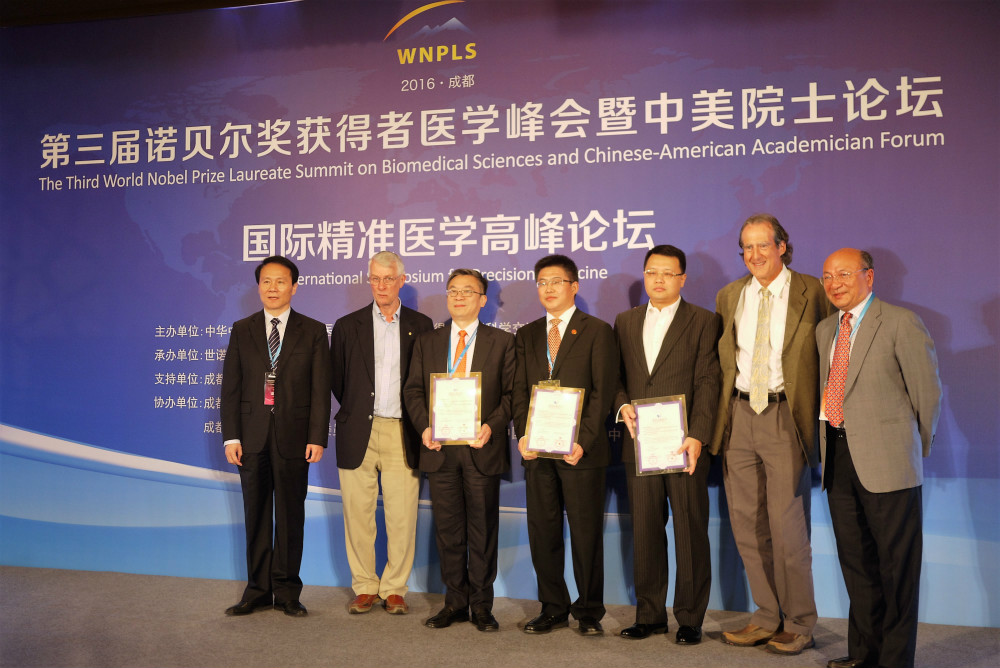
The three scientists honored as “Nobel Prize Stars” at this event are Huang Xiaojun (third from left), Director of the Institute of Hematology at Peking University, whose primary research focuses on the clinical application and laboratory studies of hematopoietic stem cell transplantation for treating blood disorders; Chen Rui (third from right), Professor at Southeast University, who is mainly engaged in research on precision tumor immunotherapy based on tumor metabolism and the tumor microenvironment; and Wang Yongjun (center), Dean of the School of Rehabilitation Medicine at Shanghai University of Traditional Chinese Medicine, who has long been committed to clinical and basic research on the prevention and treatment of chronic musculoskeletal diseases with traditional Chinese medicine. Following the award ceremony, Chen Rui shared insights into his research direction in an exclusive interview with a reporter from VCBeat (WeChat ID: vcbeat).
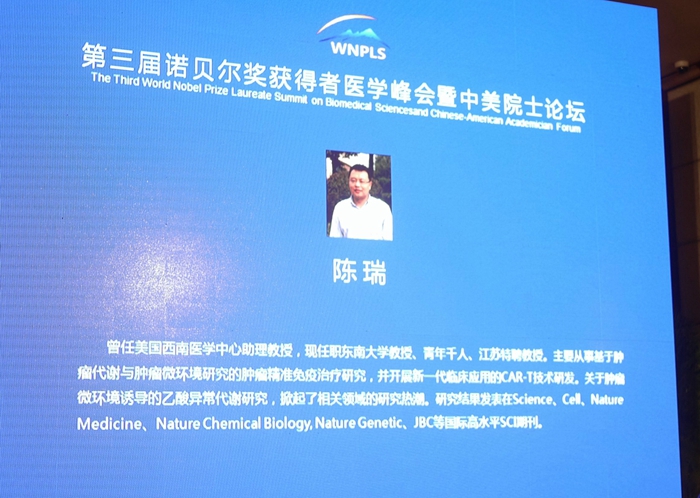
Chen Rui stated that although he had spent seven years in the United States, he had not worked in a Nobel Prize-winning laboratory. Therefore, he was delighted to have the opportunity to communicate directly with Nobel laureates at this event. The summit featured six Nobel laureates in the fields of biomedicine, chemistry, and physics, as well as more than ten academicians from the Chinese and U.S. academies of sciences. Participating in this conference provided young scholars like him with a valuable learning opportunity, allowing them to engage closely with Nobel laureates and gain insights into the perspectives and thinking of leading figures in the field.
In his research, Chen Rui has been focusing on colorectal cancer, aiming to identify early biomarkers for the disease. He is currently approaching this goal from several angles. The first is metabolism. As a researcher specializing in tumor metabolism, he recognizes that tumors require nutrient uptake and waste excretion to sustain their growth, which occurs at a faster rate than that of normal cells. Therefore, he hypothesizes that by studying these metabolic processes—specifically the uptake and excretion activities of tumor cells—it may be possible to achieve early detection in patients. He personally believes that tumor cells possess unique metabolic capabilities not found in other cell types, which enable their rapid proliferation.
He also identified a less-noticed area of research—acetate. Acetate is indeed present in the bodies of patients with liver cancer. Later studies in colorectal cancer revealed that acetate facilitates the utilization of a precursor substrate, leading to the production of a series of enzymes, which represents a fundamental biochemical synthesis process. Two American research groups have also found that acetate participates in metabolic processes in gliomas and breast cancer. The research institution where Chen Rui is based is currently attempting to measure acetate levels in the gut and the expression levels of acetate-associated proteins in the blood, thereby providing indicators for the early diagnosis of colorectal cancer.
A third area of focus is the gut microbiota. Modern microbiomics posits that, in addition to the human genome, the body harbors a vast array of microorganisms. The fact that these microbes coexist with us suggests an underlying biological rationale. While their persistence in the human body may indicate beneficial roles, they can also be detrimental. In a physiologically healthy state, these microbes tend to exert positive effects; however, in pathological conditions, previously dormant or imbalanced microbial communities may trigger a series of adverse effects. Chen Rui has identified a specific group of bacteria that produce acetate, which exhibits a positive regulatory interaction with blood acetate levels, thereby further promoting the onset and progression of colorectal cancer.
Colorectal cancer samples are scarce in the United States due to ethical concerns and the stringent requirements for various clinical approvals. After returning to China, Chen Rui obtained a wealth of valuable colorectal cancer samples for analysis. Gradually, using certain exceptional samples, Chen Rui began investigating the relationship between smog and colorectal cancer. In fact, the issue of smog has long existed; it only started to gain widespread attention after the U.S. Embassy in Beijing first raised awareness about it.
He believes that research on smog should not be limited solely to lung cancer. PM2.5 can enter the bloodstream, affecting not only the lungs but also likely playing a significant role in cancers of various other organs. Current PM2.5 levels are high, and elevated concentrations of heavy metals have also been detected in the intestines. As a complex mixture containing a wide range of substances, PM2.5 itself serves as an excellent model for carcinogenesis. Furthermore, in laboratory settings, Chen Rui has demonstrated that exposure of intestinal epithelial cells to PM2.5 extracts at the cellular level can induce their transformation into cancer cells within approximately eight weeks. Although PM2.5 is primarily inhaled through the lungs, its effects are systemic; it can also act via the digestive tract, leading to alterations in the gut microbiota.
Guided by these insights, Chen Rui has linked smog, gut microbiota, and colorectal cancer, situating this relationship within China’s environmental context as well as the broader global landscape of pollution. Chen Rui stated, “I believe that research should not be conducted for its own sake. Instead, we should identify which major components in PM2.5 contribute to specific types of cancer and convey this information to environmental and energy experts, enabling the government to control emissions at their source. Alternatively, I can inform the general public about dietary measures they can take to mitigate the adverse effects of smog. I find such efforts more meaningful.”
Related Reading:
Must-Read Insights: Six Nobel Laureates Share Their Medical Fortunes and Opportunities
“The God of Cancer Research” Harald zur Hausen: Have More Persistence in Your Own Judgments
2016 Nobel Laureates Medical Summit and Sino-US Academicians Forum Held in Chengdu