PwC: Emerging Markets Including China Poised to Leapfrog into Next-Gen Digital Healthcare Models

Compared with developed countries, China lags far behind in the field of digital healthcare. A few months ago, somePessimisticA friend remarked to me, “We are still in the 1.0 stage, while others have already adopted the 3.0 model. How long will it take for us to catch up?” I responded, “This also means that we may be able to avoid the costs associated with going through the 2.0 phase and, building on the experiences of others, strive directly toward the 3.0 model.” A recent study by PwC expressed a similar viewpoint.
VCBeat Research Institute has observed that prominent international consulting firms, including PwC, have recently increased their attention to the digital health industry in emerging markets such as China. This trend indicates that major players from outside the internet sector are either preparing to enter or have already begun engaging in this space, suggesting that it is time for these newcomers to prove their mettle. The emergence of various challenges is a positive development and an inevitable stage in the industry’s growth.
——VCBeat, Gu Beini
PwC recently released a study analyzing the digital transformation models in healthcare across emerging markets, including China. VCBeat has excerpted key findings as follows.
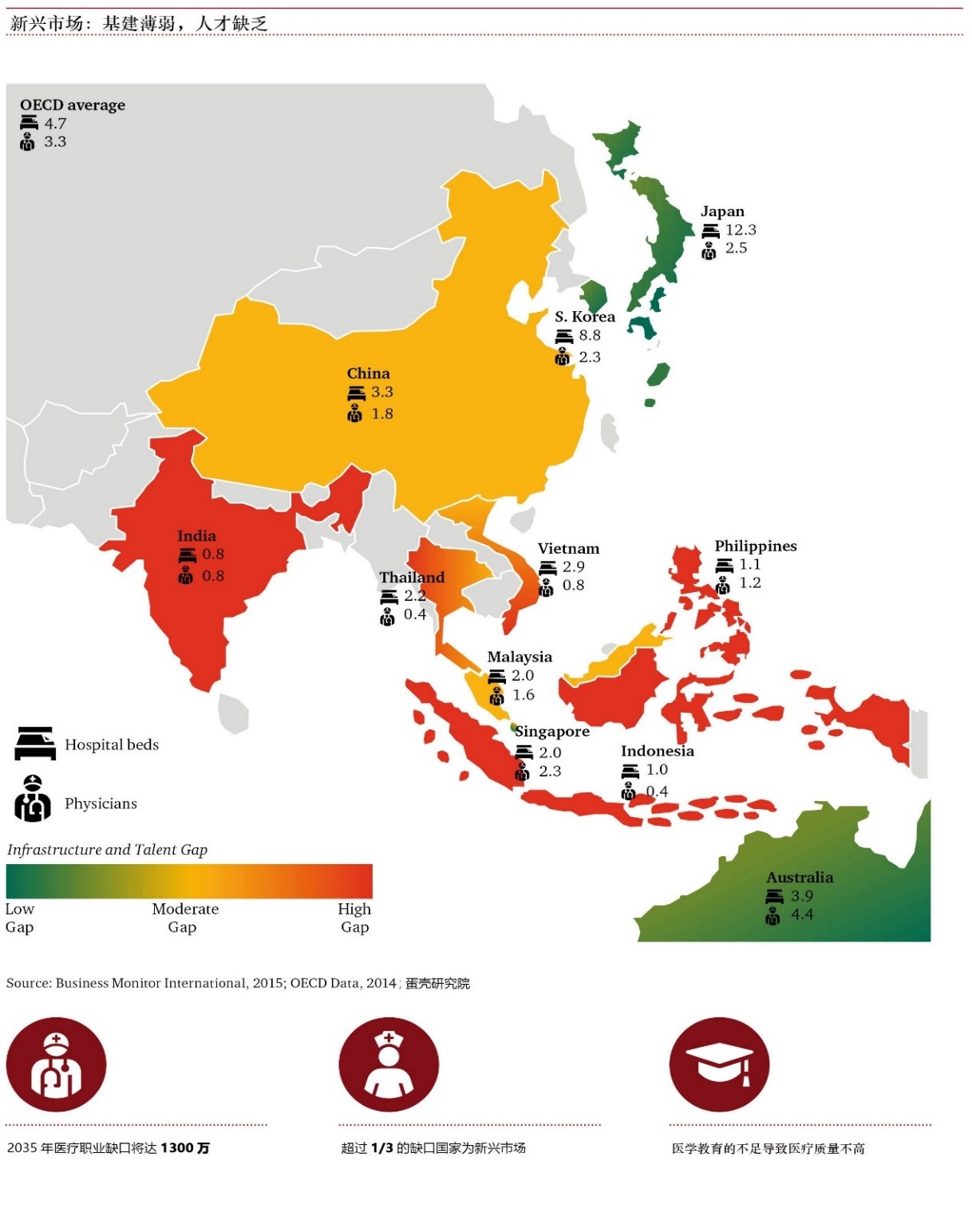
Driven by a combination of factors, including population growth and aging, healthcare demand in emerging markets is continuously rising. With the expansion of the middle class and increasing incomes, people are spending more on healthcare. Non-communicable diseases (NCDs), such as diabetes, are no longer “diseases of affluence” and are spreading across emerging markets. In these countries, most healthcare infrastructure is concentrated in urban areas, while over 50% of the population resides in rural regions. Regarding the gap in medical resources and infrastructure, China faces a moderate level of scarcity compared to other emerging markets, rather than the most severe shortage (as shown in the figure).
Electronic Medical Record (EMR) Adoption and Internet Penetration Are Core Factors
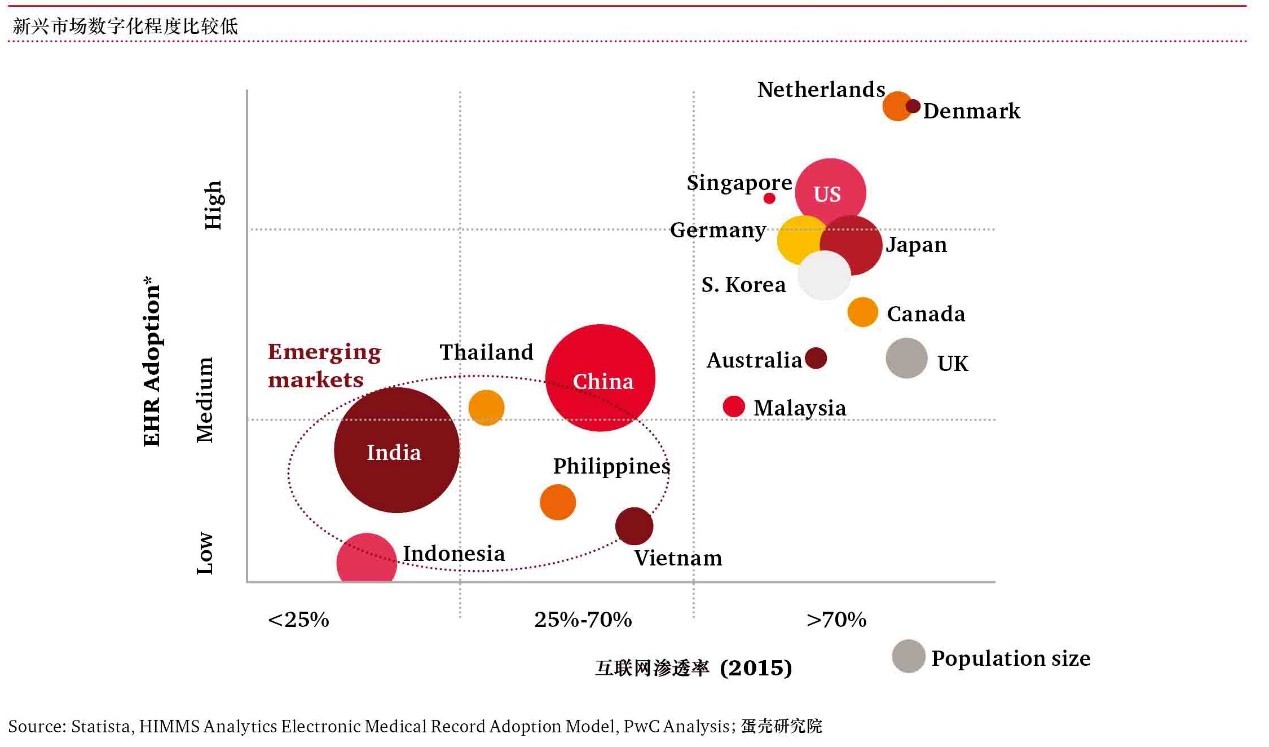
The adoption of traditional EHRs remains slow in emerging markets (as shown in the figure). A significant proportion of these markets still rely on paper-based solutions and outdated IT infrastructure. China’s internet penetration rate is relatively high among emerging markets, with the acceptance of electronic medical records approaching the lower end of levels seen in developed markets.
Traditional EHR solutions have been widely adopted in developed countries, marking a milestone transformation in recent decades. The purchase and installation of EHR systems require substantial upfront costs, as well as expenses for training and maintenance. According to the U.S. Congressional Budget Office (CBO), the average cost of EHR implementation for hospitals is approximately $14,500 per bed annually, with operating costs amounting to around $2,700 per bed per year. For instance, Lifespan, a U.S.-based primary care provider, announced in March 2013 its plan to adopt Epic’s EHR system, which became operational across its health network in April 2015. This project was estimated to cost $100 million. Healthcare institutions in emerging markets are unlikely to afford such high operational expenses.
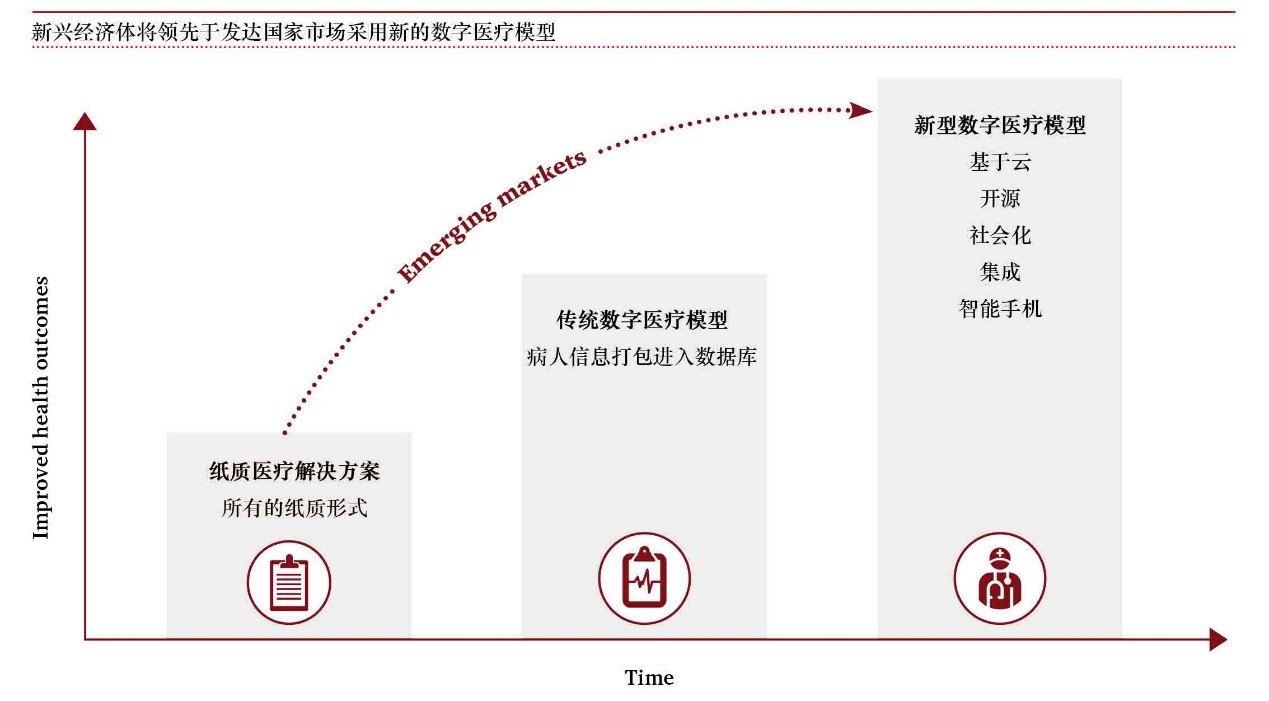
However,The adoption of digital health solutions incorporating EHRs in emerging markets will undergo significant changes in the coming years.. As internet and smartphone penetration rates increase and technical infrastructure shifts toward cloud services, this presents an opportunity to adopt innovative and more cost-effective approaches to delivering healthcare services. These new digital health models encompass rapid prototyping, design, and application, offering emerging markets a chance to catch up with developed countries.
With lower sunk costs, it will become easier to apply innovative solutions within the existing technological architectures and equipment conditions in emerging markets., reduce the fixed costs associated with overcapacity, weaken privileged classes, and mitigate public divisions typical of mature markets.
The Legacy Digital Health Model Is Ill-Suited for Emerging Markets
Most developed countries have moved away from paper-based healthcare solutions and adopted digital health models, which can be referred to as legacy digital health models (as shown in the figure). These legacy models require the purchase or leasing of hardware and software, as well as dedicated space for services and data centers. These systems are coded, packaged, and customized, requiring highly skilled programmers and IT experts to develop and manage the solutions. The healthcare system market in developed countries is shifting toward new digital health models that rely on cloud systems and mobile technologies. However, challenges related to integration and interoperability in existing legacy models will make this transition somewhat slow.
For example, Singapore implemented the National Electronic Health Record (NEHR) system in 2011. It enables the sharing of patients’ medical records across the entire healthcare system. Currently, all community hospitals, 56 community healthcare institutions, and nearly 40% of private clinics are connected to the NEHR. The Singaporean government aims to incorporate the remaining market participants into the system. During the first phase of the NEHR, $128 million was invested in development, with annual maintenance costs amounting to $150 million. Singapore is transitioning to a new model that seeks to migrate healthcare information to the cloud; this initiative, named hCloud, is projected to cost $37 million over the next decade. Nevertheless, the plan is expected to reduce overall healthcare IT expenditures. Future developments will include the application of data analytics to support clinical decision-making and Ministry of Health planning.
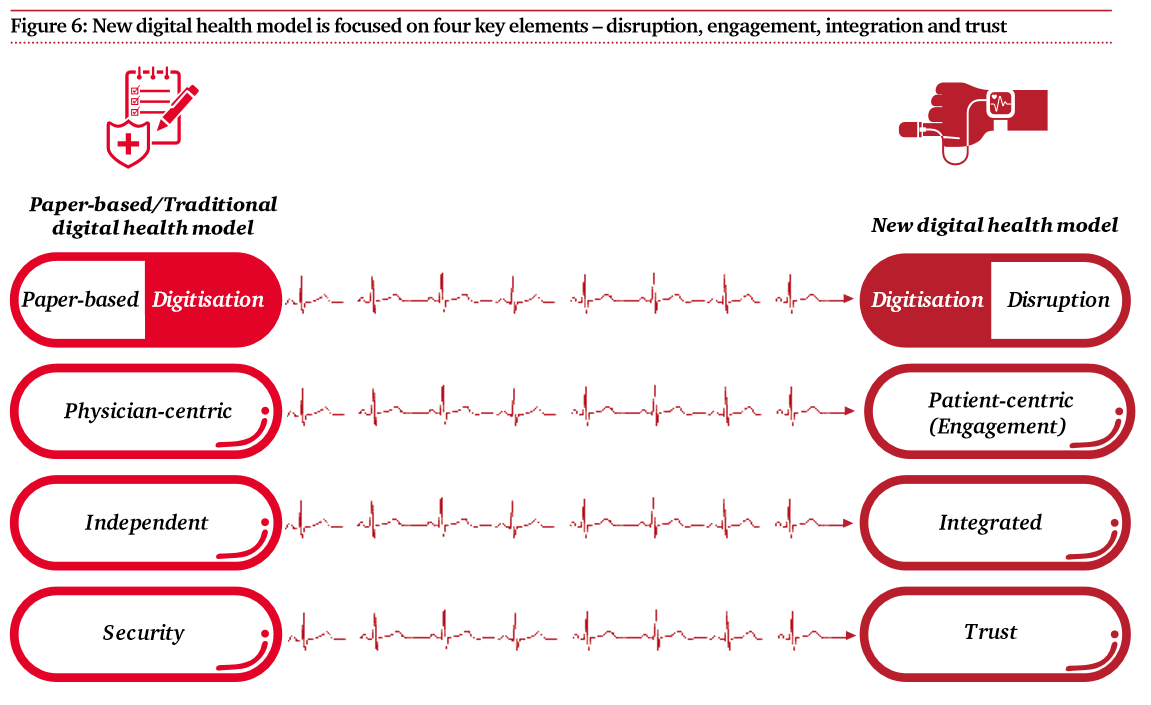
For most emerging markets, the high costs of the old model are unacceptable.This also means that digital health in emerging markets will not evolve by first establishing the traditional model and then transitioning to a new one; instead, it will leapfrog directly into development based on the new model. The new model of digital health is characterized by more open and integrated electronic medical data, as well as cloud-based system solutions.。
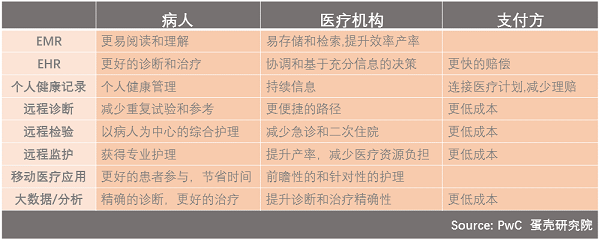
Table: Benefits of Digital Health
Focusing on Shared Interests in the Transition to a New Model of Digital Health
When healthcare institutions and regulatory bodies establish patient-centered care models, they need to develop strategies that leverage technology to serve mutual interests and benefits. The companies that will prevail in the new market are those that can clearly demonstrate how technology adds value, aligns incentives, facilitates strategic sharing and data analytics, and redeployes, extends, and expands the workforce to accommodate digital factors. The following are the key points:
●Understanding Which Digital Health TechnologiesIntegrating Healthcare Institutions and Customer Value to Formulate Digital Strategies
● Through data analysisGenerate Meaningful and Actionable InsightsFocus on investment to deliver better and faster results
●Understanding What Motivates Caregivers and UsersAdopting and continuously utilizing digital technologies is of paramount importance.
●Rethinking the Workforceand workflow will ignite the return of investment in digital health
Compiled by Fu Haitian
By VCBeat. Please credit the WeChat Official Account when reposting:VBResearch2016
↓↓↓