

Dr. Noopur Raje: Novel Therapies May Transform Multiple Myeloma into a Non-Fatal Chronic Disease
At the 2016 Third Nobel Laureates Medical Summit and Sino-US Academicians Forum, outstanding medical experts from around the world gathered together. Noopur S. Raje was one of the few female experts in attendance. A reporter from VCBeat (WeChat ID: vcbeat) had the opportunity to conduct a brief interview with her.
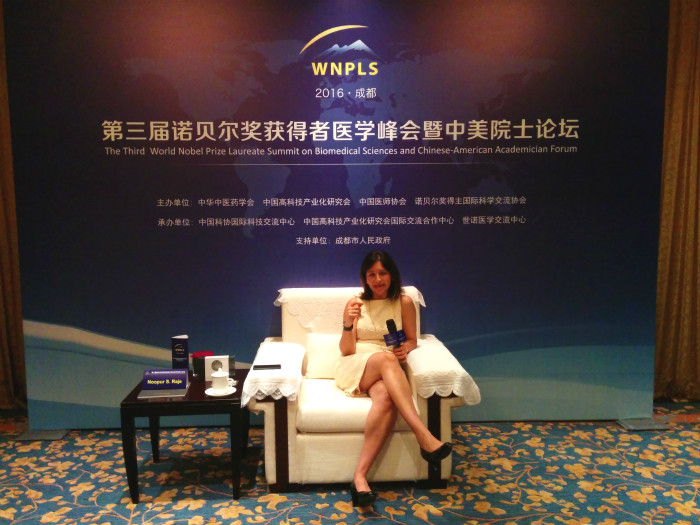
Dr. Noopur Raje is a renowned hematologist and oncologist, and Director of the Multiple Myeloma Center at Massachusetts General Hospital in the United States. Her laboratory primarily focuses on bone biology and the development of innovative therapies for multiple myeloma, as well as research aimed at identifying and validating novel targets and translating them into clinical trials.
She remarked that hosting the summit in Chengdu, with such substantial investments of resources, manpower, and materials to bring together five Nobel laureates on one stage, is truly inspiring for anyone engaged in scientific research and will further motivate their research endeavors. She also expressed hope that more highly interactive breakout sessions could be added in the future to facilitate dialogue between attendees and experts. For instance, a sub-forum on precision medicine could provide participants with greater research inspiration.
As an expert in the field of multiple myeloma, Nupa Rajesh also discussed her laboratory’s latest research directions. The first is basic research. The laboratory is now at the forefront of the industry in researching this bone tumor, particularly in developing new osteoblast therapies. One therapeutic approach involves suppressing specific proteins in myeloma cells to stimulate osteoblast generation. Additionally, certain antibodies have been identified for treatment purposes. The second focus is on new drug development. Although multiple myeloma remains incurable to date, significant efforts have been dedicated to improving existing medications through collaborations with pharmaceutical companies. In the later stages, combining multiple therapies aims to extend survival and enhance the quality of life for patients with multiple myeloma.
Multiple myeloma is a rare disease. A decade ago, only two drugs were available, which could extend patients’ survival by merely two years. By 2016, however, twelve therapeutic agents had become available, truly extending patient survival by 10 to 12 years. Moreover, these new drugs have minimal side effects; patients undergoing treatment appear physically indistinguishable from healthy individuals, as they do not experience hair loss, nausea, or vomiting. The future goal of laboratory research is to transform multiple myeloma into a chronic disease through the development of novel therapeutics, and ultimately achieve a complete cure.
In today’s era, where precision medicine is prevalent, Nupa Rajesh also shared his views on personalized diagnosis. To truly achieve personalized medicine, the first step is to understand the disease itself and its biological mechanisms, and then formulate treatment strategies. Since a single disease can be treated with various approaches, understanding the disease allows for either monotherapy or combination therapy involving multiple drugs. Cancer is an exceptionally challenging condition to treat because it involves genetic factors and requires the management of numerous variables. Therefore, the first step is to recognize the heterogeneity of tumors or cancers; consequently, developed drugs can only address a small fraction of the problems.
Personalized diagnosis also faces the critical issue of cost. It is foreseeable that, in five years, there will be a large-scale emergence of drugs tailored for personalized medicine. However, how should these drugs be utilized? Do physicians require additional training? Who will bear the cost of these medications? Although these drugs are expensive, they yield significant societal benefits and prove more cost-effective in the long run. In the short term, however, the R&D costs for new drugs are substantially high, necessitating the involvement of investment institutions and other stakeholders. If clinical validation encounters setbacks, the financial losses could be severe.
Nupa Rajesh discussed the strengths and weaknesses of female researchers. Although women may be more low-profile than men, their level of effort is in no way inferior, even as they divide their energy to care for their families and children. She also encouraged young scholars engaged in scientific research and medicine to learn from mistakes along their research journey. She advised them not only to focus on their own fields but also to share their findings when阶段性 achievements are made. During the sharing process, it is essential to maintain an open mindset toward criticism, thereby enabling meaningful learning from such feedback.
Related Reading:
Must-Read Insights: Six Nobel Laureates Share Their Medical Fortunes and Opportunities
“Cancer-Fighting Titan” Harald zur Hausen: Have More Persistence in Your Own Judgments
2016 Nobel Laureates in Medicine Summit and Sino-US Academicians Forum Held in Chengdu