Freenome Files for IPO: Pioneering Multi-Omic Liquid Biopsy Platform for Early Cancer Detection
FreenomeIt is an emerging liquid biopsy diagnostic biotechnology company based in Philadelphia, USA. By dynamically collecting genetic material from blood (cell-free DNA), it diagnoses whether a patient has cancer. Compared with traditional cancer detection methods such as tissue biopsy, which are complex and time-consuming, this technology also serves as a cancer detection system capable of issuing early warnings to facilitate timely treatment interventions.
This year, Freenome also secured $5.55 million in venture funding from firms such as Andreessen Horowitz (hereinafter referred to as A16Z). With annual revenues of approximately $3.5 million, the company plans to further commercialize its tests.
Translational Research with Existing Discoveries Wins Verizon Powerful Answers Award
In 2014, Gabriel Otte, then a researcher in academia and now CEO, recognized that while biological research was advancing at an unprecedented pace, few discoveries held genuine clinical significance for patients. He believed that many challenges could be avoided if diseases such as cancer were detected earlier. Furthermore, he contended that although the necessary research and technologies for treating conditions like cancer already existed, there was a regrettable lack of in-depth translational research to apply these advancements effectively.
Thus, he co-founded Freenome with his partners Charlie Roberts and Riley Ennis. Charlie, a clinician, developed the theory of cell-free DNA (DNA freely circulating in the blood) based on research into non-invasive early testing. Riley brought extensive expertise in cancer through his cancer immunotherapy company. Gabriel contributed knowledge in genomics and instrumentation, integrating these disciplines to enable non-invasive early detection.
Focused on research that translates existing discoveries into solutions, we leverage biocompatibility, biophysics, cell biology, and big data to design devices capable of real-time disease detection. Our innovative and effective solutions help people prevent diseases and lead healthier lives. Freenome won the 2014 Verizon Powerful Answers Award, receiving a $700,000 prize.
Genomics + Algorithms for Cancer Early Warning
Gabrie believes that solutions for cancer detection require the development of new algorithms grounded in biological research. Modern DNA sequencing has answered many traditional biological questions; however, biology is often far more complex than technology suggests. Most researchers have focused on simplified biological models, which account for less than 2% of the DNA sequence. This is insufficient for the detection of complex diseases.
Freenome integrates assays, instrumentation, and computational biology to develop novel computational methods and, in turn, create effective new tools that address clinical challenges in disease screening, diagnosis, and treatment. By leveraging the power of next-generation sequencing, Freenome enables personalized, non-invasive diagnostics for cancer and other diseases, as well as targeted therapies.
“Our technology relies on the deep integration of genomics research and algorithms,” said Gabriele. “But to understand it, I first need to explain what the ‘freenome’ is.” The freenome refers to the dynamic ensemble of genetic material flows in the blood (from cell-free components) among the body’s billions of cells, reflecting spatiotemporal changes in the genomes of living cells throughout the body. “By understanding an individual’s freenome, we have developed tests capable of early cancer detection,” Gabriele added.
By leveraging advanced technologies, dynamic genetic information is extracted from blood samples. Algorithms are then employed to match this genetic data with entries in a comprehensive database, ultimately determining the individual’s likelihood of developing cancer. Beyond cancer detection, this test serves as a holistic health monitoring system, empowering individuals to make informed health decisions and facilitating the realization of precision medicine.
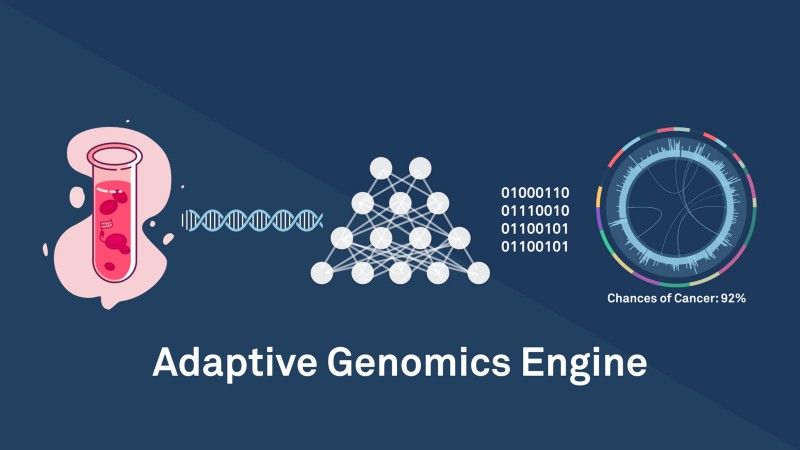 Adaptive learning engine that matches sample data with cell-free DNA data to determine the probability of cancer. Over time, the engine accumulates more data, thereby not only improving test accuracy but also identifying the specific type of cancer.
The company is prioritizing the development of new technological solutions to understand dynamic biomarkers, such as those utilized by Freenome. It has also established a learning engine named the Adaptive Genomics Engine (AGE), which analyzes genomic health in the most extensive and comprehensive manner possible. Unlike cancer tests that focus solely on a limited number of mutations, Freenome’s technology can detect every potential early sign of cancer and pinpoint the specific tumor location, thereby enhancing test precision.
Furthermore, the AGE learning database can store detected genetic information in its own knowledge base, thereby further expanding the data repository. In other words, the more tests conducted, the more precise and detailed the results become. By automatically storing and categorizing information from previously tested samples and matching new samples against this dataset, the system can not only assess disease risk or health status but also identify the specific location and type of cancer.
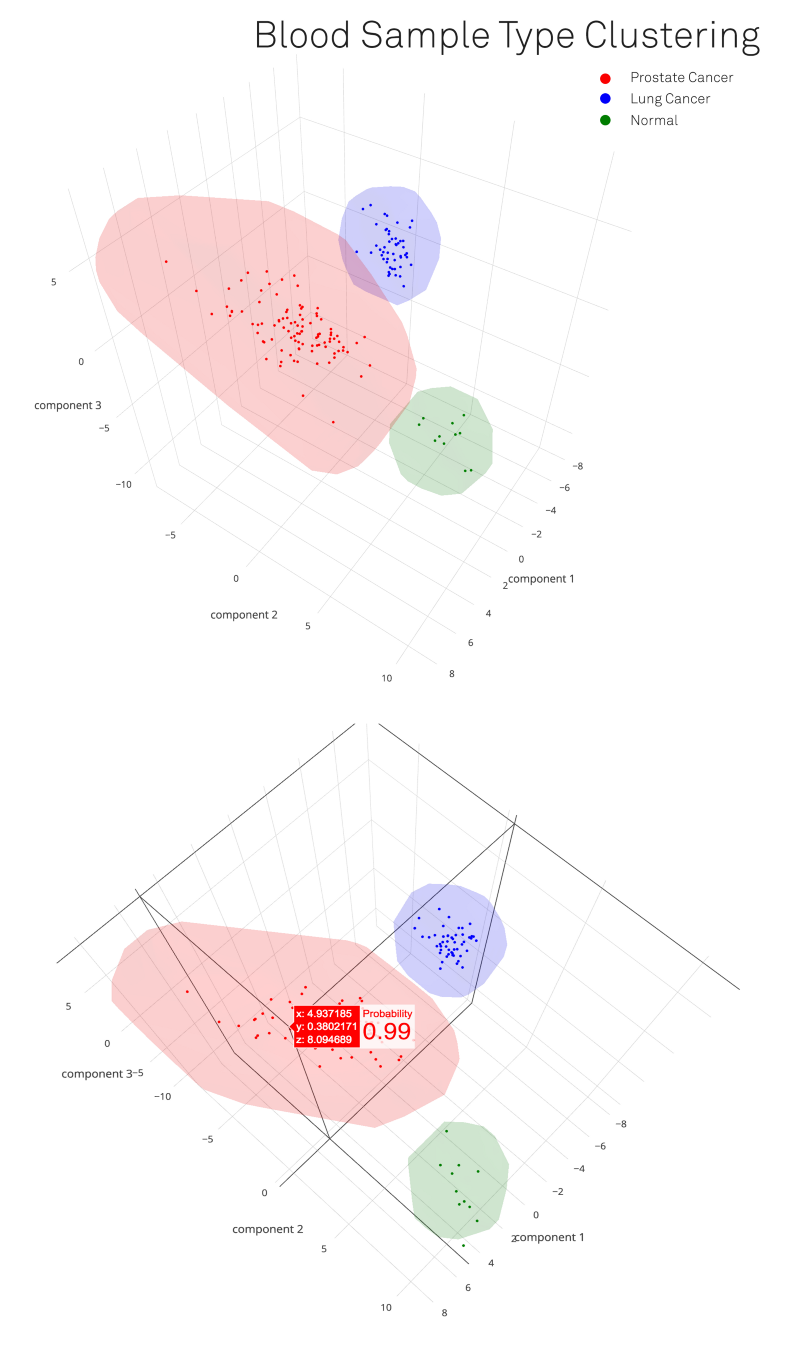
The learning engine analyzes and classifies each sample, calculating the probability of cancer and the type of cancer.
The advent of the genomics era has enabled solutions to problems that traditional biomedicine could not address. As programmers, machine learning experts, and computational biologists, we develop novel computational methods and, in turn, create effective new tools to tackle clinical challenges such as disease screening, diagnosis, and treatment. Leveraging the power of next-generation sequencing, we are pioneering personalized, non-invasive diagnostic approaches for cancer and other diseases, as well as advancing cancer therapies.
Open-Label Trials: A Step Closer to Clinical Application
A16Z’s investment brought not only capital but also, under the leadership of Vijay Pande, Partner at the a16z Bio Fund, a unique convergence of biology, technology, and business.
“From the moment I met Vijay and his colleague Malinka Walaliyadde, I knew how to properly build a company like Freenome,” said Gabriele. They understood that this field must be innovative, accountable, and collaborative with regulators and academic institutions.
The a16z team discussed not only the technology with Freenome but also proposed opening up a platform for blinded testing. “Although we recognize that our technology is not yet fully mature, if we fail this test, the clinical utility of the technology would be significantly undermined.” Freenome submitted five unknown plasma samples and requested the laboratory to classify them. After analyzing the received samples, the laboratory not only distinguished between cancer and healthy samples but also identified that among the three samples potentially indicative of cancer, the cases corresponded to Stage I, Stage III, and Stage IV cancer, respectively.
This also highlights the prospects and potential of Freenome in clinical applications.
Future Goal: To Provide More Cost-Effective and Accurate Technologies for Cancer Treatment
Moreover, Freenome recognizes that detection alone is insufficient; appropriate treatment is also required.
Freenome’s technology does not focus on studying the static genome, and the questions it can answer go beyond a simple dichotomy of “disease” versus “non-disease.”
By collaborating with leading research institutions, Freenome is expanding the scope of its technology beyond mere disease detection to provide additional information, such as tumor type, which can help determine more effective treatment strategies. Gabriele believes that over time, Freenome’s technology will become more mature, cost-effective, and accurate, ultimately contributing to cancer treatment.
Currently, Freenome is preparing to release its initial research findings, while continuing to collaborate with clinical organizations and actively advancing pre-submission reviews with the Centers for Medicare & Medicaid Services (CMS) and the U.S. Food and Drug Administration (FDA).
About Liquid Biopsy
As early as 1,000 years ago, the Arab physician Abulcasis (1013–1017) pioneered biopsy techniques. The advantage of biopsy lies in enabling physicians to assess the patient’s condition based on the histological structure of the lesion.
With the deepening of tumor research, traditional tissue biopsy techniques have exhibited many limitations:
1. Tissue biopsy has a lag time.
2. Tumors exhibit heterogeneity; for patients with metastatic cancer, sampling tumor tissue from a single site fails to reflect the overall disease status, while comprehensive sampling and testing of all tissues is impractical.
3. Certain patients’ individual conditions preclude them from undergoing tissue biopsy.
As a branch of in vitro diagnostics, liquid biopsy addresses the aforementioned issues and advances the timing of cancer diagnosis. The advantages of liquid biopsy lie not only in its non-invasive nature but also in enabling early detection and real-time monitoring of cancer, thereby helping to prevent tumor recurrence. It can be applied to early cancer screening, dynamic monitoring of cancer patients, and guidance for personalized medication, demonstrating broad market prospects.
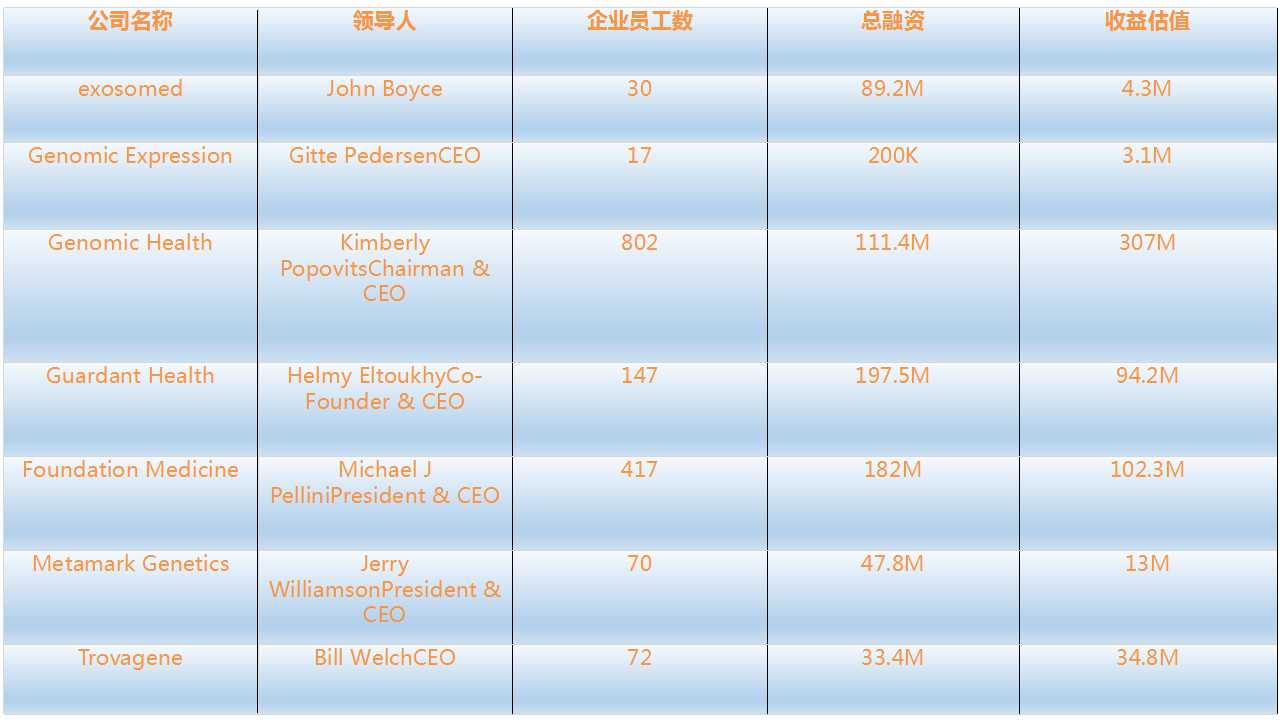
In addition to Freenome, there are over a hundred liquid biopsy companies in the United States; seven of them are highlighted below: