

Investor Brief: Eight Leading Population Health Management Platforms File IPO Prospectus
In today’s healthcare industry, the widespread adoption of population health management has become a trend; however, fields such as precision medicine, analytics, and revenue cycle management are also attracting increasing attention from investors. So, what key considerations should healthcare organizations keep in mind when investing in population health management over the next decade?
Like other types of enterprise software, population health platforms must also be capable of dynamically collecting real-time data from numerous information sources and systems. This enables them to process varying volumes of information while presenting healthcare providers and operational staff with data that can be directly extracted and utilized.VCBeat (WeChat: vcbeat) has compiled a list of eight companies at the forefront of the population health information platform sector in the current healthcare market.
1
Caradigm
Headquarters:Bellevue, Washington
Product:Caradigm Smart Platform, Caradigm Nursing Management System
Customer:Greenville Health System, Virtua, and St. Luke’s University Health Network.
Data is extracted from diverse sources and converted into formats compatible with various platforms to support a wide range of clinical diagnostic needs. The data analysis adopts a retrospective perspective, supplemented by real-time monitoring, thereby ensuring robust causal analysis and model prediction.
Introduction:The Caradigm intelligent platform and care management system are dedicated to serving high-risk patients, while also providing prevention for all diseases and treatment for chronic conditions. Caradigm’s technology enables the identification, assessment, and stratification of patients, allowing healthcare institutions to optimize care teams, manage patient populations, improve treatment outcomes, and reduce overall costs. Caradigm’s products primarily offer four core functionalities: data management, healthcare analytics, care coordination, and patient engagement.
For data management, Caradigm extracts data from numerous sources, converts it into formats compatible with various platforms, and stores it in repositories that facilitate easy retrieval. Meanwhile, Caradigm has developed corresponding front-end interfaces for many systems, thereby ensuring data consistency and providing terminology mapping to support clinical diagnosis and clinical data.
Caradigm’s healthcare analytics technology identifies and quantifies diagnostic outcomes and costs. To support complex patient population management, this healthcare analytics solution adopts a retrospective perspective, complemented by real-time monitoring, thereby ensuring robust causal analysis and predictive modeling. Caradigm offers a suite of analytics systems that report on retrospective events, monitor current activities, predict future behaviors, and provide causal analysis.
In the field of care management, Caradigm’s products are designed to help healthcare providers optimize care management for large patient populations while delivering continuous medical services to high-risk patients and those with escalating risk levels. Through this process, the Caradigm team has also developed an approach to maintaining long-term engagement with patients, ensuring timely and appropriate communication while minimizing unnecessary disruptions.
2
Enli Health Intelligence
Headquarters:Beaverton, Oregon
Product:Enli Nursing Experts, including CareManager Analytics, CareManager Central Worklist, and CareManager Point-of-Care
Client:Texas Tech University Health Sciences Center, The Christ Hospital Health Network, and Bellin Health.
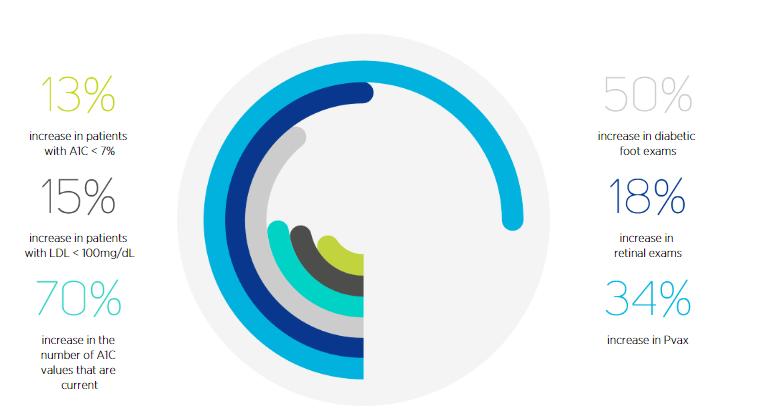
Integrating patient data and care guidelines into daily workflows, a standardized system has been created to deliver optimal medical services and guide nursing teams in optimizing care plans.
Introduction:Enli Medical Intelligence Technology’s Population Health Management System integrates medical data with principles based on historical diagnoses. Enli’s Risk Stratification Management System enables healthcare providers to implement diagnosis-incentivized, value-based care programs. It identifies clinical and non-clinical risk determinants, prioritizes risks, and categorizes patients by risk level to enhance care delivery and patient engagement.
Enli’s value-driven software assists healthcare institutions in delivering care to high-risk patients. These systems standardize diagnostic workflows, enhance administrative and clinical efficiency, define distinct patient populations, and leverage care management tools to boost institutional revenue, while also improving treatment plans for care teams and optimizing program resources.
3
Forward Health Group
Headquarters:Madison, Wisconsin
Product:Population Manager, Population Monitor, and Population Information System
Client:Advocate Medical Group, Penn Medicine, Ascension Health, AIDS Resource Center of Wisconsin, and University of Illinois Hospital and Health Sciences System.
Integrate data from EHRs, diagnostic results, laboratory data, and other sources to identify potential variations and discrepancies in healthcare delivery. Track clinical performance across the entire healthcare system, including information on financial impact.
Introduction:Forward Health Group’s Population Manager is designed to leverage existing healthcare technologies and data—such as electronic health records (EHRs), diagnostic results, laboratory data, and other sources—to help healthcare organizations identify gaps between the services patients need and those they can provide, while accelerating their transition to value-based care.
Meanwhile, Forward Health Group’s population management platform provides healthcare service providers, such as hospitals, with comprehensive, accurate, and timely data, enabling physicians and care teams to make decisions based on more complete information. The underlying technology tracks clinical performance across the entire healthcare system, thereby allowing healthcare providers to demonstrate improved treatment outcomes to patients, payers, and society at large.
Forward Health Group’s population health management platform enhances chronic disease management and delivers preventive care, while providing cost-effective, reliable services for high-risk patients. Achieving care integration and data visualization helps address mental health issues, improves the reliability of situational care teams, and significantly reduces the burden of data entry, computation, and reporting.
4
Medecision
Headquarters:Wayne, Pennsylvania
Product:Medecision Aerial Platform
Client:Christiana Care Health System, Baystate Health, Johns Hopkins, and Health New England.
Achieve data standardization, integrate existing technological resources and workload, provide unified clinical documentation standards, and deliver clinical treatment based on predictive analytics rather than a retrospective perspective.
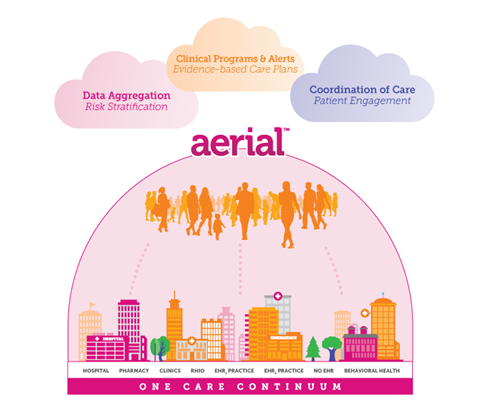
Introduction:Medecision’s cloud-based platform is designed to connect, store, route, and standardize data, thereby integrating existing technologies and workflows. The platform features a unified clinical record that aggregates population-level and individual patient data across healthcare organizations from real-time sources, enabling outcomes-based predictive analytics rather than retrospective studies. It can ingest and process industry-standard data formats—including HL7, CCD, and CMS EDI—for both real-time and batch data. Data exchange between the platform and data providers facilitates real-time interactions among payers, employers, and patients, leveraging electronic health records (EHRs), pharmacy benefit managers (PBMs), laboratories, medical devices, benefits management systems, and mobile devices.
Medecision’s cloud platform also features a “Smart Engine” designed to drive the development of new and improved models for enhancing healthcare quality. It includes analytics for population health and benchmark testing results (covering data on diagnosis, treatment, retreatment, etc.), while better identifying target patient populations that require special attention.
The design and guidance of this platform aim to help healthcare institutions strengthen nursing management and coordinate workflows. The platform includes tools that support nursing management projects related to single or multiple disciplines, alerts and workflows optimized for patient outcomes, and enhanced interaction among nursing managers, coordinators, and caregivers.
The platform connects all participants within a patient’s care circle. Its technological foundation is built on evidence-based approaches that optimize care while eliminating overtreatment and unnecessary costs. Notably, it features automated recommendation management and authorization tools that align with optimal clinical workflows. The platform also leverages the core of management technology—an engine that automatically applies business rules to determine whether service requests should be approved or denied. Additionally, the platform provides configurable reporting tools that use analytics to track and measure performance, outcomes, compliance, costs, and utilization. This helps support institutions in their strategic, managerial, and clinical functions by enhancing clinical visibility and meeting regulatory requirements, while simultaneously improving operational efficiency and the financial success of population health management systems.
5
Mendicity
Headquarters:Salt Lake City, Utah
Product:Connect, Notify, Exchange, Organize, Care, Manage, Engage and Explore
Client:LifePoint Health, CORHIO and BayCare.
The management platform enhances the efficiency of nursing management, utilizes comprehensive patient views and population-level views to mitigate risks, and provides a secure communication tool for interactions between patients and healthcare providers.
Introduction:Medicity offers a diversified system to help healthcare institutions focus on population health management. For example, the Medicity management platform is designed to enhance the effectiveness of care management, granting care providers comprehensive access to each patient’s clinical information while also assisting medical staff in developing appropriate and timely treatment plans. The Medicity management platform provides healthcare professionals with unique clinical insights, such as probabilities of recovery, incompatibilities among quality measures, high-risk conditions, and essential recommendations.
Medicity’s risk stratification system is a core software solution. Segmenting patient populations and categorizing clinical programs by risk level enables healthcare organizations to identify distinct patient groups. Standardized or customized workflows, based on quality control, program monitoring, and alert notifications, can help institutions establish targeted engagements with specific populations.
Medicity’s Organization and Management products uphold quality standards for clinical improvement in healthcare services through continuous validation. By leveraging information provided by caregivers, they deliver timely and well-planned treatment regimens to patients, while proactively identifying high-risk populations through the use of claims data and real-time clinical data. These solutions identify gaps between patient care plans and adherence, enhancing system-wide consistency and efficiency among care teams through automated workflow management.
On another front, Medicity aims to help healthcare organizations better engage with patients and access data. This technology facilitates secure communication between healthcare providers and patients, as well as improved summarization of clinical information for delivery to both parties. Patient portals or personal health records can be freely utilized by healthcare organizations.
The platform provides patients and healthcare professionals with a secure channel for health information exchange. This technology also enables the recording of clinical information access authorizations (upon patient request), allows patients to receive follow-up instructions from healthcare institutions, and permits them to view clinical summaries of all their health records.
6
Transcend Insights

Headquarters:Campbell, California
Product:HealthLogix Platform, HealthLogix Population Health Management Platform, HealthLogix Care, and MyHealthLogix
Customer:Hardin Memorial Health.
The platform supports scalable components and is open to third-party developers, enabling data exchange among different systems within the community. By leveraging FHIR and RESTful APIs, it provides real-time data analytics to help healthcare institutions make better-informed decisions.
Introduction:Transcend Insights offers the HealthLogix platform, which includes the HealthLogix Population Health Management Platform and MyHealthLogix for care management. Built on population health data sourced from the Transcend Insights website and third-party providers, the HealthLogix platform is designed to provide diverse institutions and users with a channel for sharing medical information.
HealthLogix aggregates clinical, claims, and health data from disparate systems to underpin its analytics, ensuring real-time exchange of essential health information across multiple electronic health record (EHR) systems within a community. By integrating real-time care team data from a community-wide perspective, HealthLogix delivers valuable insights that empower healthcare teams to make decisions with greater confidence. The platform aims to bridge the gap between big data analytics and population health data to facilitate proactive interventions. It leverages Fast Healthcare Interoperability Resources (FHIR) technology to enable data transmission between health systems and third-party applications, while also utilizing Representational State Transfer (RESTful) application programming interfaces (APIs) to achieve interoperability.
7
Wellcentive Inc.
Headquarters:Alpharetta, Georgia
Product:Wellcentive Platform
Customer:Health Choice Network, Seattle Children’s Hospital, CHRISTUS Health, and Delaware Valley ACO.
The platform aims to track healthcare service quality in a longitudinal manner, evaluate care outcomes across different populations, and enhance revenue and care efficiency through report submission. Care management services can utilize assessments to identify whether patients qualify for long-term care management billing models.
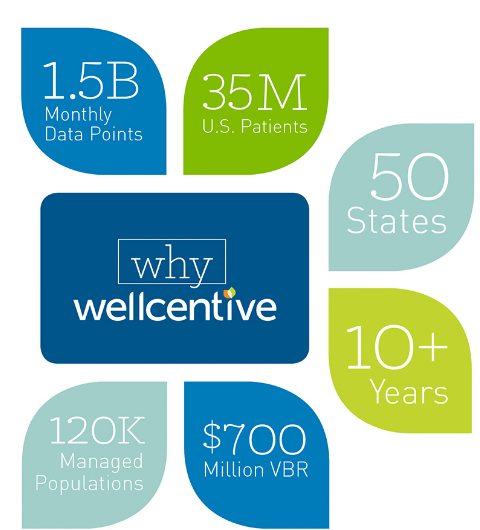
Introduction:The Wellcentive population health management platform is designed to help healthcare organizations adopt a longitudinal approach to tracking care quality, with the goal of comprehensively measuring and evaluating the health of their patient populations. By engaging employed providers and affiliated medical practitioners, the platform delivers insightful reports that measure performance effectiveness. It also offers advisory and network management capabilities to minimize so-called network “leakage,” while optimizing clinical, utilization, and care outcome data within the healthcare sector, ultimately aiming to improve revenue.
Wellcentive’s long-term care management technology helps analyze patient data within provider organizations to identify opportunities aligned with CMS long-term care requirements; it enables the identification and enrollment of eligible patients while providing documentation necessary for care management services and ensuring their traceability. Reports demonstrate that patients in long-term care management programs who meet billing criteria for long-term care needs receive more appropriate services.
8
ZeOmega
Headquarters:Plano, Texas
Product:Value-Based Jiva Platform and Jiva Service Management Platform
Client:Group Health Cooperative, MedStar Health, BJC HealthCare, MIN-NS, and Signal Health.
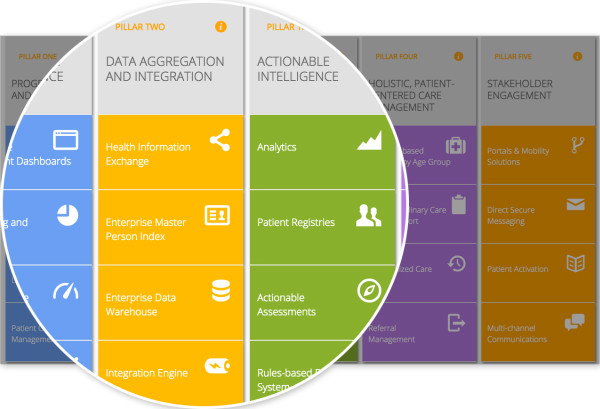
Built on a Health Information Exchange (HIE) platform, it supports multiple healthcare institutions and value-based care programs within the same ecosystem. The platform aggregates data from disparate systems, including orthopedic clinical, financial, and psychological data. Data entities encompass taxpayers, hospitals, physicians, and postoperative patients.
Introduction:HIE-Based Population Health Management (PHM) Platform: Helping Healthcare Organizations Meet ACO, Star, GPRO, PQRS, HEDIS, and Internal Quality Metrics to Maximize Revenue. This technology supports multiple healthcare organizations and value-based care programs on a single platform, enabling enterprises to maximize productivity by leveraging actionable information from workflows and decision-making processes, such as data from electronic health records (EHRs), health information exchanges (HIEs), and other systems. It integrates clinical, financial, administrative, and psychosocial data, with data subjects including taxpayers, hospitals, physicians, and postoperative patients.
The JIVA platform facilitates performance management. Healthcare organizations can leverage this technology to manage the clinical and financial aspects of pay-for-performance programs. The readmission-reduction initiative spans multiple payer categories—including Medicare, Medicaid, and commercial contracts—to monitor targets related to Star Ratings, MSSP, HEDIS, and other pay-for-performance metrics. Furthermore, this technology enables healthcare organizations to access quality performance indicators for revenue maximization, while identifying and stratifying high-risk patients to optimize resource utilization and reduce the risk of misdiagnosis. By enabling a comprehensive understanding of patient populations, it supports more targeted treatment plans, leading to improved clinical outcomes and facilitating a gradual transition toward value-based care models.