

Personalized Therapies Set to Rise as Royal Pharmaceutical Society Outlines Future Pharmacy Care Models
Rapidly advancing medical technologies are impacting every aspect of pharmaceuticals and healthcare. Even the most unlikely candidates for disruption—the ivory-tower institutions of community pharmacies—are not immune to this transformation. Let me show you the promising future of pharmacy practice.
Although pharmacies play a critical role in the recovery process, patients often perceive pharmacists and pharmacies as providers of commercial or business-oriented services. It has become a well-defined business model wherein patients purchase medications from pharmacists after physicians have prescribed the drugs and provided usage instructions.
However, the medical technology revolution is disrupting the clearly defined roles that various stakeholders play within the healthcare system. For instance, it can rebalance the historically asymmetric power dynamic between physicians and patients by empowering patients. Pharmacies must also redefine their roles within the healthcare system. Consequently, a singular drug distribution mechanism will fail to meet the demands of an economy characterized by sharing and community-based models.

Recently, the Royal Pharmaceutical Society of Great Britain released a report on future models of pharmaceutical care delivery in community pharmacies and put forward several thought-provoking recommendations.
In their view, pharmacists should make some changes:
1. It should shift its business focus from drug distribution to providing comprehensive services
2. The ultimate goal should be to help customers maximize drug efficacy and safeguard their health.
3. Instead of passively waiting for the state to provide solutions, proactive efforts should be made to advance local reforms.
4. Break down the boundaries between community, social, secondary, and tertiary care, and collaborate with other healthcare professionals
In summary, the fundamental concept of the future pharmacist encompasses the characteristics of both ancient shaman-healers and 21st-century technical experts and professional researchers. Shaman-healers often held a special status within their tribes; they were knowledgeable about patients’ histories and could prescribe targeted treatments, providing basic medical services (referring to herbal remedies or injections in the Middle Ages). Technical experts know how to interpret data obtained from health trackers and wearable devices, delivering necessary medical care to patients based on this information. Meanwhile, true researchers possess not only foundational medical knowledge but also an understanding of the latest advancements in the fields of pharmaceuticals and medicine.
This combination of traditional healers and technology experts will prove invaluable in areas with limited pharmacy access, such as rural, remote, or small communities. This phenomenon has even impacted hospital readmission data. Researchers have found that rural areas with scarce pharmacies have higher readmission rates than urban areas. If our ultimate goal is to improve patients’ experience during recovery, this disparity must be addressed. Technology should also play its proper role when needed.Now, VCBeat (WeChat: vcbeat) takes a look with you at potential future scenarios and the technologies that will have a significant impact on pharmacies.
Post-modern pharmacies will not merely be medication dispensing outlets; empowered by technology, they will gain greater efficiency and play a more significant role in patient triage. Acting as health managers, they will assist both healthy individuals and patients with health conditions in managing their treatment plans, oversee medication regimens for patients on polypharmacy, provide advice for minor ailments, and deliver public health services.

To enable pharmacies to focus on health management tasks rather than medication delivery, we must make greater efforts in refining organizational structures and advancing technological research and development.
Computer systems for controlling labels and inventory, automated patient packs, and unit-dose dispensing technologies that have been used in UK and US hospitals for decades should be more widely adopted. This would significantly reduce the time required for selecting and storing medications.
As wearable sensors and health trackers become increasingly prevalent, pharmacies can also assume additional health management roles beyond dispensing medications, such as helping patients interpret data from wearable devices (which, in my experience, is highly technically demanding) or recommending treatments for minor ailments or medications based on device readings.
Furthermore, scientific workload scheduling and skill-based task allocation can help transform traditional pharmacies into modern 21st-century healthcare management institutions. For instance, specially trained pharmacy staff will be capable of performing technical medication compounding or decoding data from health sensors and trackers. In this context, pharmacists’ skills and technological innovations will save time for pharmacies, enabling them to better provide other services such as basic care.
Have you ever had this experience? You stand in line at the pharmacy, and after a long wait, you finally reach the counter. You hand your prescription to an overwhelmed pharmacist or assistant and wait for them to retrieve your medication. Although you have questions about the drug itself or wish to consult on vitamin and medication brands you researched before visiting the pharmacy, you simply pay and leave. However, is the real reason you left without asking questions truly because the wait was too long or the pharmacist lacked time to respond?
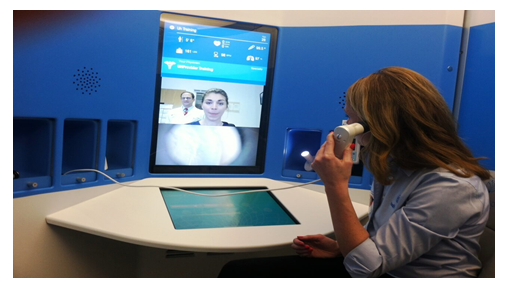
It is time for pharmacies to transform from simple medication dispensing outlets into health advisors. With continuous technological advancements and the refinement of organizational structures, pharmacists are expected to provide basic medical services or health management consulting for patients with minor ailments. In this way, the medical services offered by pharmacies can nearly reach the level of primary care.
The most critical factor driving this advancement is patients’ access to healthcare services through “grassroots” channels. This means that when professional healthcare providers and pharmacists are not physically present, they must proactively deliver care in the manner most convenient for the patient. In this context, solutions such as telemedicine have emerged. For instance, through Intouch Health’s telemedicine network in remote areas of the United States, patients can receive high-quality emergency consultations for stroke or cardiovascular events, as well as timely burn care. With the aid of telemedicine technologies, professional healthcare providers in both urban and rural areas can offer specialized services, enabling patients to receive treatment within their own communities.
This is the so-called point-of-care diagnosis, which enables healthcare professionals to diagnose patients and initiate timely treatment in any setting, such as physician offices, ambulances, homes, on-site locations, or hospitals. Health sensors like the Scanadu Scout, which can measure heart rate, respiratory rate, blood oxygen saturation, and body temperature, or the Viatom Checkme sensor, which can measure electrocardiogram (ECG), pulse, blood oxygen saturation, blood pressure, body temperature, sleep quality, and daily activity, greatly assist professional healthcare providers in making more accurate and effortless diagnoses in settings such as pharmacies.
Let us further envision the pharmacy of the future: traditional pharmacies have successfully transformed into health management centers and, with the aid of technology and organizational support, have become health advisors. So how can pharmacies play a greater role in the recovery process?
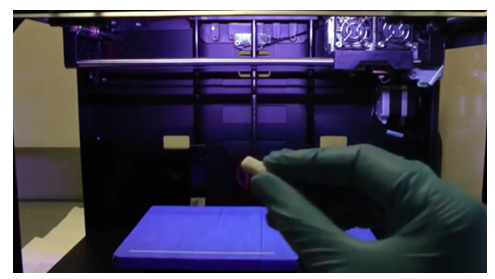
I believe that pharmacies should be granted the autonomy to operate in the realm of personalized treatment. By leveraging cloud-based algorithms and digital health solutions, pharmacists can access medical information comparable in both quantity and quality to that available to physicians, and they may even print medications on demand. It is also possible that clinical trials could be conducted within this framework.
Anything is possible! Last year, the FDA approved Spritam, a 3D-printed epilepsy medication. This drug is fabricated layer by layer from powdered raw materials, enabling it to dissolve more rapidly than conventional medications. Imagine the speed at which medications could be dispensed in secondary or tertiary pharmacies equipped with 3D printers.
Furthermore, with the aid of artificial intelligence (AI) technologies, the time required for clinical trials will be significantly reduced, better aligning with the needs of pharmacies and patients. For instance, Atomwise is leveraging supercomputers combined with molecular structure databases to develop therapies. Last year, Atomwise initiated a virtual screening of existing safe drugs, aiming to repurpose redesigned medications for the treatment of the Ebola virus. Using the company’s AI technology, researchers identified two drugs that could significantly reduce the infectivity of the Ebola virus. This type of analysis, which would typically take months or even years, was completed in less than a day. If clinical trials could be conducted at the starting point of healthcare services—namely, pharmacies—the efficiency of new drug development would be greatly enhanced.
Regardless, I hope pharmacists will embrace change and leverage technology to improve work efficiency. Undoubtedly, these practices can reduce service costs in pharmacies, enhance service quality, and expand the scope of services.