

Stem Cells Unlock Secrets of Hypertrophic Cardiomyopathy in Groundbreaking Research
Hypertrophic cardiomyopathy (HCM) is an idiopathic myocardial disease associated with a risk of sudden cardiac death. It is classified into obstructive and non-obstructive HCM based on the presence or absence of left ventricular outflow tract obstruction and may have a genetic basis. Scientists at the Icahn School of Medicine at Mount Sinai have developed an HCM model using advanced stem cell technology.
Stem cell scientists have created heart-like tissue in the laboratory, helping researchers understand the mechanisms of sudden-onset diseases, including hypertrophic cardiomyopathy, whose etiology remains unclear.
A newly identified genetic disorder, known as cardiofaciocutaneous (CFC) syndrome, is caused by a mutation in the BRAF gene. According to research from the National Institutes of Health (NIH), this condition is extremely rare, with fewer than 300 cases reported worldwide. It leads to abnormalities in the head, face, skin, and major muscles, including the heart.
To gain deeper insights into the relationship between HCM and various genetic disorders, scientists at Mount Sinai converted skin cells from three patients with Cardiofaciocutaneous (CFC) syndrome into induced pluripotent stem cells, which were then differentiated into cardiomyocytes responsible for heart contractions. This model was employed to investigate the association between CFC syndrome and common genetic conditions, including Noonan syndrome, which is characterized by distinctive facial features, short stature, congenital heart defects, and skeletal abnormalities.
“Currently, there are no effective treatments for hereditary HCM,” said Bruce D. Gelb, a geneticist at the Icahn School of Medicine at Mount Sinai and Director of the Mindich Child Health and Development Institute. “If our research is correct, we may be able to effectively treat HCM by blocking specific cellular signaling pathways.”
Dr. Gelb believes that approximately 40% of patients with Cardiofaciocutaneous (CFC) syndrome also have Hypertrophic Cardiomyopathy (HCM) (two of the three CFC patients in the study had concurrent HCM). Although sufficient research evidence is not yet available, Dr. Gelb considers this a lethal association. The primary goal of current research is to understand the role played by the cellular signaling pathway RAS/MAPK in the association between HCM patients and those with CFC and other similar conditions, such as Noonan syndrome and Costello syndrome.
By observing the pathological processes of these cardiomyocytes, Dr. Gelb and his team discovered that some of these changes were caused by interactions with fibroblast-like cells that produce collagen and other proteins.
“Although cardiomyocytes are primarily responsible for pumping blood, fibroblasts remain a critical component of cardiac tissue. These fibroblast-like cells produce a protein growth factor called TGF-β, which in turn induces hypertrophy or growth of cardiomyocytes,” said Dr. Gelb.
Based on previous research observations, Dr. Gelb’s team considered transitional hypertrophy to be a “cell-autonomous” phenomenon, meaning it is an intrinsic property of cardiomyocytes. “Using the cell model we established, we found that fibroblasts play a key role in signaling cardiac cells to enlarge,” said Dr. Gelb. “This was a completely unexpected finding.”
Certainly, this has profound implications for treatment. “We can use antibodies tethered to proteins to block TGF-β. With such a therapeutic approach, cardiomyocytes no longer undergo hypertrophy,” stated Dr. Gelb. “However, we are still uncertain about its efficacy in some cases of HCM that are not clinically driven by BRAF or RAS.” Essentially, BRAF and RAS are cellular proteins that help transmit signals from cell surface receptors to the DNA in the nucleus.
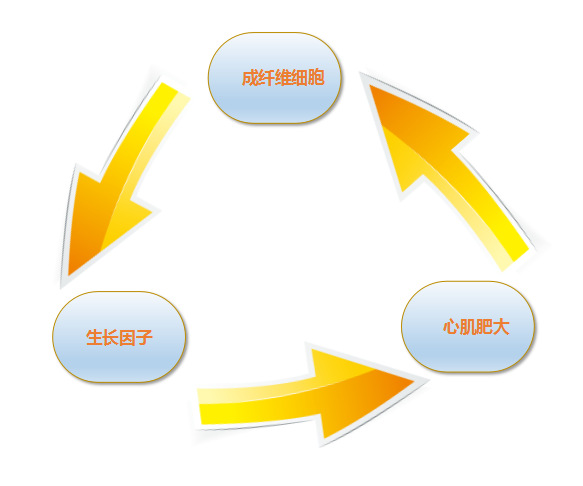
More surprisingly, research has revealed that this system actually forms a signaling loop: fibroblasts trigger the release of growth factors, leading to cardiomyocyte hypertrophy, which in turn prompts fibroblasts to release even more growth factors. Dr. Gelb has not yet confirmed the final step of this signaling loop; however, in mouse model experiments, the stimulatory effect of fibroblasts was observed without the expression of RAS mutations. If this signaling loop does exist, Dr. Gelb suggests that it could lead to new theories and broader prospects for therapeutic interventions in both RAS-mediated and non-RAS-mediated hypertrophic cardiomyopathy (HCM). At least in theory, this would enable a single approach to cure both types of HCM.