

Expert Zhang Dan: Urgent Need for Talent and Faster Approval in Drug Development
Zhang Dan, an outstanding representative of China’s first generation of top-tier talent, granted an exclusive interview to a reporter from VCBeat (WeChat ID: vcbeat) after attending the 3rd Nobel Laureates Medical Summit and the Chinese-American Academicians Forum.
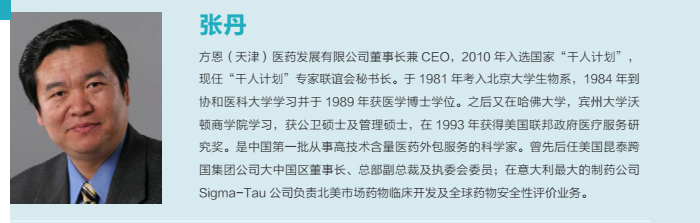
Since returning to China, Zhang Dan has observed that the country’s scientific research environment is undergoing year-on-year changes. Particularly since last year, the state has implemented systemic reforms on one hand, proposing that greater autonomy be granted to scientific and technological personnel, while also fostering innovation in the allocation of science and technology funding and the management of related projects. These measures have expanded the scope for researchers to exercise their professional discretion within the institutional framework.
On the other hand, the state has introduced talent through mechanisms such as embedded evolution. For instance, it has recruited more influential, accomplished, and innovative scientists and young scientists from around the world. From a talent perspective, this represents the highest peak in human capital achieved since the founding of the People's Republic of China.
Attracting talent and achieving rapid development is no easy feat. Accelerating the pace of translation has become a global priority. For instance, while innovation was the theme of the recent G20 Summit, the focus ultimately rested on the speed of translation. In the field of biopharmaceuticals, the window for innovation has been relatively narrow, leaving considerable room for improvement in managing the transition from patent protection to product approval processes for biologics.
As someone working at a clinical CRO that provides services, Zhang Dan can deeply relate. He has consistently helped companies implement drug development strategies, particularly in the area of global pharmaceutical distribution channels. “We are practitioners who directly put into action high-quality, efficient, and rapid efforts to bring effective products to patients,” is his mantra.
Currently, the United States, Europe, and Japan hold certain advantages in new drug development, while the United States and Europe have distinct strengths in mastering techniques for new drug discovery.
After completing their studies and returning to China, they found that in the vast Chinese market, China has already taken the global lead in exports, imports, and investment. In particular, the national “Belt and Road” initiative may have created more development opportunities for overseas friends seeking to learn from these experiences.
In 2007, Zhang Dan resolutely gave up superior material conditions abroad and chose to return to China.
To address the shortcomings in China’s drug R&D, he established Fangen (Tianjin) Pharmaceutical Development Co., Ltd. as a contract research organization (CRO). The company provides comprehensive services within the scope of Good Clinical Practice (GCP) for international coordination meetings to multinational clients conducting clinical research in China.
Fang En’s management team boasts decades of experience at internationally leading contract research organizations (CROs) or multinational pharmaceutical companies. In China’s CRO market, it delivers high-quality services at a low cost.
FangEn Pharmaceutical Development Co., Ltd. has established operations in the United States, Beijing, China; Tianjin, China; and Shanghai, China.Subsidiary. Possesses extensive clinical trial experience in the fields of cardiovascular, central nervous system, endocrine and metabolic disorders, and oncology.
As is well known, the genetic mechanisms underlying cancer pathogenesis are not yet fully understood. How can precision medicine be achieved in oncology, and how much benefit can it truly bring to patients?
Personalized cancer therapy is now a globally recognized principle, with targeted precision therapy constituting the core of such personalized approaches. In Zhang Dan’s view, “Everything must be targeted and precise; without this approach, there is no room for survival. The one-size-fits-all chemotherapy regimens of the past are no longer used in clinical practice with new agents. While older treatment modalities persist, newly developed drugs rarely follow such non-targeted paradigms. Therefore, precision medicine is not merely a broad strategic direction but an imperative pathway in current clinical research and development.”
Throughout the entire new drug development process, Zhang Dan believes that there are issues with national drug regulation. For example, the approval speed for new drugs is unusually slow, and the technical support provided by the drug testing system to manufacturers and drug developers needs improvement.
Every country encounters challenges to varying degrees during its development. Fortunately, the National Medical Products Administration (NMPA) is continuously making adjustments, primarily in the following areas:
First, significantly raise the quality requirements for clinical trials;
Second, third-party pharmaceutical manufacturers are permitted to engage in contract manufacturing and production, eliminating the need for researchers to establish their own facilities to produce new drugs.
Third, a “green channel” may be established to expedite the approval of a broader range of products, including those addressing unmet clinical needs, pediatric and geriatric medicines with robust clinical evidence of efficacy, key projects supported by the state, products whose manufacturing is being relocated from overseas to China, and products that have already received marketing authorization in major international markets.
Fourth, recruit experienced professionals from overseas to serve as Chief Approval Officers. To accelerate the approval process for innovative drugs, the state may strengthen and centralize review procedures, with the aim of completely clearing the backlog of products that have already been submitted and are awaiting accumulation by the end of this year. From this perspective, the issues within the drug regulatory system are being gradually resolved. Of course, we hope for better and faster solutions, which remains an enduring topic.
More importantly, the development of new drugs must be conducted in collaboration with hospitals, with clinical practice as the foundation. Currently, Foen Group collaborates with over 500 hospitals, adopting a scaled, assembly-line approach rather than focusing on just one or two drugs from a single pharmaceutical manufacturer. Typically, Zhang Dan oversees the research and development of dozens of new drug candidates simultaneously.
In addition, with the launch of new drugs, ZhangDan can simultaneously apply for marketing authorization in the European Community, Japan, and China, without having to first obtain approval in China, then in the United States, and finally in Europe. Over the past three years, he has submitted 17 new drug marketing authorization applications in Europe and the United States, successfully obtaining approval for 11 of them—a first for Chinese domestic enterprises.
In Zhang Dan’s view, although internet healthcare is currently experiencing robust growth, pharmaceutical R&D companies face varying degrees of suitability for its adoption—some applications are feasible, while others are not. Nevertheless, leveraging the internet’s advantage in low-cost data collection can foster further global collaboration, and we look forward to the early realization of this prospect.