

Google DeepMind Mimics Human Neural Networks to Enable Precision Disease Prevention
What is the current state of processing and mining of big data in healthcare, and how will it evolve in the future? VCBeat (WeChat ID: vcbeat) will publish a series of reports on the global healthcare big data sector, covering typical case studies, investment and financing activities, and industry landscape developments, to serve as a reference for investors, entrepreneurs, and healthcare institutions.
AlphaGo defeated world Go champion Lee Sedol, propelling DeepMind to fame. Now, it can not only beat top-tier Go players but also defeat professional gamers! In fact, DeepMind is an artificial intelligence laboratory headquartered in London, UK. Its research focuses on developing general-purpose self-learning algorithms. It was swiftly acquired by Google in 2014 for $400 million—a hefty price tag driven by competition from Facebook, which was also vying for the acquisition.
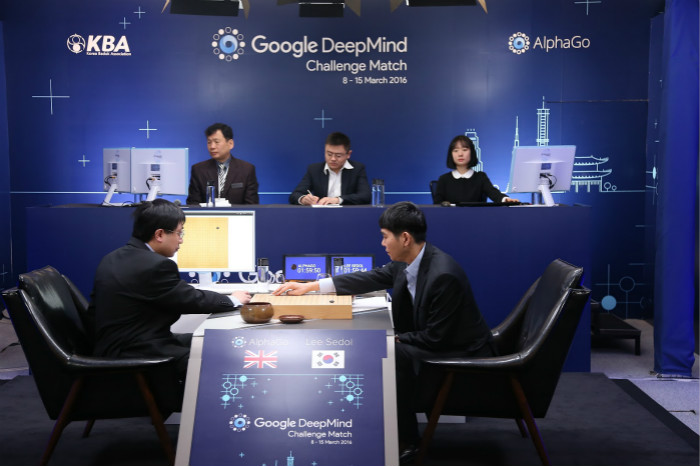
Since its acquisition, DeepMind has continued to operate independently. Unlike conventional machine learning systems that rely on pre-programmed rules, its objective is to integrate the most advanced techniques from machine learning and neuroscience to develop powerful, general-purpose learning algorithms with broad applicability across various industries.
DeepMind was founded in 2012 by neuroscientist and young chess prodigy Demis Hassabis, along with two partners. On DeepMind’s newly revamped official website, three core sections are prominently featured: AlphaGo, DQNas well as Health, offering a glimpse into DeepMind’s current research focus.
DeepMind’s research is founded on “deep learning” technology! Deep learning is an important branch of machine learning, aiming to mimic the way human neural networks perceive the external world. As an emerging topic in the field of artificial intelligence (AI), it enhances machine learning capabilities through the use of neural networks. Currently, Google’s speech recognition and natural language processing (NLP) technologies are relatively mature, and there are also development platforms and smart hardware products based on speech and NLP. The more established application models of deep learning include the following:
1. Computer Vision: A scientific discipline focused on enabling machines to "see." It employs cameras and computers to replicate human visual functions—such as object recognition, tracking, and measurement—and performs image processing to facilitate observations akin to those made by the human eye.
2. Natural Language Processing (NLP): A branch of artificial intelligence and linguistics that explores the processing and application of natural language.
3. Object Recognition: In the field of computer vision, this refers to locating a given object within an image or a sequence of video frames.
4. Machine Translation: A field within computational linguistics that focuses on using computer programs to translate text or speech from one natural language into another.
What does conventional machine learning look like? Essentially, it involves pre-programmed coding instructions that learn or establish patterns from large datasets, and then use these patterns to predict new instances or acquire additional knowledge. Inevitably, issues arise: on one hand, it requires substantial time; on the other, it relies on human-written code to enable machines to learn abstract concepts, meaning it cannot surpass human intelligence.
Unlike conventional machine learning, the core of DeepMind’s deep learning lies in enabling computers to autonomously discover patterns within large datasets. Its solution involves a combination of methods such as deep neural networks and reinforcement learning. In terms of algorithmic evolution, it has undergone continuous advancements through Q-learning, reinforcement learning, Deep Q-Networks, and AlphaGo. By simulating large-scale neural networks, it enables computers to learn and “think” like humans without the need for direct human intervention.Artificial intelligence agents acquire knowledge through interactions with their environment.What computers learn through deep learning algorithms are more abstract conceptual representations. The rapid accumulation of big data, the swift advancement of large-scale parallel computing, and the continuous emergence of new algorithms have collectively driven a transformative overhaul of neural network technologies, enabling them to deliver greater utility.
This may sound complex. Take the remarkable Deep Q-Network (DQN) as an example: it can autonomously learn game rules. Without being provided with any prior information about the games, DQN can still improve its performance through continuous gameplay. According to overseas media reports, DQN was tested on 49 games with different rules, including Space Invaders, Breakout, and Pong. It outperformed humans in 29 of these games, while its AI performance continued to improve across 43 games.
DeepMindFounder Demis Hassabis stated, “The next phase of AI DQN will involve developing a system capable of learning more complex 3D games. In this way, if it can drive normally in racing games, it will then be possible to enable its intelligent control of real vehicles.”
To date, the DeepMind team has published more than 100 professional papers and achievements on neural network technologies in prestigious journals and conferences such as Nature and NIPS.
Reassuringly, physicians will not be rapidly replaced by AlphaGo-like machines at this stage; their involvement in providing feedback remains essential. Due to the limitations of the current healthcare environment, the vast majority of valuable data remain confined to paper records or charts. These data are neither documented nor tracked, and some hospitals even lack medical data logs. Without “auditable” data, the accuracy of generated information cannot be verified. Therefore, DeepMind needs to address two core patient safety issues: identifying risks of clinical deterioration in patients and enabling real-time assessment.
Once we identify that a patient is at risk, how exactly should we intervene? We cannot simply offer recommendations—such as reconfiguring medical equipment—as if analyzing a report. The true purpose of deep learning is to help clinicians better understand the patient’s condition and enable rapid intervention in real-time settings.
DeepMind co-founder Suleyman mentioned in an interview: "For the healthcare industry, the most noteworthy aspect is that if we can successfully deploy advanced, modern technologies within healthcare systems, we can achieve system optimization and generate incredible profits."
To develop solutions and “frame” all related work, the DeepMind team spent extensive time in hospital wards alongside doctors and nurses. They observed clinical workflows, identified challenges encountered in daily practice, and gathered as much information as possible to gain a deeper understanding of the technology to be developed, thereby enabling the rapid construction of a preliminary design framework. Engineers then continuously refined this framework, proceeding through iterative stages of development, testing, and solution implementation—encompassing pilot runs, evaluation, further development, and learning—before repeating the entire cycle. In this way, DeepMind significantly accelerated the iteration cycle of its AI-driven healthcare solutions, thereby enhancing the speed of machine learning development.
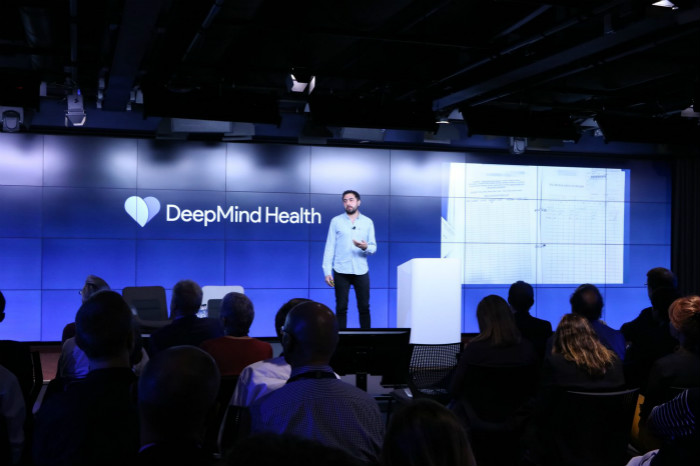
On September 20 this year, DeepMind Health held in LondonThe 1stPatient and Public Administration Open Forum,At the conference, 130 patients, caregivers, and public health professionals engaged in in-depth exchanges.A patient-centered direction has been established. Within the NHS healthcare system, the development of IT systems in many hospitals is often driven by top-down administrative decisions, resulting in many medical tools being outdated and misaligned with current clinical needs. In response to this issue,DeepMind Health Actively accept patient feedback and strive to address practical issues in the medical fieldof the thorny issue, such as data security and transparency, as well as AI-powered products that enhance the efficiency of clinicians and patients, all provide important strategic guidance for subsequent product development and application.
1. Establish the DeepMind Health Division to Transform the Healthcare Sector
On February 24 this year, DeepMind announced the establishment of its DeepMind Health division. Co-founder Mustafa Suleyman stated that the division currently comprises approximately 15 employees and is poised for rapid expansion in the future. The company has also recruited two physicians to guide its research and development efforts. In collaboration with the UK’s National Health Service (NHS), the division aims to provide tools for clinical nurses, doctors, and specialist consultants over the long term. These tools are designed to support world-class healthcare delivery by aiding clinical decision-making and enhancing efficiency to reduce time burdens.
In a collaborative pilot with the Royal Free Hospital, DeepMind Health developed software called Streams. This software serves as an acute kidney injury (AKI) alert platform for blood tests, helping clinicians review medical results more rapidly. Through Streams, clinicians can view blood test results for patients at risk of acute kidney injury within seconds, thereby optimizing patient treatment plans. The next step is to enable the system to autonomously escalate alerts and facilitate more effective interventions.
Furthermore, DeepMind acquired the UK-based healthcare startup Hark. Previously, Hark developed task management applications for clinicians, leveraging deep learning algorithms to replace traditional paper medical records, sticky notes, and fax machines, thereby improving efficiency by 37%. Following the acquisition, Hark was integrated into the DeepMind Health division, and its two founders, Dr. Dominic King and Ara Darzi, joined DeepMind Health as program overseers. However, both software products are currently in a basic, early stage of development.
2. Collaborate with Moorfields to develop machine learning algorithms for identifying ophthalmic diseases and preventing eye conditions
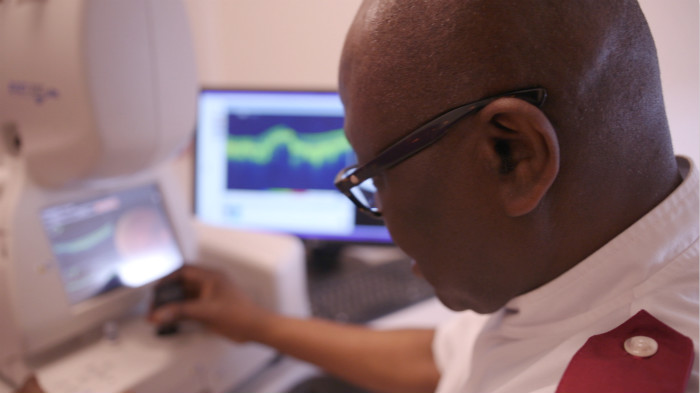
On July 5 this year, DeepMind announced its first purely medical research project with the NHS (National Health Service), which involves developing a machine learning system to identify visual diseases in collaboration with Moorfields Eye Hospital.
The core of this research project lies in Moorfields Eye Hospital sharing approximately one million anonymized eye imaging scans with DeepMind. A key aspect of this collaboration is the substantial increase in high-resolution retinal scans, which offer greater detail than imaging of any other part of the human body, even enabling visualization at the cellular level. DeepMind researchers have developed algorithms to identify early signs of eye diseases, such as age-related macular degeneration (AMD) and diabetic retinopathy, with the aim of achieving early prevention of vision loss.
Early identification of diabetic retinopathy is crucial, as patients with diabetes face a 25-fold higher risk of blindness compared to the general population. If early signs are detected promptly, 98% of severe vision loss can be prevented. Physicians typically rely on optical coherence tomography (OCT) to diagnose and manage ophthalmic conditions. However, the scanning process is highly complex, and traditional computer-aided analysis tools require considerable time to interpret scan results before providing diagnostic and treatment recommendations. DeepMind’s research aims to leverage advanced machine learning algorithms and big data systems to rapidly analyze these scans, thereby significantly enhancing both the speed and accuracy of diagnosis.
Furthermore, after analyzing big data, DeepMind can also sensitively detect subtle changes associated with diabetic retinopathy and age-related macular degeneration. Through machine learning, the aim is to achieve faster, real-time feedback of results, as well as more continuous and standardized monitoring, thereby facilitating subsequent preventive measures.
Moorfields is a world-leading eye hospital with 200 years of clinical ophthalmology records. It is understood that the collaboration between Moorfields and DeepMind was made possible by Pearse Keane, a consultant ophthalmologist at the hospital. He proactively reached out to Suleyman, co-founder of DeepMind, to discuss how to improve the analysis of retinal scans, thereby initiating this collaborative project. In terms of data security, all shared data were anonymized, with ownership retained by the NHS. This means that individual patients cannot be identified from these scan images, and the data are used for analytical research aimed at improving the diagnosis and treatment of future eye diseases.
3. Partnering with the NHS to Develop Radiotherapy Protocols for Head and Neck Cancer, Reducing Physicians’ Radiotherapy Time
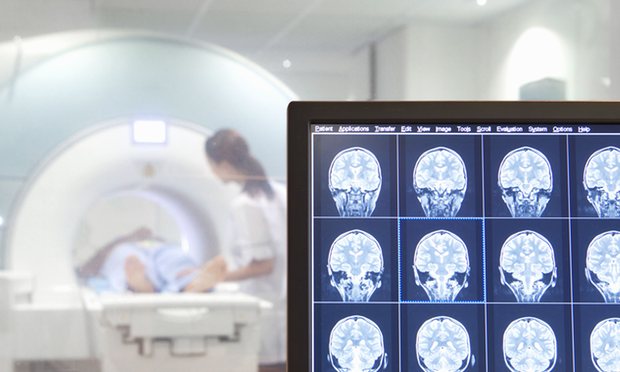
On August 30 this year, DeepMind announced a research collaboration with the UK’s National Health Service (NHS) to leverage deep learning for designing radiotherapy treatment plans for patients with head and neck cancer. Unlike other cancers, head and neck cancer occurs in close proximity to the brain, and men are more susceptible to this disease than women. In the UK, there are 11,000 new cases of head and neck cancer annually, representing a 92% increase compared to the 1970s.
In clinical practice, physicians must first obtain detailed scans of the patient’s head to delineate the target volume for radiotherapy and minimize damage to healthy tissues. Due to the complex anatomy of this region, radiotherapy demands exceptional meticulousness and precision in segmenting the anatomical structures. Even at top-tier cancer centers such as University College London Hospitals (UCLH), this process takes an average of four hours.
In this initiative, DeepMind and the NHS will collaborate on research by analyzing anonymized data from over 700 head and neck cancer patients in compliance with UCLH’s data privacy policy, leveraging deep learning to explore the potential for reducing radiotherapy planning time. The goal is to introduce AI-powered intelligent algorithms to design radiotherapy regimens for head and neck cancer patients, shortening the current four-hour segmentation planning time to just one hour. This would free up clinicians, allowing them to devote more time to patient care, education, and research. Furthermore, if the algorithms for head and neck cancer radiotherapy planning successfully pass clinical validation, this big-data-driven approach could be extended to other types of cancer.
Big data analytics focuses on the phenomena and origins of past events to inform decision-making; therefore, the ability to provide efficient and accurate recommendations or judgments is paramount. This requires self-iterative algorithms and data models, rather than merely accumulating experience and data. Neural network simulation algorithms and deep learning have become the two primary drivers enhancing healthcare efficiency.
Series Report:
[Medical Big Data] $30 Billion in Sales! SHYFT Analytics Is Expanding Aggressively
[Medical Big Data] Zephyr Health: Market Insight Advisor for Pharmaceutical Companies