

FA2H-WMU Achieves Over RMB 22 Million Monthly Transactions via Alipay Partnership Within 18 Months
By Huang Gejing, Xu Miaosang / The Second Affiliated Hospital of Wenzhou Medical University
As of August 29, 2016, the daily transaction volume on Alipay’s Service Window exceeded RMB 1 million, with monthly transactions surpassing RMB 22 million. The number of followers exceeded 1.08 million, and the cumulative number of linked users surpassed 220,000. Transactions accounted for 30% of total outpatient visits. This impressive performance was achieved by The Second Affiliated Hospital of Wenzhou Medical University (hereinafter referred to as “WYU Second Affiliated Hospital”) after 18 months of collaboration with Alipay.
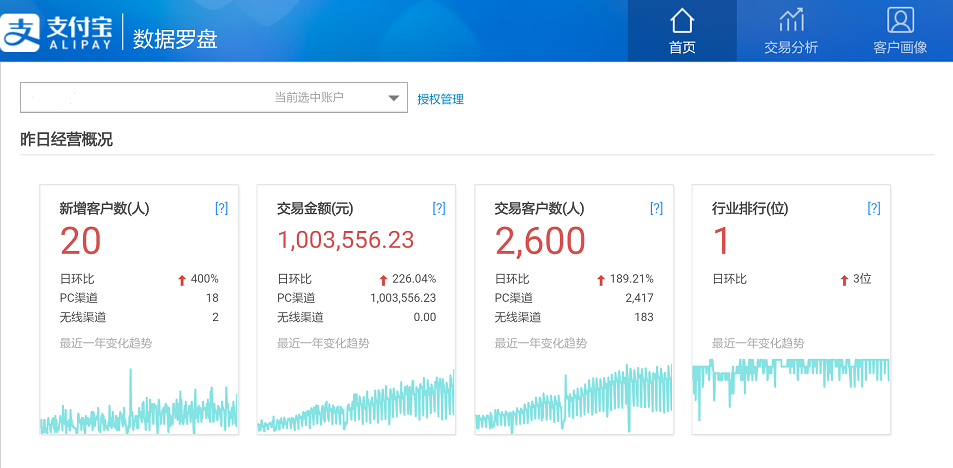
In March 2015, the Second Affiliated Hospital of Wenzhou Medical University announced a partnership with Alipay to link hospital visit cards with Alipay accounts. Initially, the collaboration was limited to end-to-end mobile services such as appointment registration, payment, and report retrieval. Later, the two parties embarked on deeper cooperation.
In March this year, the Second Affiliated Hospital of Wenzhou Medical University officially launched its “Cloud Hospital” service, leveraging Alipay’s “Future Hospital” platform. The introduction of this service has not only optimized in-clinic workflows but also enabled services such as appointment-based consultations, scheduled examinations, remote consultations, and home delivery of medications via courier.
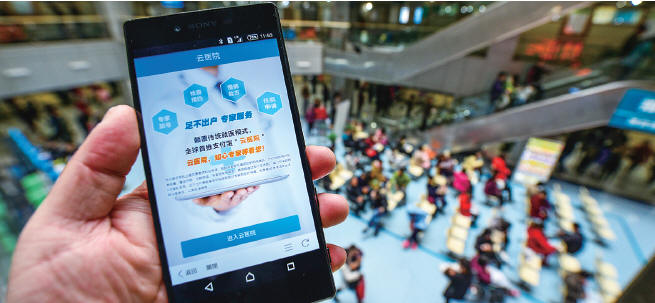
Since the advent of mobile health, The Second Affiliated Hospital of Wenzhou Medical University has seemingly never ceased its innovative endeavors, with enhancing efficiency and reducing labor costs through mobile health solutions emerging as the core focus of their exploration.
The origins of the collaboration between the Second Affiliated Hospital of Wenzhou Medical University and Alipay can be traced back to self-service kiosks. For most hospitals with limited medical space, it is impractical to deploy these bulky machines on a large scale. Self-service kiosks are not only constrained by physical space, but also require patients to visit the hospital in person to access services. This dual constraint of time and space limits the applicability of in-hospital self-service kiosks.
Moreover, as self-service kiosks age, wear and tear become increasingly pronounced, leading to frequent malfunctions that significantly reduce patients’ usable time and overall experience. In response, hospitals must devote substantial human, material, and financial resources to maintenance. These hidden costs deter many hospitals from adopting such systems.
Prior to its partnership with Alipay, The Second Affiliated Hospital of Wenzhou Medical University proposed a vision: “Turn mobile phones into portable self-service kiosks.”
In response, The Second Affiliated Hospital of Wenzhou Medical University has developed a mobile app called “Medical Visit Card.” The app’s features include outpatient payment (with medical insurance support), appointment registration, initial visit profile creation, inpatient prepayment, physical examination report inquiry, outpatient medical record inquiry, remote appointment addition, diagnostic test scheduling, and prescription refills for chronic diseases. Tailored to patient needs, it delivers a comprehensive, end-to-end closed-loop healthcare experience.
Later, as QR code payment on mobile platforms gradually gained public acceptance, the Second Affiliated Hospital of Wenzhou Medical University introduced a novel transaction model: linking medical visit cards with Alipay accounts.
Patients can sign an authorization agreement online with the hospital via the Alipay Service Window. This allows medical cards (including social security insurance cards) from designated hospitals to be linked to their Alipay accounts. When users make payments at designated hospitals and have sufficient balance, no further password entry is required; the system will automatically deduct the payable amount directly from their Alipay account.
This innovative model transforms self-service payment at kiosks into automatic settlement via mobile phones, minimizing time spent on non-clinical processes such as payment and successfully freeing patients from temporal and spatial constraints in seeking medical care. It not only effectively reduces reliance on hospital Wi-Fi networks for transactions but also saves physical space within hospitals. Meanwhile, the robust communication capabilities of mobile devices provide a solid hardware foundation for hospitals to build more comprehensive doctor-patient communication platforms, achieving three benefits with one solution.
Furthermore, a single Alipay account can be linked to multiple medical visit cards. In simple terms, as long as one family member is proficient in using Alipay, the entire household can enjoy the convenience of mobile payments.
It is foreseeable that self-service kiosks, as a payment method, will likely remain in use for the long term. However, with the rise of mobile healthcare, smartphones are becoming portable self-service terminals, enabling smoother communication and more convenient payments.