

Quyi Network Secures RMB 216 Million Series B+ Funding Led by SoftBank China
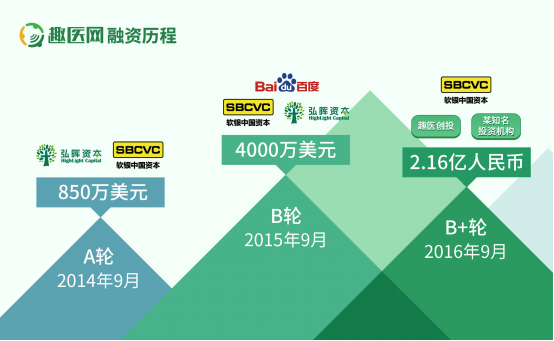
On September 9, 2016, Quyi Network announced the completion of its Series B+ financing round, raising a total of RMB 216 million (equivalent to USD 32.5 million). The round was led by SoftBank China Venture Capital (SBCVC), with participation from Quyi Ventures and a well-known investment firm.
During the same period last year, Quyi Network secured $40 million in Series B financing, led by Baidu, with participation from SoftBank China Venture Capital (SBCVC), HighLight Capital, Quyi Ventures, and other investors.
According to VCBeat (WeChat Official Account: vcbeat), Quyi Network was established in May 2014, with its strategic core focused on providing deeply specialized vertical internet healthcare services to medical institutions.
The “Hospital+” platform, a unified deep-integration platform launched by Quyi Network that directly connects with mainstream public hospitals at Level II and above in China, is currently the only unified open platform in the country providing bidirectional real-time transactions between medical institutions and third-party internet service providers. It has signed contracts with more than 2,000 public hospitals at Level II and above, among which Level III hospitals account for 50%. It is expected to sign contracts with 3,000 such public hospitals by the end of 2016, with 2,000 of them going live on the platform.
As of now, the “Hospital+” platform has integrated more than 100 third-party service providers, including Baidu Doctor, Ping An Good Doctor, 111.com.cn, Bestpay, China Construction Bank, He Shenghuo, iFLYTEK, Qunar, and China Overseas Property. It is expected that by the end of 2016, the “Hospital+” platform will have integrated 150 third-party service providers.
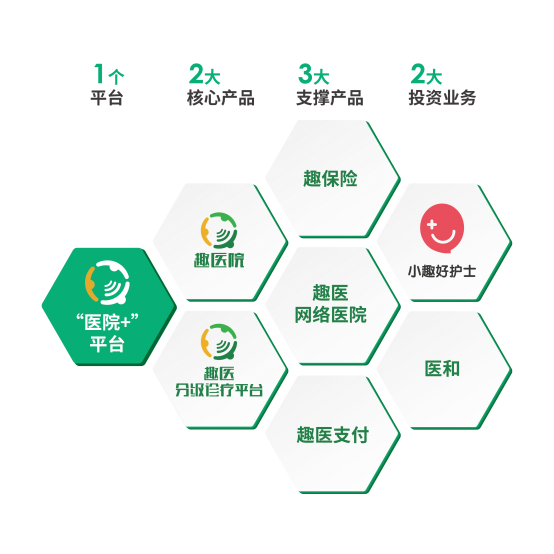
“Qu Hospital” App and “Quyi Tiered Diagnosis and Treatment Platform” are the two core application products of Quyi Network. The “Qu Hospital” App provides comprehensive medical services covering the entire patient journey, including pre-consultation, during-consultation, and post-consultation phases. As of now, the “Qu Hospital” App has been launched in more than 1,600 mainstream public hospitals at secondary level and above, and is expected to be available in 2,000 such hospitals by the end of 2016.
Quyi Network has made advancing “Internet + Tiered Diagnosis and Treatment” its current key focus. The “Quyi Tiered Diagnosis and Treatment” platform is built upon the “Hospital+” platform and features tight integration with healthcare institutions, enabling them to efficiently facilitate patient referrals and consultations. It is planned to go live in more than 30 prefecture-level cities and across 100 medical consortia by the end of 2016.
Based on its assessment of the future market for medical accompaniment services, QuYi Network established a wholly-owned subsidiary, QuHu Network, dedicated to this business. It launched the “XiaoQu Good Nurse” app, which integrates with the “Hospital+” platform to deepen the content of internet-based medical services and extend the service value chain. With rapid business growth, QuHu Network has become the enterprise with the strongest service capabilities and the widest service coverage in the medical accompaniment sector.
Furthermore, Quyi Network invested in and established Shanghai Yihe Network Technology Co., Ltd. (hereinafter referred to as “Yihe”), launching a physician social networking and remote consultation platform based on hospital affiliations. Yihe’s remote consultation model is an upgraded version of the first-generation B2B remote consultation model, aiming to enable flexible, real-time remote consultations among physicians for patient care, with transactions completed at the remote consultation practice sites. Currently, the Yihe platform has been fully launched within the Wuhan Tongji Medical Group and is poised for broader external promotion.
According to VCBeat (WeChat Official Account: vcbeat), since its establishment in May 2014, Quyi Network has consistently focused on the hospital side, allocating substantial resources to provide key products and services that enable hospitals to transition to internet-based service models. This effort supports governments and medical institutions in upgrading their service models and improving patients’ healthcare experience.
According to official estimates from Quyi.com, the company achieved revenue of no less than RMB 80 million in 2016 and no less than RMB 250 million in 2017. As the initial phase of heavy investment in hospitals has largely concluded, Quyi.com is expected to achieve full profitability in 2017, with projected profits amounting to no less than RMB 30 million.
According to official disclosures from Quyi Network, the company will continue to prioritize its service capabilities for hospitals as its core competency and competitive moat. It aims to further expand its market share in the area of deep integration with hospital systems, while opening up the capabilities of its “Hospital+” platform to third parties. This strategy is designed to assist governments and medical institutions in achieving a comprehensive transformation toward internet-based service models, thereby reducing overall societal costs.
In addition, VCBeat (WeChat Official Account: vcbeat) has learned that Quyi Network has currently launched its Series C financing plan. The funds from the Series B+ and Series C financing rounds will be entirely invested in the aforementioned plans.
It is worth noting that Kyee Group, another healthcare informatics company co-founded by Dr. Li Zhi and Dr. Shao Huagang, secured RMB 97 million in its Series C+ financing round during the same period. The fact that both companies invested in received substantial funding at nearly the same time underscores the two doctors’ remarkable industry acumen.