

Singlera Genomics Secures $20 Million Series A Funding to Advance B2B Non-Invasive Gene Testing Platforms
On August 22, 2016, Geneseeq secured $20 million in Series A financing led by Lilly Asia Ventures. Amidst a widely discussed “capital winter,” what enabled the company to secure this funding? To find out, VCBeat interviewed Dr. Gao Yuan, founder of Geneseeq, who shared the story of how several postdoctoral researchers embarked on their entrepreneurial journey together.
Kun Yuan Gene was established in 2014, with its headquarters in Shanghai and R&D facilities, an independent laboratory, and an international business center in San Diego, USA. The company is dedicated to the development of high-throughput non-invasive genetic testing products. Kun Yuan Gene possesses world-leading single-cell sequencing capabilities,DNAA technology-oriented startup with patents related to methylation sequencing and bioinformatics technologies.
Genetic testing is a technique that analyzes DNA from blood, other bodily fluids, or cells. It can determine individual identity and, through population comparisons, identify group (ancestral) characteristics, thereby narrowing the search scope before confirming individual specificity. Genetic testing can be used for disease diagnosis as well as for predicting disease risk. Currently, the most widely applied genetic tests include screening for hereditary diseases in newborns, diagnosing genetic disorders, and providing auxiliary diagnosis for certain common diseases.
Kun Yuan Genomics primarily operates across four product segments: oncology diagnostics, maternal and child health, reproductive health, and infectious disease diagnostics. According to VCBeat (WeChat ID: vcbeat), a key distinguishing feature of Kun Yuan Genomics in the field of oncology diagnostics isDNAMethylation Testing. In current cancer research, it has been detected that many important genes in various tumors have not undergone mutations or deletions; abnormal gene expression is primarily due toDNAmediated by methylation. Hypomethylation of oncogenes and hypermethylation of tumor suppressor genes can lead to oncogene activation and tumor suppressor gene inactivation. Hypomethylation of oncogenes and hypermethylation of tumor suppressor genes are important characteristics of tumor cells.

DNA methylation is one of the earliest discovered modification pathways, and a large body of research has shown thatDNAMethylation can induce changes in chromatin structure,DNAConformation,DNAStability andDNAalterations in the mode of protein interactions, thereby regulating gene expression. GeneralDNAMethylation-targeted sequencing is challenging, while array-based technologies can only detectCMethylation at a single end represents a single-locus assay, which therefore has many limitations. The detection method developed by Genetron Health using next-generation sequencing (NGS) technology is a multi-locus assay, enabling the simultaneous detection of multiple loci.DNAMethylation.
Professor Gao Yuan stated,DNAThe clinical applications of mutation, fusion, and methylation detection include early tumor detection, guidance for medication and efficacy monitoring, postoperative recovery and continuous follow-up, as well as drug development.
2016On January 25, Kunyuan Genomics announced that it had signed a clinical trial agreement with the research team led by Professor Michael J. Paidas of Yale School of Medicine. Professor Paidas’ team will collaborate with Kunyuan Genomics to evaluate the company’s proprietary next-generation non-invasive prenatal testing (NIPT) technology. This novel approach has the potential to significantly reduce the cost of cell-free DNA (cfDNA) testing, lower the false-negative rate, and shorten the laboratory turnaround time to 1–2 days.
It is reported that the Yale research team chose to collaborate with Kinde Genomics because Kinde’s proprietary technology demonstrated superior performance in comparative studies against other similar technologies.
Currently, Genetron Health has launched the following three products:
1. OncoAim™ Tumor Hotspot Mutation and Drug Metabolism Testing Based on Tissue Samples.
2. OncoAim™ RNA Fusion Gene Detection for Lung Cancer Based on Tissue Samples.
3. Somatic cell-based BRCAimTM BRCA1/2 gene testing for breast and ovarian cancer.
Professor Gao Yuan, founder of Kunyuan Genomics, told VCBeat (WeChat ID: vcbeat) that the company is expected to launch its Plasim peripheral blood ctDNA test before October this year.
Kunyuan Gene’s primary target clients are hospitals, followed by independent third-party clinical laboratories. Professor Gao Yuan stated that the company may also expand into the health management sector in the future.
As a technology-driven enterprise, Genetron Health’s competitive advantage lies in its sustained technological innovation capabilities and patented technologies.Kunyuan Gene’s combined team size across China and the United States has exceeded 60 members.
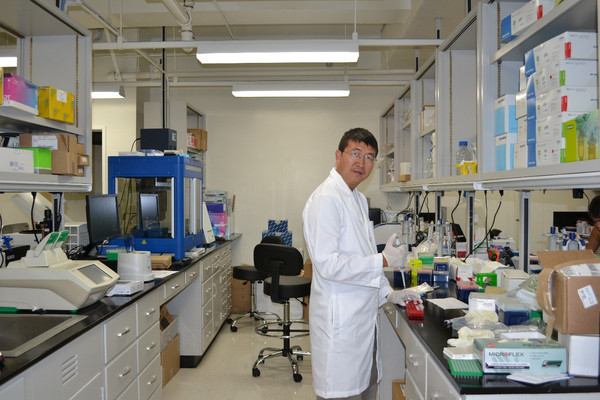
Professor Gao Yuan, Founder of Kunyuan Genomics
Professor Gao Yuan, the company’s founder, is an Associate Professor in the Department of Biomedical Engineering at Johns Hopkins University in the United States, as well as the Founder and President of Med Data Quest, Inc. Professor Gao earned his bachelor’s degree from the Department of Biology at Peking University, obtained his Ph.D. in Computer Science from the University of Memphis in the United States, and completed his postdoctoral fellowship under Professor George Church at Harvard University. In 2008, Professor Gao collaborated with Professor Dennis Lo Yuk-ming of The Chinese University of Hong Kong to publish a paper on non-invasive prenatal testing (NIPT) technology in PNAS. This technology was recognized by Time magazine as one of the Top 10 Medical Breakthroughs of 2008.
Professor Kun Zhang, co-founder of the company, earned his undergraduate degree in Biophysics from Fudan University and his Ph.D. in Genetics from the University of Texas under the supervision of Professor Li Jin. He also completed postdoctoral training with Professor George Church at Harvard University. In 2006, Professor Zhang became the first researcher to achieve whole-genome sequencing of a single cell. In 2009, he jointly developed the first large-scale targeted DNA methylation sequencing technology with Professor Yuan Gao, which was featured on the cover of Nature Biotechnology. In 2011, his paper published in Nature on genomic instability in induced pluripotent stem cells (iPSCs) ranked among the top ten most-cited articles worldwide that year. In 2013, his development of the Microfluidic Digital Single-Cell Sequencing (MIDAS) technology was again featured on the cover of Nature Biotechnology. In 2016, Professor Zhang led the completion of the U.S. Brain Genome Sequencing Project, with his latest single-cell sequencing findings published in Science.
Dr. Liu Rui, Co-founder and Chief Technology Officer of the company, earned her Bachelor of Medicine in Clinical Medicine from Peking University Health Science Center. She holds a Ph.D. in Genetics from the University of Pennsylvania and completed her postdoctoral fellowship and served as an Associate Researcher in the Department of Bioengineering at the University of California, San Diego (UC San Diego). In 2012, Dr. Liu collaborated with Professor Zhang Yi’s laboratory at Harvard University to perform deep sequencing of ultra-low-input whole-transcriptome and whole-genome epigenetic libraries of germ cells. This work, published in Nature (with Dr. Liu as co-first author), provided the first demonstration of the molecular link between demethylation and mitosis. Since 2013, Dr. Liu has led the single-cell analysis program funded by the National Institutes of Health (NIH) at the UC San Diego laboratory. Related research findings were published in Science in 2016.
In addition to its technological innovation capabilities, the team at Genetron Health also boasts a strong business background.Mr. Zhang Jiangli, Co-founder and CEO of the Company, graduated from Fudan University with a Bachelor’s degree in Biochemistry and a Master’s degree in Business Administration. He brings 20 years of experience in marketing and corporate management within the life sciences, pathology, and molecular diagnostics sectors. During his tenure at Gene Company Limited, he successfully introduced multiple internationally leading tumor molecular diagnostic technologies to China and assisted multinational pharmaceutical companies such as Roche and AstraZeneca in registering and launching targeted therapy drugs in the Chinese market. The products and technologies he spearheaded for introduction included Dako’s immunohistochemistry and companion diagnostics, Abbott’s FISH, Qiagen’s nucleic acid molecular diagnostics, and Affymetrix’s gene chips. Between 2002 and 2004, Mr. Zhang co-founded the life sciences portal ebiotrade and served as its Chief Operating Officer (COO). Prior to joining Kindear Genetics, Mr. Zhang held the position of Vice President/General Manager of the Healthcare Business for Greater China at Thermo Fisher Scientific, a Fortune 500 company, where he was awarded the Global CEO Award in 2012 for his outstanding performance.
Liu Qiang, Co-founder and Chief Operating Officer of Kunyuan Genomics, holds a Bachelor’s degree in Biochemistry from Jilin University, a Master’s degree in Bioengineering from the University of New South Wales, and an MBA from the University of York. He previously worked at several internationally renowned investment banks, including JPMorgan, Bank of New York, and Canadian Imperial Bank of Commerce, where he successfully assisted numerous Chinese companies with their listings and delistings in the United States and Canada.
The founders boast impressive academic backgrounds, and it was through their scholarly pursuits that they first met.
According to Professor Gao Yuan, Professor Zhang Kun was a student of Professor Jin Li at Fudan University. In 2003, Professor Zhang Kun went to Harvard for his postdoctoral research, making him a junior colleague of Professor Gao Yuan. They co-authored multiple papers, the most significant of which was the pioneering DNA methylation sequencing technology developed in 2009. The corresponding article was featured on the cover of Nature Biotechnology and is reported to have been ranked among the five most important papers published in the journal over the past five years.
Mr. Zhang Jiangli was Professor Zhang Kun’s college classmate, while Dr. Liu Rui was Professor Zhang Kun’s student. Mr. Liu Qiang has also been a close friend of Professor Gao Yuan for many years. Professor Gao Yuan stated, “The most challenging aspect of entrepreneurship is finding the right partners. Mr. Zhang Jiangli has navigated the complexities of the Chinese market for years, having previously served as Vice President and General Manager of Thermo Fisher Scientific in China. He gave up a high-paying position to join Kunyuan Gene. Dr. Liu Rui relocated her entire family to Shanghai to pursue this entrepreneurial venture. Everyone is fully committed, dedicating their utmost efforts to our shared cause.”
On August 22, 2016, Genetron Health announced the completion of a $20 million Series A financing round. The round was led by Lilly Asia Ventures, with participation from Sinoway Capital and Chende Capital. According to VCBeat (WeChat ID: vcbeat), Lilly Asia Ventures, established in 2008, is an equity investment firm focusing on the biopharmaceutical, biotechnology, medical device, healthcare services, and animal health sectors in Asia, particularly in China. It is also the earliest industry fund in China established by a multinational pharmaceutical company.It is evident that Kunyuan Gene’s sustained technological innovation capabilities and patent advantages, coupled with the team’s strong backgrounds in biology and business, have earned the favor of investors in this round of financing.
Professor Gao Yuan stated that this round of financing will help Kunyuan Gene advance the research and development, as well as commercialization, of non-invasive genetic sequencing tests for cancer and other genetic diseases. Kunyuan Gene will also leverage this funding to further expand its R&D efforts and accelerate the market launch of new products related to cancer diagnosis and personalized treatment.
Moving forward, Kunyuan Genomics will increase its R&D investment, accelerate the commercialization of its products, strengthen its business development team, build its brand image, and expand its technical team.