

From Da Vinci to ARES: The Surgical Robotics Pioneer Poised to Drive Next-Gen Medical Innovation
Surgery is a troublesome matter,Laparotomy carries high risks.Since the advent of surgical robots, the situation has seemed to take a turn for the better. The highly acclaimed “da Vinci” surgical robot performs complex surgeries using minimally invasive techniques on an advanced robotic platform, effectively enabling surgeons to conduct laparoscopic procedures with precision far surpassing that of the human hand. “Minimally invasive surgery” has gradually become the preferred option for most patients requiring surgical intervention and represents the prevailing trend in the future of surgical practice.
On September 6, Tangdu Hospital of the Fourth Military Medical University in Xi’an performed its first thoracic surgical procedure using the da Vinci Surgical System since its installation, successfully removing a tumor approximately 10 centimeters in diameter from a patient. This marksWorld's FirstSubxiphoid Robot-Assisted Minimally Invasive Resection of Anterior Mediastinal Thymoma. Currently, there are more than 50 Da Vinci robotic surgical systems installed in mainland China. Although this number is not large compared to the over 2,000 units in the United States and the 230 units in Japan,Utilization Rateyet it ranks first in the world.
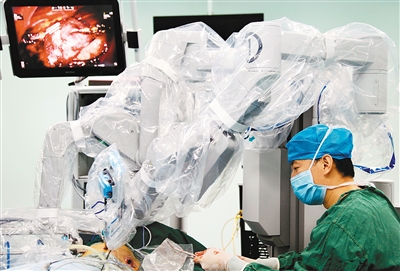
World's First Subxiphoid Robot-Assisted Minimally Invasive Resection of Anterior Mediastinal Thymoma
During surgery, the robotic surgeon issues motion commands from a dedicated console, while the robotic arm system on the operating table directly interacts with the patient. The imaging system’s 3D vision provides 10x to 15x magnification to clearly visualize the surgical site, freeing surgeons from the physical demands and manual dexterity constraints of traditional open surgery and reducing incision size.
Since its inception in 1996, the da Vinci Surgical System has evolved to its fourth generation, achieving significant improvements in flexibility and precision. However, the development of surgical robots has not stopped with “da Vinci.” Dr. Frederic H. Moll, founder of Intuitive Surgical—the company that first introduced surgical robots into clinical practice—and the namesake of the “da Vinci” robot, is now developing another type of surgical robot for broader applications: the ARES robot.
Moll has over 20 years of experience in the medical device and high-tech healthcare sectors. He is widely recognized in the industry for his significant contributions to healthcare technology companies. In the early 1980s, while completing his surgical residency at Virginia Mason Medical Center in Seattle, he observed that the harm caused by surgical site infections often far exceeded the risks posed by the conditions being treated. “The size of the incisions made during open surgeries was truly shocking,” Moll recalled. “The approach was overly outdated.” He subsequently took a leave of absence to go to Silicon Valley; although his original position was held open for him for ten years, he never returned.
In 1994, SRI International, a nonprofit research organization, invested in the development of a remote surgery system for battlefield use, which caused significantly less trauma and injury than manual surgery. This aligned perfectly with Moll’s vision, prompting him to propose that Guidant Corporation, where he was employed at the time, develop similar medical devices. However, the proposal was rejected due to the high risks associated with robotic surgery, which hindered its commercial viability.
In 1995, Moll resigned from Guidant and co-founded Intuitive Surgical, a medical robotics company, with John Freund and Rob Younge. They brought the “da Vinci” surgical robot, capable of performing minimally invasive robotic surgeries, to the market at an average price of $1.3 million. The company went public in 2000 at $9 per share and acquired its competitor, Computer Motion, in 2003. Since then, Intuitive’s sales and profits have surged, completely dispelling Wall Street’s doubts about the commercial value of its surgical robots. Over the years, Moll and his supporters’ steadfast belief that robotics could reduce surgical trauma enabled Intuitive to overcome widespread skepticism and create the “da Vinci” system, thereby fulfilling their aspiration to benefit patients through technology.
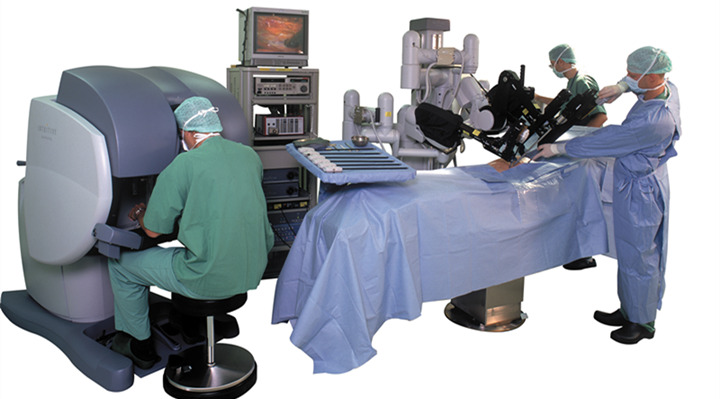
“Da Vinci” Three Major Components: Surgeon Console, Patient-Side Robotic Arm System, Imaging System

Dr. Frederic H. Moll
Throughout his career, Dr. Moll has been dedicated to the research and development of surgical medical devices. Before co-founding the industry-renowned Intuitive Surgical, he made two previous entrepreneurial ventures: founding Endotherapeutics, a medical device company, in 1984, and co-founding Origin Medsystems, a surgical equipment company, in 1989. Additionally, he served as Medical Director in the surgical division at Guidant. Dr. Moll has often held multiple roles simultaneously; over decades of developing his own products, he has also served as a director or advisor for an extensive list of medical companies, including MAKO, Shockwave, Cephea, Innovative Spinal Technologies, BIOLASE, RefleXion Medical, Intersect ENT, Restoration Robotics, AcousTx, Aptus Endosystems, Leptos Biomedical, as well as venture capital firms Catalyst Health Ventures and Kearny Venture Partners. Dr. Moll’s depth of expertise in the medical device field is truly remarkable.
In 2002, Frederic Moll left Intuitive, the company he founded, to establish Hansen Medical. He aimed to develop a more technologically advanced robot capable of precisely positioning, manipulating, and stably controlling an ultra-thin, flexible catheter implanted in the heart for minimally invasive procedures. Hansen Medical manufactured robotic surgical systems and a series of tools used during surgeries, including guidewires, catheters, sheaths, balloons, and stents. Its product portfolio included the Sensei™ Robotic Catheter System for cardiovascular interventions, the Magellan™ Robotic System for peripheral vascular procedures, the Artisan® Steerable Catheter, and the CoHesion™ 3D Visualization Module.
Unlike the “Da Vinci” system,The flagship product, the Sensei robotic surgical system, focuses on more intricate procedures, such as making small incisions in large blood vessels of the arm or thigh to introduce catheter-based surgical tools for circulatory surgeries. Due to business conflicts with Intuitive Surgical, Hansen entered into an intellectual property agreement with the company, paying 3% of its sales revenue to Intuitive and collaborating on certain cardiac surgical procedures. In 2007, Hansen’s Sensei robotic surgical system received FDA clearance, becoming a leading solution for the surgical treatment of cardiovascular diseases.
Auris Surgical Has Been Around for Nearly a Decade, Yet Its Homepage Remains Bare
Most impressively, Moll founded Auris Surgical Robotics in 2007. Nearly a decade later, visiting the homepage of Auris Surgical Robotics today reveals only a single sentence: “Auris Surgical Robotics is a technology company from Silicon Valley.” The company provides virtually no official information about its business operations or development progress. Nevertheless, from an external perspective, although Auris has not launched any products during this period, it has attracted significant interest from prominent venture capital firms: it raised $34.38 million in Series A funding in March 2014, and secured RMB 150 million in September 2015. When asked about Auris’s recent activities, Vice President of Marketing David Schummers declined to provide details, stating that “Auris is currently operating under a high level of secrecy.” This inevitably sparks curiosity: What exactly is Auris working on?
The official website also lists the current board members, including Ajay Royan, founder of Mithril Capital; Peter Hébert, co-founder of Lux Capital; and Bijan Salehizadeh, co-founder of NaviMed Capital, in addition to Frederic H. Moll—all of whom are prominent figures in the industry.
On April 20 of this year, Auris acquired Hansen Medical, a company previously founded by Dr. Moll, at a price of $4 per share, resulting in a total transaction value of approximately $80 million. As part of the deal, some of Hansen’s former major shareholders also committed to injecting approximately $49 million into Auris Surgical Robotics. This transaction will grant Auris control over three different types of surgical robots. “Hansen has already achieved a technological lead in endovascular surgical robotics,” commented Dr. Moll. “The commercial opportunities for highly flexible robots are substantial, and I look forward to leveraging this merger with Hansen to help us expand our market presence in this area.”
Auris has remained silent for nearly a decade, but judging from these signs of financing and acquisitions, it is clearly laying the groundwork for future developments.
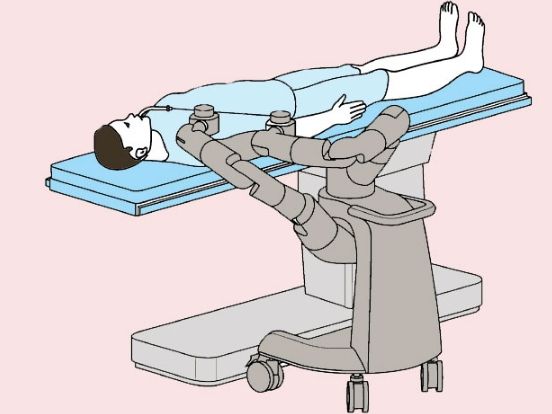
Schematic Diagram of the ARES Surgical Robot — From Auris Patent Application
This year, the public has finally seen product-related news from Auris Surgical come to light. In late May, Auris’s first medical robot—the ARES surgical robot—received approval from the U.S. Food and Drug Administration (FDA) and is now available for clinical diagnosis and treatment. ARES stands for Auris Robotic Endoscopy System. Rumors have circulated that the ARES robot, developed by Auris Surgical, would be used for cataract surgery, leading the company to file several patents in this area. However, according to an observer from IEEE Spectrum magazine, Auris’s ambitions extend far beyond this. Insights from certain company employees reveal that Auris is “inventing a new generation of surgical robots… enabling robotic application across the medical management of various types of diseases.”
According to the patent documents submitted by the company, Auris is currently focusing on a so-called “endoluminal” surgical approach, which enables surgical robots to access the larynx, lungs, and digestive system through the body’s natural orifices, particularly the mouth. In traditional endoscopic procedures, surgeons often have to adopt awkward, contorted postures to maneuver levers or dial-based instruments for introducing endoscopic tools into patients, while also being exposed to X-ray radiation for extended periods. The ARES robot not only eliminates these issues through remote operation but also enhances procedural precision.
Because the “endoluminal” surgical approach does not create open wounds and does not require extensive anesthesia, the ARES robot can reduce surgical risks for patients with more fragile health conditions. The Society of American Gastrointestinal and Endoscopic Surgeons estimates that endoluminal surgery helps successfully treat diseases in more than 1 million overweight or acid-reflux patients annually in the United States. According to IEEE Spectrum, this robotic system has already performed at least one successful clinical surgery. The FDA has cleared the ARES robot for use in bronchoscopic procedures to treat lung diseases.
In a patent document filed by Auris Surgical, surgical instruments such as lasers, medical forceps, medical needles, graspers, and scalpels are mentioned, highlighting the potential to perform a series of procedures including biopsies, gastric repair, and tumor resection. Ariel Waldman, co-founder of Science Hack Day, is developing Auris’s hardware and software interface, describing the system as “a groundbreaking robotic surgical system.”In one experiment, Auris’s robotic surgical system successfully performed endoluminal pulmonary procedures, diagnosing cancer in 9 out of 15 suspected patients and obtaining biopsy samples, with no adverse events throughout the entire procedure. This milestone underscores the significant potential of their technology for both clinical diagnosis and surgical treatment. Frederic Moll’s decades of dedicated expertise in surgical robotics may once again drive further technological innovations worldwide.