

Batu Biologics Submits IPO Prospectus as Lung Cancer Vaccine ValloVax Nears Phase I Clinical Trial in the U.S.
ValloVax, a novel lung cancer therapeutic developed by US-based Batu Biologics, has completed preclinical animal testing in the United States. Experimental data demonstrated significant tumor shrinkage in mice, and the combination therapy with checkpoint inhibitors (PD-1 antibodies and CTLA-4 antibodies) resulted in cures for murine cancer models. Meanwhile, clinical trials involving three patients with stage IV advanced cancer in Mexico indicated that the treatment exhibited favorable safety profiles and effectively controlled disease progression, with survival times exceeding 18 months to date. Through interviews with key executives at Batu Biologics, reporters from VCBeat (WeChat ID: vcbeat) have gained a more comprehensive understanding of the company.
In the United States, lung cancer has the highest incidence and mortality rates among all cancers, with annual expenditures for non-small cell lung cancer (NSCLC) exceeding $5.1 billion. However, due to the propensity of lung cancer to develop resistance to targeted therapies, drug-related toxicities and adverse reactions, and the limited efficacy of recently approved PD-1 antibody drugs (approximately 10%), there is currently no effective treatment available.
Batu Biopharma Inc. (based in San Diego, Southern California), founded in December 2013, specializes in the research, development, and commercialization of cell-based immunotherapeutic anticancer drugs. The company currently owns four therapeutic technology platforms and lead products in clinical and preclinical development stages: ValloVax, a cancer vascular regeneration-targeted therapeutic vaccine for non-small cell lung cancer (NSCLC) and various solid tumors; ImmXyte™, an immune adjuvant stimulatory peptide for solid tumors; DendroVax™, a nonspecific cellular immunotherapy for solid tumors; and Immitam™, a gene-silencing autologous T-cell immune checkpoint-targeted therapy for solid tumors. The lead product, ValloVax, is undergoing clinical trials in Mexico and has submitted an Investigational New Drug (IND) application to the U.S. FDA for Phase I clinical trials in NSCLC, with approval expected by the end of the year. Batu Biopharma has filed 23 patents covering its four product pipelines.
Batu Company has developed the world’s first placental endothelial cell vaccine product (ValloVax), manufactured in accordance with U.S. FDA regulatory standards, for the treatment of lung cancer, and has advanced it into clinical trials.
ValloVax is a novel anticancer vaccine that avoids direct confrontation with tumor cells. ValloVax trains the patient’s own immune system to selectively target tumor angiogenesis, thereby preventing the continued growth and proliferation of tumor cells. The advantages of targeting the inhibition of tumor angiogenesis are as follows:
1. Unlike tumor antigens, which are prone to mutation, tumor vascular endothelial cell antigens are genetically stable; ValloVax can reduce the likelihood of developing tumor drug resistance;
2. Through the blood system, tumor vascular endothelial cell antigens can more directly contact the immune system than tumor cell antigens and can avoid the protective effect of the tumor microenvironment on tumors, making them easier to be recognized and killed by immune cells;
3. Amplification effect: For every tumor vascular endothelial cell killed, approximately 100–300 tumor cells die;
4. Therapeutic trauma induces activation of the coagulation cascade in tumor vascular endothelial cells, blocking the blood supply essential for the sustained growth of tumor cells and leading to rapid necrosis of the tumor cells.
ValloVax is a human placental endothelial cell vaccine that trains autologous immune cells to recognize and counteract tumor angiogenesis and cancer metastasis, while stimulating and enhancing humoral immune responses. Compared with human umbilical cord blood endothelial cell vaccines currently in clinical trials, human placental endothelial cell vaccines also demonstrate significant advantages:
1. Manufacturability: One placenta can produce vaccine doses for more than 2,000 administrations;
2. Immunogenicity: The placental microenvironment shares many similarities with the tumor microenvironment, and the placenta expresses markers characteristic of tumor vascular endothelial cells. Pretreating the vaccine with immunostimulants can significantly enhance its immunogenicity;
3. Patented Vaccine Formulations: Robust Intellectual Property Protection;
4. Placenta-based products have established safety databases.
Preclinical animal studies conducted by Batu Company demonstrated that the combination of ValloVax with checkpoint inhibitors (PD-1 and CTLA-4 antibodies) yields superior efficacy, rapidly eliminating tumors through a dual mechanism and preventing recurrence. Specifically, ValloVax inhibits tumor angiogenesis, while checkpoint inhibitors suppress tumor cell growth; this combined approach achieves enhanced therapeutic outcomes. Dr. Hong Ma, Vice President of Business Development at Batu Company, told VCBeat (WeChat ID: vcbeat) that ValloVax offers the advantage of not only delivering robust therapeutic effects but also helping to prevent cancer occurrence. By training the patient’s own immune system to establish immunological memory, ValloVax can combat cancer recurrence.
There is currently a monoclonal antibody drug on the market for the treatment of lung cancer—Avastin (bevacizumab)—which was approved by the U.S. FDA in 2006 for the treatment of non-small cell lung cancer (NSCLC). Compared with patients receiving chemotherapy alone, the combination of Avastin and chemotherapy extends the survival of NSCLC patients by only two months. A Phase III clinical trial involving 842 patients showed that the median overall survival was 10.3 months for those receiving chemotherapy alone, versus 12.3 months for those receiving chemotherapy combined with Avastin. Despite this modest benefit, Avastin’s global annual sales have exceeded $6 billion.
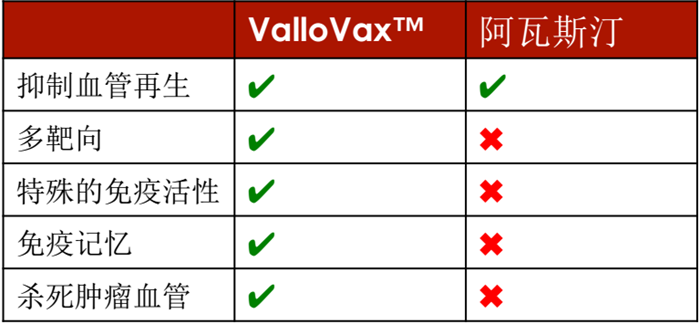
Batu Company'sValloVaxComparison of Functions with Avastin
In fact, Batu Company has only five full-time employees, including its founders. So how did they manage to secure approval for Phase I clinical trials within just two and a half years, using only $2.1 million? Typically, companies require at least $10 million and five years of R&D time to reach this stage. This achievement stems from their unique business model: Researchers at Batu Company first thoroughly validate the efficacy (proof of concept) of newly developed cancer treatments. They then provide funding and theoretical support to universities or clinical research institutions, entrusting them with completing the remaining experimental validations. Meanwhile, Batu Company partners with specialized pharmaceutical manufacturers for production. By leveraging the respective strengths of each party, Batu Company avoids the need to establish a comprehensive R&D and manufacturing system, significantly reducing both the cost and time required for new drug development.
Batu Company has four co-founders: Alan J. Lewis, Thomas Ichim, Samuel C. Wagner, and Dimitri Theofilopoulos.
Chairman Alan J. Lewis has 37 years of management experience in the life sciences sector. He has served as a director of BioMarin Pharmaceutical, currently valued at $23.9 billion, since 2005. He also served as Vice President of R&D at pharmaceutical giant Wyeth Pharmaceuticals for 15 years.
Founder Thomas Ichim has over 10 years of experience in stem cell therapy and cellular product development. In 2007, he founded MediStem, a stem cell pharmaceutical company, serving as its General Manager and Chief Technology Officer. He led the company’s stem cell drug development, optimization, and preclinical testing in accordance with U.S. FDA regulatory pathways, ultimately securing FDA Investigational New Drug (IND) approval for clinical trials. In 2013, MediStem was acquired by Intrexon for $26 million.
Samuel C. Wagner graduated from the University of California, San Diego, and successfully invested in a series of companies during his college years;
Dimitri Theofilopoulos graduated from the University of Southern California Gould School of Law and served as an in-house business consultant for The Scripps Research Institute, where he was responsible for technology transfer and research compliance.
In addition to the four founders, the company has also assembled a team of professional technology advisors from around the world.
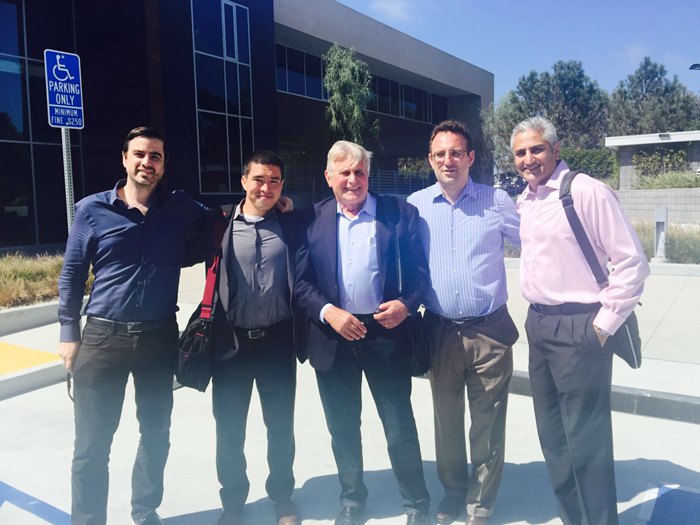
From left: Dimitri Theofilopoulos, Samuel C. Wagner, John Peck (Investor), Thomas Ichim, Samir Patel, Co-Founder of CENCO Capital
Batu Company provides patent and financial support for academic and clinical research, thereby securing R&D backing. Currently, Batu Company’s products have reached the stage of filing an Investigational New Drug (IND) application for clinical trials in the United States. The seed round has raised $2.1 million, with a valuation of $16 million. Upon receiving FDA approval for IND clinical trials, the company will conduct a Series A financing round of $15 million, bringing its post-financing valuation to $200 million. ValloVax is expected to complete Phase I clinical trials in the first quarter of 2018. Once the drug completes Phase II clinical trials, the company may be acquired by a pharmaceutical giant or go public, at which point its market valuation is projected to reach $500 million.
Batu Company’s optimistic valuation of itself is not only due to the advantages of its own products; let us also examine the market valuations of U.S. companies developing similar therapeutic cancer vaccines.
Regeneus:A Sydney-headquartered regenerative medicine company, founded in 2007 and listed on the Australian Securities Exchange (ASX) in 2013, currently has a market capitalization of USD 29 million. Regeneus is primarily engaged in the commercialization of cell therapies for conditions such as osteoarthritis in both humans and animals. The company isolates stem cells from adipose tissue and supplies them to physicians for use in plastic surgery and sports injury repair. Currently, its human therapeutic products are utilized by multiple specialist clinics across Australia, while its animal therapeutic products are employed by more than 70 veterinary clinics. With approval from an ethics committee, Regeneus is conducting Phase I clinical trials in humans for a cancer vaccine named RGSH4K. This vaccine is formulated using the patient’s own tumor cells combined with a proprietary immune stimulant, designed to activate the patient’s immune system for personalized anti-tumor therapy.
Heat Biologics:Founded in 2008 and listed in the United States in 2013, the company raised $23.25 million in financing. It is currently a development-stage company in the U.S. The company is dedicated to the development and commercialization of immunotherapy platforms. This platform technology offers a novel approach to targeting specific molecules by leveraging live, engineered cell lines to activate the immune system for the treatment of cancer and other diseases. The company has completed Phase I clinical trials, and its market capitalization stands at $30 million.
Northwest Biotherapeutics :Founded simultaneously in the United States and Europe on March 18, 1996, and listed on the U.S. stock market on December 12, 2012, the company is a development-stage biotechnology firm. It focuses on developing immunotherapy products for cancer treatment that are more effective than current therapies and do not require chemotherapy with toxic side effects. Its product for treating brain tumors, DCVax-L, is currently in Phase III clinical trials. The company’s current market capitalization is $47 million.
A relevant executive at Batu Company told VCBeat (WeChat ID: vcbeat) that the company’s stock price was 25 cents per share at its inception, rose through 50 cents, and currently stands at $1 per share. Once the FDA approves the formal initiation of clinical trials, the share price is expected to rise to at least $2. To date, Batu Company has issued 16,116,002 shares, raising over $2.1 million in capital. The company’s total authorized share capital is 30,000,000 shares. Current shareholders include company employees, partner organizations, and several institutional investors, among which is Dalian Lingfeng Investment Co., Ltd.