

Shanghai TiMi Robotics Secures Nearly RMB 10 Million in Angel Funding, Specialized Medical Service Robot to Debut End of October
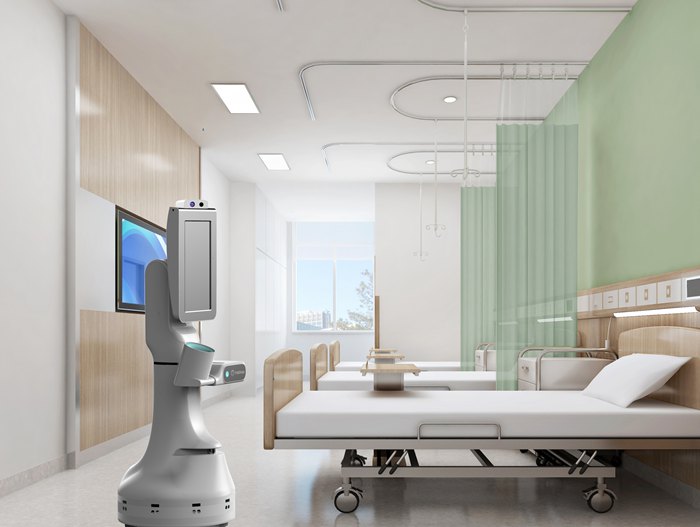
Shanghai Timi Robot Technology Co., Ltd. recently completed its angel round of financing, raising nearly RMB 10 million. The investment was jointly made by Guoke Jiahe and Shanghai Chuangtu. Pan Jing, founder of Shanghai Timi Robot, told VCBeat (WeChat ID: vcbeat) that the funds from this round will be primarily used for clinical trials of specialized medical service robots.
Shanghai Timi Robot Technology Co., Ltd. was established in January 2015 as the first company in China to provide products and solutions for the high-end service robot market. The company currently holds more than ten invention patents related to robotics and is one of the few technology enterprises in China with independent intellectual property rights capable of rapidly delivering comprehensive robotic system solutions.
Founder Pan Jing is a graduate student majoring in Robotics at Shanghai Jiao Tong University. After graduation, he joined a foreign enterprise to work on the design tools and system development for robotic systems. His project portfolio includes the globally best-selling LEGO MINDSTORMS EV3, the official hardware and software systems for FIRST Robotics Competition (the largest high school robotics competition in the United States), and MIT’s Cheetah Robot system.
Medical robots are categorized into three types: The first type is rehabilitation and nursing robots, which primarily assist nurses in providing patient care and conducting basic physical examinations. The second type is diagnostic robots, which integrate medical equipment onto medical service robot platforms, functioning as a consolidated suite of hospital-grade medical devices mainly for diagnostic purposes. The third type is therapeutic robots, such as surgical robots. Currently, the specialized medical service robots developed by Shanghai TIMI Robot Co., Ltd. fall under the category of rehabilitation and nursing robots. In addition to specialized medical service robots, the company is also researching diagnostic robots and plans to develop therapeutic robots once the technology matures.
Mr. Pan told VCBeat (WeChat ID: vcbeat) that the functions of specialized medical service robots include scheduled infusion services, medication preparation, physical examinations, and rehabilitation nursing. Physicians can also make diagnoses based on data collected by these robots. Furthermore, specialized medical service robots can replace certain healthcare personnel in work environments with radiation or infectious risks, thereby providing better protection for medical staff. In summary, the use of specialized medical service robots can reduce the workload of healthcare professionals, improve their work efficiency, and enhance patients’ medical experience.
The greatest advantage of Shanghai Timi Robot Company’s specialized medical service robots lies in their universal robotic chassis technology. This universal chassis is a series of advanced, easily programmable, and user-friendly autonomous omnidirectional mobile research platforms. Featuring a simple and intuitive structure, portability, and modular design, the platform is easy to customize and expand, and supports the Robot Operating System (ROS), a software framework that provides operating system-like functionalities for heterogeneous computer clusters. It is China’s first medical service robot platform based on ROS. Additionally, the robots are equipped with various novel sensors to assist physicians in promptly collecting patients’ physiological data.
The robot can be optionally equipped with various sensors and accessories, including infrared, ultrasound, LiDAR, voice modules, Kinect, RealSense, cameras, and tablet displays, thereby facilitating functions such as autonomous navigation, autonomous obstacle avoidance, SLAM, human-computer interaction, and wireless video/image transmission.
In April 2016, Shanghai Timi Robot signed a framework cooperation agreement with Peking Union Medical College Hospital to conduct clinical trials at the hospital. This round of financing will help the company strengthen its R&D in specialized medical service robot technologies. The company plans to make its debut at Peking Union Medical College Hospital’s 150th-anniversary celebration in late October this year.
Shanghai Timi’s product, the service-guiding robot “Timi Xiaomei,” is priced between 250,000 and 300,000 yuan. The specific price of its specialized medical service robots has not been disclosed; however, Mr. Pan told a reporter from VCBeat (WeChat ID: vcbeat) that the price of these specialized medical service robots is only one-half to one-third that of similar products in Europe and the United States.