

From Bumeng Digital Asset Platform to Blockchain-Driven Healthcare Revolution
“Bumeng is not just a secure, open, and trusted digital asset platform; ultimately, it will evolve into a digital asset ecosystem jointly built and maintained by the community.” This was the insight shared by Bubi Blockchain regarding Bumeng at the time of its official launch.
The concept of digital assets is not unfamiliar; virtual items commonly referred to as gaming equipment, prepaid cards, e-vouchers, commercial loyalty points, and insurance policies can all be categorized as digital assets. Bubi is an emerging technology company that leverages blockchain technology to enable the highly trusted, highly liquid, and highly convenient free issuance, transfer, and even trading of digital assets.
The emergence of Bimeng, along with its foreseeable rapid growth in the future, is by no means an isolated incident. With the large-scale adoption of wearable devices, sensors, and the Internet of Things (IoT), data volume has surged dramatically in recent years. How to effectively record, track, and manage data information, and how to ensure its security and circulability, have become major concerns across various industries. The advent of blockchain technology has provided a viable solution to this widespread challenge.
Blockchain technology, which originated from cryptocurrencies such as Bitcoin, is essentially a cryptographic mechanism that generates a time-ordered, tamper-proof, and trusted database. This enables the distributed storage and recording of data and information, allowing all participating members to jointly oversee and share a vast information repository based on consensus regarding network information.
Not Only Digital Assets, But Also Healthcare
Bubi has applied this technology to digital asset trading, enabling secure and convenient transfer and transaction of digital assets, although it is more widely used in the financial sector. However, from a broader perspective, fields such as healthcare, media, and the Internet of Things (IoT) also suffer from data security and circulation issues, making them ideal scenarios for the effective application of blockchain technology. Among these, healthcare represents the most promising area for exploration and in-depth development.
Information and data issues in the healthcare sector have long persisted without effective resolution. This is partly due to the industry’s elongated supply chain, where data passes through numerous stages from upstream to downstream, making it difficult to allocate sufficient monitoring and management resources to every node. Additionally, past limitations in information technology have left many regulators and supervisors unable to translate their intent to address these concerns into concrete actions.
The emergence and progressively scaled application of blockchain technology have reinvigorated the healthcare sector. Public, tamper-proof blockchain records, transparent and shared transfer processes, and multi-centric network trust systems can address many latent and overt concerns. Issues spanning the upstream and downstream of the medical supply chain—such as drug authenticity verification, diagnosis, and surgical scheduling—are finally seeing a glimmer of hope.
Three Major Application Scenarios of Blockchain in Healthcare
Authentication of Medicines
“Food is the people’s paramount necessity.” For patients, medications are as essential to daily life as food, especially for those with chronic diseases. Therefore, ensuring drug quality and enabling authentication of their authenticity are critically important. However, the pharmaceutical supply chain involves numerous stages—from manufacturing and distribution to healthcare institutions and finally to patients—making effective oversight a primary challenge.
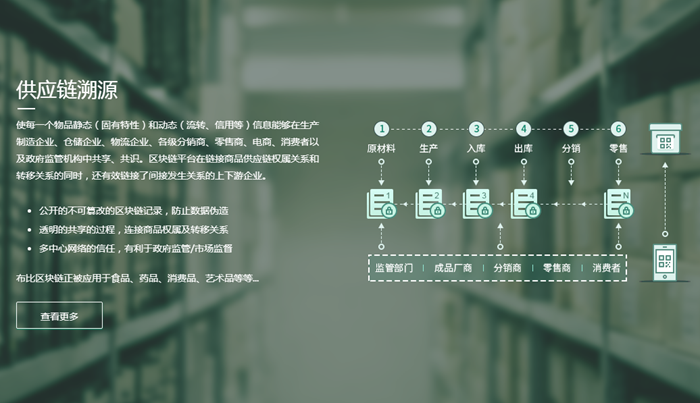
Blockchain technology precisely addresses this critical issue: similar to encoded anti-counterfeiting technologies, pharmaceutical products utilizing blockchain-based anti-counterfeiting measures incorporate a specialized verification label embedded on the surface of their packaging. By leveraging the immutable, shared, secure, and reliable attributes of blockchain records, this approach effectively ensures the legitimacy and authenticity of medications.
What is even more inspiring is that blockchain’s application in pharmaceutical anti-counterfeiting goes beyond the superficial levels of authenticity verification and genuine product assurance. Its inherent characteristics also enable end-to-end product tracking of medications, and even provide global pharmaceutical commodity solutions. Once drugs are manufactured and registered, companies can implement oversight across all stages of the pharmaceutical distribution supply chain, thereby evolving into a comprehensive drug quality monitoring solution.
Abroad, Block Verify, a pioneer in the application of blockchain technology in the healthcare sector, has already provided such solutions. Its verifiable goods include counterfeits, swapped items, stolen goods, and fraudulent transactions. In the pharmaceutical industry, this means that Block Verify can fully ensure, through pharmaceutical supply chains, that consumers receive only authentic products. In China, although no blockchain company has yet deployed its technology on a large scale in the pharmaceutical industry, strong contenders are entering the field, such as Bubi Blockchain and VeChain, which recently secured millions in investment.
Data Sharing, Protection, and Medical Diagnosis
Compared with pharmaceuticals, a more serious issue for the overall healthcare system is the inability of personal medical information to circulate seamlessly across the entire system. Parallel concerns include security risks and data breaches involving personal health data. The terms “medical information” and “health data” encompass a broad range of content, with the most common types being personal electronic medical records (EMRs) and personal genetic information. The predominant challenges lie in the limited large-scale sharing of EMRs and issues related to the leakage of personal health information and privacy protection.
In centralized databases, vast amounts of medical information are stored in a concentrated manner, facilitating cyberattacks by hackers. Abroad, the healthcare company Anthem once suffered a data breach exposing the records of 80 million patients and employees, while another U.S. company, UCLA Health, experienced a leak affecting 4.5 million patients. In contrast, decentralized blockchain databases can enable coordination across multiple network nodes, thereby ensuring data security. On the other hand, since patients’ personal information is often recorded only at individual healthcare facilities, it cannot be shared across the entire healthcare system, creating significant barriers for patients seeking care and for physicians making diagnoses.
Gem Health, a company focused on providing blockchain technology solutions for the healthcare industry, has pointed out that blockchain enables secure and efficient data exchange. This allows hospitals, insurance companies, and laboratories to connect seamlessly in real time and share information without concerns about data breaches or tampering. As a solution provider, Gem Health addresses personal identity issues through public/private key cryptography and offers four products—Gem Identity, Gem Logic, Gem Data, and Gem Network—to build a blockchain ecosystem.
Other companies offering similar services include Factom, Tierion & Philips, and Bit Health. Notably, Bit Health leverages blockchain technology not only to address data sharing and confidentiality but also to enable data recovery at each node through a decentralized database, thereby ensuring data integrity.
Process Management and Surgical Scheduling
The third application of blockchain technology in the healthcare sector focuses on process management. Healthnautica, a Chicago-based company, is dedicated to streamlining communication among hospitals, physicians, and patients. It leverages customizable, customer-driven cloud software systems to handle administrative procedures for both providers and patients. Its product, eORders, applies blockchain principles to significantly enhance surgical treatment and procedural scheduling, reduce network latency, and overcome data loss issues.
Blockchain and Healthcare: A Long and Arduous Journey Ahead
Although the current application of blockchain technology in healthcare is still limited in scope and relatively nascent in development, various potential applications yet to be explored and urgent issues requiring resolution deserve sufficient attention from both healthcare professionals and information technology specialists.
In the foreseeable future, the exponential growth of data and the increasingly tight interconnectivity among internet-enabled devices will undoubtedly remain a prevailing trend. As a cutting-edge technology addressing data security and integrity issues, the significance of blockchain is self-evident. Whether in its origin sector, finance, or in the healthcare field—which currently boasts immense potential for exploration—blockchain technology is poised to bring about profound transformations across these industries.