

ECHO Project Submits IPO Prospectus: Scaling a Proven Telemedicine Model to Transform Global Primary Care
Unequal distribution of medical resources is an intractable global challenge.In New Mexico, USA, the ECHO (Extension for Community Healthcare Outcomes) project is addressing the challenge of accessing medical care in remote areas by providing free medical training via telemedicine video conferencing, enabling people to obtain high-quality healthcare more efficiently. VCBeat (WeChat: vcbeat) provides a detailed introduction to these pioneers exploring this new model.It may offer some insights into issues such as the unequal distribution of resources and the tiered diagnosis and treatment system in China’s primary healthcare sector.
In May 2015, a slightly flustered physician sat before a laptop, its screen displaying a conference room in Albuquerque where a group of pharmaceutical experts were gathered. They were discussing a critical issue: how to provide emergency care for a patient.
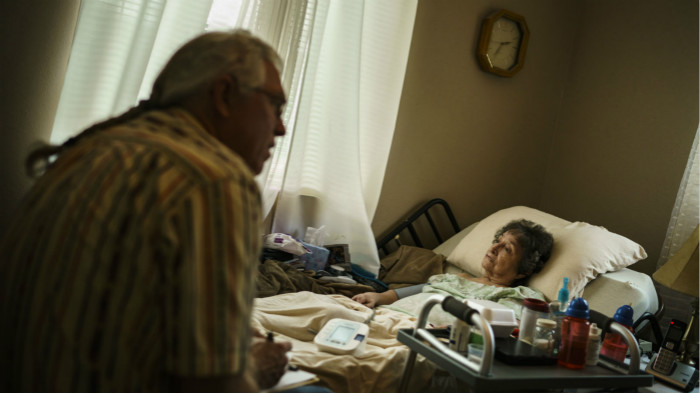
Chris RugeVisit Senaida Buston in an effort to find a solution for her ailment
The patient is Senaida Buston, a 45-year-old transgender woman who is fiercely battling hepatitis C, chronic back pain, alcohol use disorder, overweight, and depression. She has attempted suicide twice, most recently by ingesting a large quantity of analgesics. Dr. Chris Ruge consulted with specialists in Albuquerque via video conference to determine how to proceed with treatment and prevent further suicidal ideation. “I was wondering whether I had missed any tests or needed to adjust the medication regimen. I needed to find a solution quickly,” recalled Dr. Ruge.
Within 20 minutes, seven experts promptly provided Dr. Ruge with the urgent answers he needed, guiding him on medication management to address the patient’s pain and depressive symptoms, instructing him on how to perform spinal imaging, and highlighting specific situations to avoid in order to prevent this transgender woman from a small town from slipping back into depression. While there is no panacea for all the challenges she faces, the experts offered Dr. Ruge practical, actionable recommendations that enabled him to immediately optimize her treatment plan.
These experts are all part of a program called ECHO, which uses video conferencing to train and guide primary care physicians in managing complex cases that typically require specialist expertise. Research has demonstrated that this approach improves treatment outcomes, reduces healthcare costs, and enhances clinician job satisfaction. Moreover, the ECHO program is free for both patients and providers.
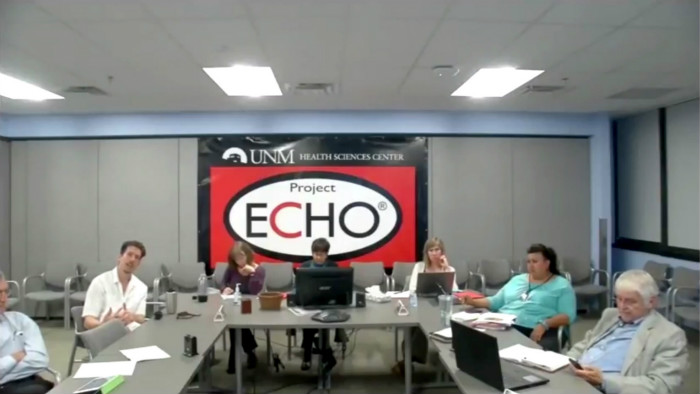
ECHO Project’s Medical Experts Discuss Cases in Video Conference
The ECHO project team noted two major shortcomings in the current healthcare system. First, routine patient examinations are mostly conducted by junior primary care physicians who lack the ability to accurately assess conditions, potentially leading to inconsistent treatment plans or unnecessary tests. Second, in rural areas, patients often wait months to see a specialist for an examination, and in some cases, cannot find any medical provider at all. The ECHO project has now been launched in many regions, enabling primary care physicians to easily access specialized medical training, thereby eliminating long waiting times for patients.
However, since its inception 13 years ago, the ECHO Project has remained little known among primary care physicians. This fact underscores how deeply entrenched traditional mindsets are within the healthcare industry; even breakthroughs in scientific research can take decades to achieve widespread adoption in clinical practice. Dr. Sanjeev Arora, the founder of the ECHO Project and an idealist dedicated to transforming the current healthcare system, still faces numerous challenges ahead.
“The healthcare system represents a market worth trillions of dollars; transforming it is easier said than done!” said 59-year-old Arora. “Our organization is almost like a delusion.”
Most of the funding for the ECHO project comes fromShort-term Charitable Funds and Government Subsidies, has successfully trained hundreds of frontline physicians from cities across 30 U.S. states and 15 other countries. Now, ECHO is exploring ways to reduce its reliance on charitable grants and become a self-sustaining organization. To achieve this transition, the ECHO project may collaborate with someFee-for-Service Healthcare SystemForge more connections, such as with Medicare and private insurance. Whether the ECHO project can successfully integrate into the mainstream pharmaceutical market directly impacts the fate of countless patients in regions like New Mexico.
Since 1970, advances in medical technology have spurred the rapid growth of medical specialization in the United States. However, this trend has also given rise to a new phenomenon: primary care physicians increasingly refer patients to other facilities for treatment. Over the past 15 years,Frequency of Patient ReferralsThis can be described as a sharp surge. From 2010 to 2011 alone, the annual referral volume increased from 41 million to 105 million.
Under such circumstances, the doctor-patient relationship inevitably becomes increasingly strained. Overburdened by heavy administrative workloads, physicians find themselves unable to adequately attend to routine patients due to the demands of complex geriatric cases. As they are required to manage nearly every aspect of clinical care, they have no choice but to direct patients to seek assistance from medical specialists.
“I often hear physicians say they don’t know how to meet patients’ requests, so they refer them to four different specialists,” said Kavita Patel, a primary care physician at Johns Hopkins Medicine and a former health policy advisor at the White House.
Patel is considering seeking assistance from the endocrinology department of the ECHO Project, as she manages several patients with diabetes and often needs to consult specialists to resolve clinical issues. However, there are several challenges to participating in the ECHO Project: on one hand, her work schedule is so tight that she cannot even spare the one hour per week required for training; on the other hand, the time spent on training would result in financial losses for the hospital. Nevertheless, Patel believes that this project is highly significant.
“I know Dr. Sanjeev initially deployed ECHO in rural areas, but later found that urban settings face the same challenges,” said Patel. “Most of us physicians are not as omnipotent as people imagine; we cannot treat every rare or complex condition.”
Founder Sanjeev Arora has a keen interest in topics such as clinical study design, “joy and tranquility of body and mind,” and “employee satisfaction.” He quickly rose to prominence in the medical field: serving as a faculty member at Tufts University School of Medicine while concurrently conducting practical research in gastroenterology. However, material affluence did not satisfy him; he sought to apply medical knowledge in practice, striving to help others achieve better health.
In 1993, the University of New Mexico invited him to serve as the head of its Division of Gastroenterology. He set one condition: the construction of an endoscopy suite capable of handling 50 cases per day. At that time, the university’s endoscopy suite could only accommodate 10–15 cases daily. “I wanted to be able to tell patients, ‘Regardless of your ability to pay, if you need treatment, call us, and we can schedule you for the next day,’” said Dr. Arora.
Arora’s credentials continue to grow. He serves as a department chief at the hospital, joined the Board of Directors of the University of New Mexico Health Sciences Center, and acts as Interim Chair in its Internal Medicine outpatient clinic.
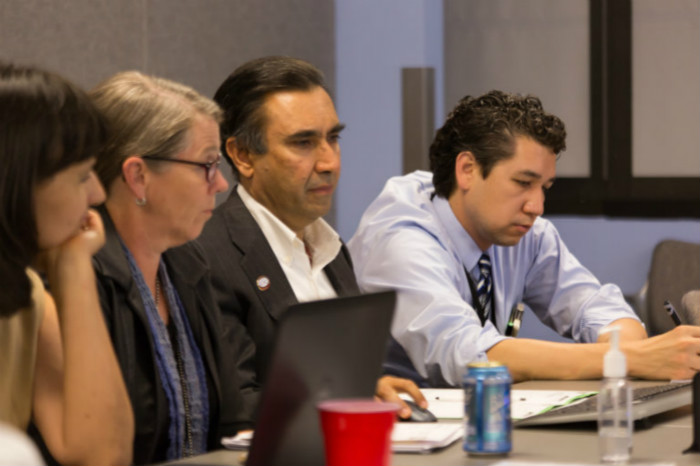
In August 2015, Dr. Sanjeev Arora (center) at the TeleECHO Clinic’s hepatitis C research symposium
In 2003, New Mexico faced a severe shortage of gastroenterologists. Patients with hepatitis C had to wait eight months for an appointment with Dr. Arora, and traveling to Albuquerque for medical care required at least a four-hour drive. Among the more than 30,000 hepatitis C patients in New Mexico, over 95% did not receive treatment. Some progressed to liver cancer or liver failure, and in severe cases, death occurred—all of which were entirely preventable. In December of that year, Dr. Arora found the answer to how he could “serve the world” during meditation: he could leverage his clinical expertise in hepatitis C to remotely guide numerous primary healthcare providers in treating the disease. He described this idea as a sudden “flash of inspiration.”
Arora declined most of his administrative duties to travel across China.Seeking Physicians Willing to Participate in Two-Hour Weekly Training Sessions. Once physicians participate, they can continue to receiveFree Medical EducationPhysicians from five prisons and 16 federal government nonprofit clinics agreed to participate in the project. Eight months later, the long waiting lines at Arora’s clinic began to shrink dramatically; after 18 months, the waitlist was reduced to two weeks. “Within a given area, having just one physician willing to undergo medical training can transform healthcare access for everyone in that region,” he said. “It doesn’t take many people; it suffices for only one physician in a region to reach a high level of proficiency.”
Over the past decade, the project has engaged approximately 100 contract employees, with the majority of its funding derived from donations by reputable non-profit organizations. The Robert Wood Johnson Foundation was one of Arora’s earliest advocates, providing $5 million to support the project’s growth and development, while the GE Foundation contributed an additional $14 million last year. Several federal agencies have also supported the ECHO project, including the Department of Veterans Affairs, the Department of Defense, and the U.S. Centers for Disease Control and Prevention.
Internationally, Namibia, Georgia, and Uruguay are all utilizing the ECHO program to treat hepatitis C and HIV/AIDS, while more than a dozen other countries, including Brazil, Mexico, and India, have independent ECHO clinics.
In 2011, The New England Journal of Medicine published a report that raised greater awareness of the impact of the ECHO project. The report demonstrated that primary care providers guided by ECHO achieved clinical outcomes in hepatitis C treatment nearly identical to those of medical specialists at the University of New Mexico, and slightly superior to those of community-based specialists.
Dr. Chris Ruge said, “In the past, treating patients with hepatitis B was often a grueling experience, but now I feel much more confident and at ease when caring for them.” Dr. Ruge even relocated to Albuquerque to help the ECHO Project build a system capable of training primary care physicians in managing “frequent hospital users.” These patients, much like the transgender women Dr. Ruge previously treated, have complex medical histories, often with some degree of substance use disorders or psychological issues, and require hospitalization multiple times a year for various conditions.
ECHO has already amassed a strong following. In a recent interview, Michael Botticelli, the Director of National Drug Control Policy under the Obama administration, stated that the ECHO model could be leveraged to combat opioid addiction. Nevertheless, supporters of ECHO remain concerned about its potential to become mainstream in the United States. Robert A. Berenson, a fellow at the Urban Institute, described ECHO as “a potential game-changer,” but noted that it still faces significant resistance.
The biggest obstacle at present is the U.S. physician compensation system: the greater a doctor’s workload, the higher their income, which leads physicians to focus more on task volume than on actual clinical outcomes. To address this issue, ECH is pinning its hopes on a growing cohort of “value-based care organizations,” which reward physicians based on actual treatment effectiveness and reduce unnecessary medical procedures.
Despite facing obstacles within the healthcare system, Arora remains optimistic. He noted that although the reimbursement model for the ECHO program has yet to be fully clarified, universities seeking ECHO services have formed a long queue. To date, this medical innovation is well underway, making it highly unlikely to be halted easily.
A Phenomenon in China: A significant number of patients prefer to seek medical care at large tertiary hospitals far away rather than at smaller hospitals closer to home, directly resulting in the striking contrast of overcrowded major hospitals and underutilized local facilities. This is because national healthcare investments have primarily flowed into large urban hospitals and medical research institutions, while grassroots healthcare personnel remain in short supply, leading to inadequate service quality and incomplete functional capabilities.
Furthermore, the shortage of healthcare personnel in western China is severe. Dr. Sun Tao, who once practiced medicine in rural Ningxia, led a research team that conducted a survey. “Measured per 1,000 people, both the number of township health centers available to the rural population and the number of village doctors per 1,000 rural residents in the western region are lower than the national average and also below those in the central region.”
Imagine if China had medical expert teams similar to the ECHO project, conducting regular training for doctors in remote areas via telemedicine or providing connectivity services to small hospitals, enabling them to consult specialists for optimal treatment plans. This would allow regions with less advanced healthcare infrastructure to also access high-quality medical services.
China has long been exploring telemedicine to alleviate the shortage and concentrated distribution of medical professionals, as well as to reduce healthcare costs. However, the current penetration of telemedicine in China remains relatively low. In 2010 and 2011, the national government planned and implemented two phases of regional telemedicine pilot projects, establishing multiple telemedicine centers依托 provincial-level large hospitals. Among them, the Second Affiliated Hospital of Zhejiang University School of Medicine has completed hundreds of thousands of remote consultations for complex cases and provided remote continuing education to thousands of healthcare professionals.
Unlike the relatively independent expert groups in ECHO, China’s telemedicine market remains predominantly centered on large hospitals, with limited connectivity to primary care institutions, leaving significant market gaps. As these services are provided free of charge, tertiary hospitals—the supply side of specialized medical knowledge—lack sufficient incentive to participate. Therefore, government incentives alone are insufficient to drive the development of telemedicine; greater reliance must be placed on the “invisible hand” of the healthcare market itself. If third-party platforms akin to ECHO emerge in China, develop business models tailored to the country’s healthcare landscape, and facilitate reimbursement through medical insurance schemes as well as partnerships with charitable organizations, the pathway for telemedicine could become increasingly broad and sustainable.