

Yijia Health Revolutionizes Primary Care with Digital Family Doctor Platform Connecting Community Physicians and Users
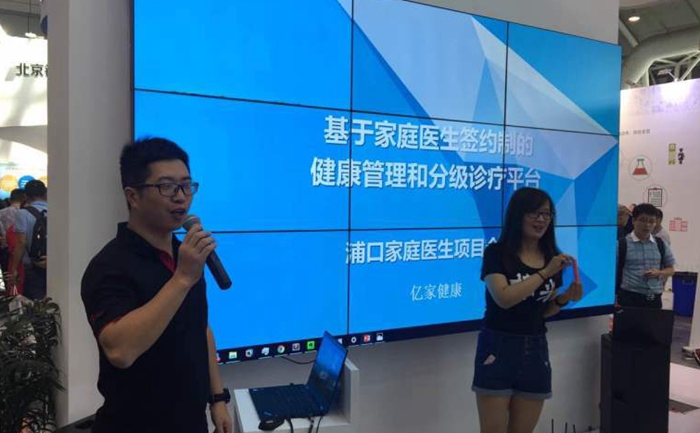
On June 6, the Office of the State Council Leading Group for Healthcare Reform, the National Health and Family Planning Commission, and four other departments jointly formulated and officially released the “Guiding Opinions on Promoting Family Doctor Contract Services.” The Guiding Opinions propose that by the end of 2016, family doctor contract services will be implemented in 200 pilot cities for comprehensive public hospital reform, with the urban coverage rate of family doctor contract services reaching over 15%, and the coverage rate for key populations exceeding 30%.
By 2020, efforts will be made to expand family doctor contracted services to the entire population, establish long-term and stable contractual service relationships with residents, and basically achieve full coverage of the family doctor contracted service system.
Yijia Health, established in 2004, leverages internet technology to connect doctors with residents, creating a family health service platform. With a decade of extensive experience in the healthcare sector, it has forged long-term partnerships with over 5,000 medical institutions across 30 provinces, autonomous regions, and municipalities directly under the central government in China, achieving comprehensive coverage of the national medical information network. What are the distinctive features of the “Pukou Family Doctor Service” model developed by Yijia Health?
The head of Yijia Health told VCBeat (WeChat ID: vcbeat) that, at this stage, family doctors mainly include registered general practitioners in primary healthcare institutions (including assistant general practitioners and traditional Chinese medicine general practitioners), as well as capable physicians from township health centers and village doctors. However, given the inherent weakness of primary care infrastructure, ordinary communities lack surplus general practitioners, resulting in substantial demand for family doctor services.
In other parts of China, active efforts are being made to guide qualified physicians from public hospitals and retired clinicians with intermediate or higher professional titles—particularly those specializing in internal medicine, gynecology, pediatrics, and traditional Chinese medicine—to serve as family doctors providing contracted services at the primary care level. Primary healthcare institutions may provide them with practice venues and auxiliary support through signed agreements. Non-governmental medical and health institutions (including individual clinics) that meet the eligibility criteria are encouraged to offer contracted services and enjoy the same payment and reimbursement policies. With the development of the general practitioner workforce, a contracted service team primarily composed of general practitioners is gradually being established.
Demand for family physicians remains substantial in the United States. According to a family medicine policy research report released by the Robert Graham Center, it is projected that by 2025, the U.S. will require more than 52,000 additional primary care physicians, including an extra 33,000 doctors. Population aging is expected to necessitate approximately 10,000 additional physicians, while the Affordable Care Act is anticipated to drive demand for another 8,000 family physicians.
In Canada, family physicians serve as private doctors. Historically, a family would retain a physician who made house calls; if a child fell ill, the doctor would visit in person upon receiving a phone call. Hospital visits were reserved only for severe or critical conditions. The prevailing model in Western countries is that each individual has a designated family physician for minor ailments or routine check-ups. If the family physician determines that the condition exceeds their scope of practice, they refer the patient to a specialist. Notably, many specialists accept patients solely through referrals from family physicians and do not accommodate self-referred appointments.
The advantage of this approach is that the physician has a thorough understanding of the patient’s medical history (and even family medical history). There is no need to review the entire medical record from scratch at each visit. The mutual familiarity and strong rapport between the physician and patient naturally make the patient more receptive to the physician’s recommendations.
In the United States, family physicians emphasize the holistic, continuous, and preventive nature of medical care. They are responsible for patient diagnosis and treatment, triage and referral, coordination of specialist consultations, integration of consultation reports, discussion of treatment plans with patients, and regular follow-ups. In the absence of disease, they provide preventive education and conduct health screenings tailored to different age groups. At times, they even serve as family mediators.
In some developed countries, the establishment of a "family doctor" system has become quite common. In the United Kingdom, family doctors account for nearly 50% of the total number of physicians; in Canada, 90% of the population has a family doctor. Through voluntary enrollment and home visits, this model enables early intervention and effective guidance for residents' physical and mental health. It also helps strengthen trust between patients and physicians, improve doctor-patient relationships, and allow residents to access high-quality medical services without leaving their homes.
In fact, the family doctor model in China differs from that in other countries. The family doctor workforce consists of general practitioners at community health centers, and the service is not provided on a one-on-one basis. If a patient’s condition cannot be managed at the initial hospital and referral is required, the patient typically must contact another hospital independently, re-register, undergo outpatient consultation and laboratory tests, and even repeat imaging studies previously performed. The specific models are as follows:
(1) “General Practitioner Team–Community Resident” Model. This model involves forming general practitioner teams comprising community physicians, nurses, and other professionals from public health and medical technology departments within community health service institutions to provide contracted services to community residents. In principle, each general practitioner team is responsible for 600 households, not exceeding 800 households, covering a population of approximately 2,000 individuals.
(II) “General Practitioner Team–Community Physician–Community Resident” Model. Supported by general practitioner teams, this model involves community physicians entering into contractual service agreements with community residents. Each community physician serves no more than 200 households, covering a population of approximately 600 individuals. Counties, county-level cities, and districts may select different operational models based on local conditions. In principle, the primary providers shall be community physicians who hold practicing physician qualifications and have completed provincial-level post training in general practice.
Residents are permitted to freely choose and sign up with a community health service institution within their jurisdiction based on their own preferences. Each household (or individual) may select only one community physician as their family doctor at any given time. Registration requires presentation of valid identification, such as an ID card, household registration book (hukou), or temporary residence permit. The contract term may be flexibly determined according to circumstances; in principle, each term shall not be less than one year. Upon expiration, if a resident wishes to terminate the contract, they must notify their community physician and provide written confirmation. Failure to request termination shall be deemed as automatic renewal.
Yijia Health, deeply rooted in the healthcare industry, aims to transform the current family doctor model in China. Centered on medical and health services, it brings together a large number of family doctors to provide convenient, personalized medical and healthcare services. It connects top-tier (Grade 3A) hospitals across China with extensive expert resources, serving as a strong support system for family doctor services. Through big data analytics, it provides precise decision-making support for government regulatory authorities. By opening its platform to aggregate resources, it partners with professionals and institutions in the broader health sector, promoting the healthy and sustainable development of China’s healthcare industry.
In January this year, Yijia Health Group and the Health and Family Planning Bureau of Pukou District in Nanjing jointly established a family doctor service model for Pukou District. This initiative achieves full-process digitalization, covering family doctor enrollment, health records, appointment registration, in-clinic payments, consultations, and referrals.
Leveraging the professional team dedicated to building Yijia Health’s family doctor service system, we assist the Pukou health administration and community health service centers in establishing a comprehensive family doctor system. This includes services such as operational mechanisms, service standards, standard operating procedures, performance evaluations, and training. Supported by internet-based information technology and implemented through family doctor management and services, this initiative has pioneered the “Pukou Model” for family doctor services.
In April, Yijia Health began assisting community hospitals in Pukou District to launch a pilot program for family doctor contract services. Various self-service testing devices were installed in health kiosks to provide contracted residents with free measurements of health indicators such as height, weight, blood pressure, blood glucose, vital capacity, and bone mineral density. The test data is automatically uploaded to electronic health records. Both the contracted family doctors and the residents themselves can access this information via the Family Doctor APP, thereby promoting residents’ self-management of their health.
Residents of Pukou District possess a Health Card, a tri-functional card integrating a medical treatment card, a bank card, and a virtual card, as recognized by the National Health and Family Planning Commission. Upon successful identity verification, residents can use this card for general outpatient registration and specialist appointment scheduling at primary, secondary, and tertiary hospitals within the region, enabling point-of-care payment and cardless reimbursement under the New Rural Cooperative Medical Scheme.
The three greatest advantages of the family doctor contract services in Pukou District are:
1. Collaboration between enterprises and the government, leveraging their respective strengths;
2. By leveraging information platforms and terminals, connect all stakeholders involved in family doctor services to enhance service experience, improve service efficiency, and enable effective supervision;
3. Provision of Family Doctor Services: Management and services delivered by Yijia Health.
Yijia Health Group fully leverages government-opened medical and health resources to enhance the efficiency of public fund utilization. It actively participates in the market-oriented operation of resident health management, delivering government-outsourced services and personalized value-added services for community residents based on their health needs. Focusing on extended community health service areas such as tiered diagnosis and treatment, elderly care, integration of medical and elderly care, and residents’ personalized needs, the Group plays a synergistic and complementary role. It serves as a platform through which residents can access health management programs, thereby meeting diverse levels of health management demands.
To date, over 5,000 individuals from key populations, such as those with diabetes and hypertension, have signed up for family doctor contracts. These enrolled residents also benefit from home-based medical check-ups, diagnosis and treatment, and referral services. Their health records are automatically generated, and visits and treatments are covered by cashless payments under the New Rural Cooperative Medical Scheme (NRCMS), featuring instant reimbursement and automatic confirmation of reimbursement ratios. Through practical implementation and exploration in the Pukou pilot project, the “Pukou Model,” which has shown initial success, will be rolled out across the entire Pukou District in September.
Currently, the principle of “managing minor illnesses within villages (communities)” has gradually become one of the measures to address the high cost and difficulty of accessing medical care among urban and rural residents. The implementation of a contracted family doctor service model serves as an effective extension toward comprehensive coverage of community health services, as well as an efficient integration for the maximized utilization of medical resources.
However, for “family doctors” to earn both acclaim and popularity, medical quality is paramount; it must be underpinned by robust clinical expertise, professional conduct, and medical ethics.
First, one must possess exceptional medical expertise. Generally speaking, “family doctors” primarily provide independent diagnosis and treatment with limited resources. To tailor appropriate treatment plans or rehabilitation programs for residents, they must have extensive clinical experience and master the traditional Chinese diagnostic techniques of inspection, auscultation and olfaction, inquiry, and palpation. Only in this way can they earn the trust and recognition of the community.
Second, healthcare professionals must uphold rigorous medical ethics. Always keep residents at heart, continuously innovate service models, and improve service conduct by shifting from a passive “wait for patients to come” approach to an active “go down to the grassroots” and “reach out” mindset, thereby proactively serving residents.
Third, they must uphold strong medical ethics. Whether providing in-clinic consultations or appointment services, the evaluation criteria and value orientation should be based on residents’ satisfaction and contentment, rather than using the guise of service to engage in sales tactics or deceptive practices. Only by adhering to these principles can “family doctors” earn residents’ trust, foster positive doctor–patient relationships, and truly gain public acceptance.