

Novogene Advances in Precision Medicine as Gene Testing Gains Prominence
Author: Zhang Liang Source: HJie
Young actress Xu Ting, only 26 years old, had her life cut short by lymphoma, leaving many in deep lament.
Xu Ting’s misfortune is representative of the plight faced by a significant segment of the population. Individuals like Xu Ting may have missed the earliest window for preventing pathological changes, the earliest stage for cancer detection, or the optimal timing for selecting the most effective treatment regimen. These repeated missed opportunities stem from a lack of understanding of one’s own genetic code, as well as limited knowledge about disease-causing genes and tumor-related genetics.
Ample evidence indicates that various cancers are indeed linked to genes, as cancer is a genetic disorder at the cellular level and constitutes a genetic disease. If it were possible to predict certain pathological changes in the body in advance and undergo regular screenings, the likelihood of detection only at an advanced stage would be significantly reduced.
Cancer Mortality Rate Exceeds Global Average
Xu Ting is a microcosm of the many cancer patients. There are also other once-vibrant lives: Zhao Lirong, Luo Jing, Chen Xiaoxu, Yao Beina...In fact, just as we held our breath1At the minute mark, we in China are currently experiencing5A cancer patient has passed away.
According to the BBC: According to the latest research, approximately 4.3 million people in China were diagnosed with cancer in 2015, and an additional 2.8 million died from the disease. In other words, 12,000 new cancer cases are diagnosed each day, and 7,500 patients die from cancer daily.According to estimates from the World Cancer Report,2012Annual number of new cancer cases in China306.510,000 cases, accounting for approximately one-fifth of the global incidence; cancer-related deaths were220.5million, accounting for approximately one-quarter of global cancer deaths. And2015The annual mortality data is equivalent to an additional increase of6010,000 people.
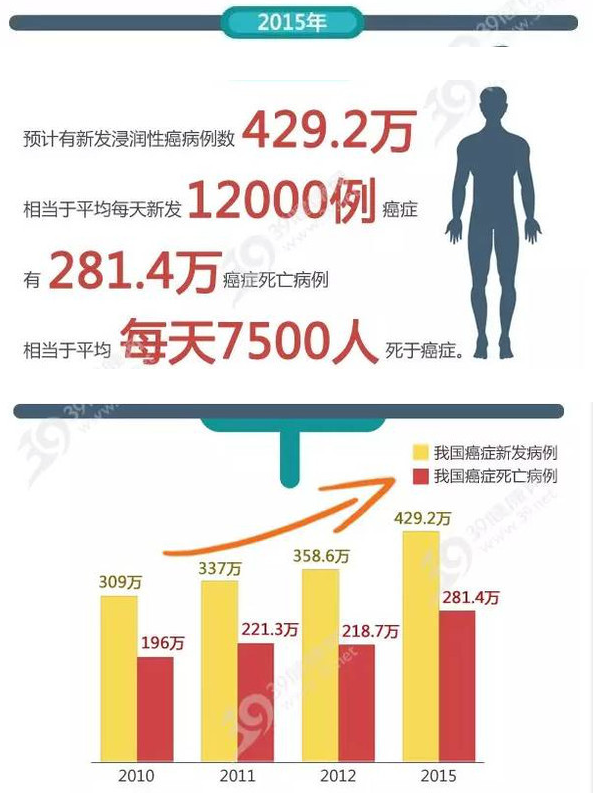
China’s cancer incidence rate is close to the global average, but its mortality rate exceeds the world level. Ji Jiafu, President of Peking University Cancer Hospital, stated that this discrepancy is primarily due to objective factors such as ethnicity and cancer spectrum patterns. Experts in tumor prevention and control believe that a significant reason for the persistently high cancer mortality rate is that many cancers in China are diagnosed at intermediate or advanced stages. Cheng Shujun, Academician of the Chinese Academy of Engineering and Vice Chairman of the China Anti-Cancer Association, noted that in recent years, the cancer incidence rate in the United States has declined, with a five-year survival rate of 60% to 70%, whereas the five-year survival rate for cancer patients in China is approximately 30%.
Same Cancer, Different Fates
Xu Ting’s misfortune lay in her adoption of inappropriate treatment after being diagnosed with a tumor—a scenario strikingly similar to that of two film stars several years earlier.
On May 13, 2007, Chen Xiaoxu, the actress who portrayed Lin Daiyu in the 1987 adaptation of *Dream of the Red Chamber* and a superstar of her generation, passed away from breast cancer at the age of 42. The 1987 version of *Dream of the Red Chamber* is widely regarded as an almost unsurpassable classic, and Chen Xiaoxu’s portrayal of Lin Daiyu—intelligent, willful, deeply devoted, and frail—remains unmatched. Her life story, including her death, strikingly mirrored the trajectory of Lin Daiyu in the novel, leaving countless people to sigh with regret.
As early as April 2006, Chen Xiaoxu had already been diagnosed with stage II breast cancer. Had she opted for standardized modern medical treatment at this stage, long-term survival would have been entirely achievable. However, Chen Xiaoxu firmly refused conventional Western medical treatment, insisting instead on traditional Chinese medicine. She subsequently sought spiritual solace in Buddhism, ultimately missing the optimal window for treatment on multiple occasions.
In contrast, in 2013, 38-year-old Angelina Jolie made a globally renowned decision: to undergo a bilateral mastectomy. After battling cancer for nearly a decade, Jolie’s mother passed away at the age of 56. Concerned that she had inherited her mother’s genetic defect, Jolie underwent genetic testing and was identified as a carrier of the BRCA1 gene mutation.
In 1990, researchers identified a gene directly linked to hereditary breast cancer, named Breast Cancer Gene 1, or BRCA1. This gene functions as a tumor suppressor; when mutated, it significantly increases the carrier’s risk of developing breast cancer. Physicians estimated that Angelina Jolie’s risk of developing breast cancer was as high as 87%.
Upon learning this news,Angelina.JulieShe opted for prophylactic mastectomy. Her surgery was performed in stages. The first stage involved a nipple delay procedure, which severed the blood supply between the nipple and the breast tissue to stimulate compensatory proliferation of the collateral vessels supplying the nipple. The second stage involved removal of all breast tissue except for the nipple and the overlying skin, with placement of a tissue expander to prevent tissue retraction.
The difference between life and death, in fact, reflects the attitudes of two film stars toward science. Angelina Jolie trusted genetic science and acted on her genetic test results by taking timely therapeutic measures, ultimately prolonging her life. Chinese people’s desire for life is no less than that of individuals in developed Western countries; however, their ambivalent attitude toward technology has delayed treatment opportunities for too many patients.
Genetic Testing: Facing Life and Death with Rationality
Angelina Jolie’s case has given cancer patients hope for survival: cancer can not only be predicted and prevented, but also preemptively treated.
"Life is as splendid as summer flowers, and death is as serene and beautiful as autumn leaves." Moreover, even when cancer has reached its middle to late stages, patients still have the option to choose a dignified death through chemotherapy and targeted drug therapy.
At the “CEIBS Foresight – Emerging Voices Forum” hosted by China Europe International Business School (CEIBS) on September 10, Jiang Zhi, President of Novogene, shared his mother’s personal story while explaining to an audience of more than 200 attendees how gene sequencing has provided substantial benefits to cancer patients.
Jiang Zhi recalled that when his mother was diagnosed with small cell lung cancer, it had already reached an advanced stage. At that time, only two treatment options were available to her: chemotherapy and targeted therapy. However, whether targeted therapy would be effective remained uncertain. Jiang Zhi naturally hoped his mother could receive a treatment that would alleviate her suffering more effectively. Yet he was acutely aware that not all cancer patients are eligible for targeted therapy. After genetic testing was performed on his mother, the results indicated that targeted drugs would be ineffective for her case. Consequently, chemotherapy was ultimately adopted as the treatment approach.
In this regard, Jiang Zhi believes that gene sequencing can unlock the secrets of life, revealing what we can and cannot do. Genes are the essence of life, and only by understanding the truth can we make more rational choices.
It is understood that Novogene’s tumor testing portfolio includes genetic testing for lung cancer. In the therapeutic management of lung cancer patients, Novogene integrates next-generation sequencing (NGS) and 3D digital PCR platforms. This approach leverages the multiplex parallel detection capability of NGS to provide evidence for initial drug screening or for changing treatment regimens upon disease progression, while utilizing the 3D digital PCR platform to monitor treatment efficacy and drug resistance. The registration applications for assay kits based on these two platforms by Novogene will provide standardized testing support for the comprehensive management of clinical lung cancer patients.
Nowadays, genetic testing has become a top priority in precision medicine. By enabling parallel multi-gene analysis, it helps patients make efficient, rapid, and precise medication choices, thereby maximizing their therapeutic prospects. The future development of genetic testing will involve three key transitions: from single-gene to multi-gene analysis to assess drug efficacy; from invasive to non-invasive methods to diversify sample types; and from static to dynamic monitoring to meet clinical testing needs.
Novogene Ramps Up Efforts in Precision Medicine
In fact, Novogene’s initial target was not the medical field but rather the scientific research services sector.
Founded in 2011, Novogene initially positioned itself as a provider of scientific research technical services. After five years of accumulation, it has established extensive collaborations with scientists both domestically and internationally in the field of scientific research. To date, Novogene and its partners have published more than 100 research articles in top-tier international academic journals such as *Science* and *Nature*. Novogene has become the largest scientific research service provider in the industry.
During the 13th Five-Year Plan period, precision medicine was selected as one of the 100 major national projects and initiatives. Against this backdrop, Novogene, like many of its peers, began to intensify its efforts in genetic testing within the healthcare sector, with a particular focus on oncology genetic testing.
It is understood that Novogene has currently developed a comprehensive tumor genetic susceptibility test for cancer gene screening, as well as deep genomic sequencing products for solid tumors targeting high-end personalized cancer treatment consultation.
The former targets 16 types of cancers with genetic risks, including breast cancer, colorectal cancer, and prostate cancer, providing precise guidance for tumor prevention in high-risk populations to achieve early detection, diagnosis, and treatment; the latter is aimed at patients with solid tumors such as lung cancer and colorectal cancer, utilizing high-throughput gene sequencing technology to comprehensively analyze gene mutations that drive tumor initiation and progression.
In terms of hardware infrastructure, Novogene Medical Laboratory, a medical testing institution under Novogene, is equipped with both Illumina and Life Technologies second-generation sequencing platforms, as well as digital PCR and pathology platforms, to provide users with clinical tumor gene testing services.